Part 5 of From Star Wars to Jedi: The Making of a Saga picks up in Arizona: the filming location of the Jabba’s sail barge sequence from Star Wars: Episode VI Return of the Jedi.
According to narrator Mark Hamill, the sail barge was the biggest set ever constructed for a movie, measuring 212-feet-long and 80-feet-high. Yet it only appeared on film for a couple of minutes. This is intentional; according to George Lucas, a fatal flaw in science fiction is spending too much time showing off sets and locations. “You don’t have to spend too much film time to create an environment,” he says. “The story is not the settings. The story is the story. It’s the plot.” The scene also represents the Star Wars storytelling style: fast and energetic.
The Star Wars style is accomplished through editing and the speed of movement through the frame. Lucas was always fascinated with speed due to his interest in car racing, which heavily influenced the Star Wars films. This is evident in the space battles of Return of the Jedi, featuring quick glimpses of TIE fighters, the Millennium Falcon, and Rebel ships, as well as the Falcon gunner sequence from Star Wars: Episode IV A New Hope.
The Book of Boba Fett took home some gold during last night’s Creative Arts Emmys Awards. Out of its four nominations, the show took home Outstanding Special Visual Effects in a Season or a Movie. Also up for the award in this category were Stranger Things, The Witcher, Lost in Space, and Foundation.
Congratulations to #TheBookOfBobaFett VFX Team on their #Emmy Award win for Outstanding Special Visual Effects in a Season or Movie. pic.twitter.com/cFmS9BTUgJ
— The Book of Boba Fett (@bobafett) September 5, 2022
Among those specifically recognized for the award include: visual effects supervisor Richard Bluff, visual effects producer Abbigail Keller, animation supervisor Paul Kavanagh, associate visual effects supervisor Cameron Neilson, special effects supervisor Scott Fisher, Legacy Effects supervisor John Rosengrant, ILM visual effects supervisor Enrico Damm, Image Engine visual effects supervisor Robin Hackl, and virtual production visualization supervisor Landis Fields….
In less than a month, select IMAX ® theaters across North America will play Star Wars: Episode II Attack of the Clones in its largest format ever. This is not just a re-projection of the standard-sized 35-mm film print onto a larger screen; through the revolutionary IMAX DMR ™ process, the movie has been re-mastered and the image enlarged to occupy up to eight stories of screen and the sound enhanced to include 12,000 watts of uncompressed sound.
Imagine the blue-white shafts of laser energy spearing the immense Trade Federation core ship, and suddenly you’re engulfed in a cloud of dust as the fallen vessel strikes the Geonosian surface. Picture twisting and diving through the luminescent skylanes of Coruscant, as panicked commuters soar directly at you. Or imagine a forty-foot tall Yoda, using the Force to draw his lightsaber as he gets ready to square off against Count Dooku.
“The biggest thing when you get get that kind of sound and that size of image on the screen, is that it draws you into it. You’re part of the experience,” says Brian Bonnick, the Vice President of Technology for IMAX Corporation.
Up until the innovation of IMAX DMR technology, there was no way to project a standard-sized live action film to the scale of an IMAX movie and still maintain a quality performance. IMAX theaters were built for 70mm film format; smaller film formats are comprised of a fine grain structure that would be magnified and detract from the underlying picture, creating a soft, unfocused and poor image. IMAX DMR digitally removes the grain and preserves the quality of the image, allowing it to be projected onto IMAX screens.
The majority of Star Wars fans saw Episode II in a 35mm film format. This means that each film frame is 35 millimeters across. The film area is mostly square — a special lens on the projector spreads the image out to its rectangular proportions. If you were to look at a film frame from a reel of Episode II, the characters would look very tall and skinny (the Kaminoans even more so). The image is compressed into the frame and the projector lens decompresses it. On each side of the image, there are four sprocket holes or “perfs” (short for perforations), which the projector uses to tug long lengths of film through its inner mechanisms.
IMAX is a totally different picture. It’s 70 millimeters wide, and the image isn’t compressed. It’s about 10 times larger in area than 35mm film stock. It’s called 15/70mm format for the 15 perforations that run along the top and bottom of the frame. Regular movies spool into a projector vertically; IMAX projectors move film horizontally for reasons explained later on.
To get a movie projected to the IMAX scale requires a lot of image area within the film frame, and a lot of light shining through it. A 35mm film frame just doesn’t have the resolution to hold up to that scale, and a typical 35 mm projector just can’t crank out the kind of light an IMAX’s 15,000-watt xenon bulb can.
So IMAX DMR technology figured out a way to scan a 35mm film frame, enhance it, and enlarge it to 70mm without sacrificing image quality. “IMAX has been working on this innovative technology for the past five years to enhance the theatrical experience, offering movie-goers an all-encompassing experience which literally brings them into the story ,” says Bonnick.
The first feature film to undergo this process is the recently released Apollo 13: The IMAX Experience. The Ron Howard-directed film was shot in Super 35mm. That film was scanned and converted into a digital form at the highest possible resolution.
“We then apply our proprietary software and it mathematically analyzes and extracts the important image elements from each frame from the original grainy structure,” explains Bonnick. “It creates the most pristine form from the original photograph. It’s clearly the most complex step in the whole DMR process.”
The complex software algorithms makes images sharper and improves the contrast on a frame-by-frame basis. Colors are adjusted to the unique technical characteristics of the IMAX screen. If there are any scratches, blotches, or imperfections in the film image — known as artifacts — those are digitally removed by a special patent-pending process. “We clean the whole thing up from front to back end,” says Bonnick.
Once the entire film has been digitized and enhanced, it is then output back to film, but this time in 15/70mm stock. “This conversion from digital back to 15/70mm is accomplished by using our proprietary 15/70 laser film recorder. It was both designed and manufactured by IMAX. It is capable of providing greater dynamic color range than normal scanners on the market and it has capabilities of capturing resolutions up to 8,000 x 6,000.”
For Apollo 13, once the film was digitized, it comprised nearly 200,000 frames of data. “When we were finished the conversion process, we had over seven terabytes of data — that’s 12 zeroes. That’s equivalent to about 13,000 DVDs of data. Episode II is comparable in frame count. There’s a massive amount of information we’re working with,” says Bonnick.
“People tend to get mixed up thinking that DMR is just a piece of software,” he continues. “IMAX DMR is a total process that clearly involves some very complex software algorithms that process image data, but along with that comes the management of that information. You have to have an infrastructure capable of knowing where every frame is in the process to manage this much.”
Digital to IMAX
With Episode II, the DMR process was spared a step in that the image content already existed in a digital state; there would be no film to scan. But starting from an HD-source brought its own technical issues, as the algorithms set in place for handling a 35mm source wouldn’t entirely suffice for the re-mastering of Clones.
“In a digital film, it doesn’t obviously have grain that we’ve come to know in normal photography,” explains Bonnick. “But it does tend to carry ‘video noise’ artifacts. Two noticeable ones would be when pixels appear to be off-color relative to those in the surrounding area. You might get a flicker from frame to frame. Or when tighter clusters of pixels tend to slightly vary in color from frame to frame. That tends to happen in dark areas, and it looks a bit like a boiling effect. Now these are very, very subtle effects; in most cases I’d have to take you into a theater and describe to you what to look for and you would find it. Somebody who is very up on video would really pick these sort of things up; obviously, in our industry that’s part of our job.”
The DMR pipeline was customized to deal with these unique forms of artifacts. “We’ve designed it to be very open-ended. If we come across an artifact that we’ve never dealt with before, we’re in a position to very quickly write a new algorithm and incorporate it into the production engine in a short period of time.”
Though the software examined each and every frame of image, the re-mastering team broke the film down into shots as discreet units of work and focus. An individual shot (a sustained hold from a camera vantage point prior to it cutting to the next “shot”) is fairly uniform in its re-mastering requirements, though if there are specific artifact issues within a shot, the team then redirects their efforts to the more focused scale: individual frames.
The image re-mastering process took about 14 weeks of work, and was finished by the end of September 2002. “The process is scalable,” says Bonnick. “At the moment, we’ve got dozens and dozens of computers in our render farm. It’s all a factor of how many frames per day you want to process. If you want to process more frames per day in a given timeline under a tighter deadline, then you would scale up the numbers of computers in your system to give you greater throughput capacity.”
The IMAX Experience™ is more than just big picture. It also delivers six-channel uncompressed multi-speaker sound that further completes the audience’s total immersion into Episode II. “We use six completely discreet channels plus subwoofers on their own separate channels. We use ultra-low distortion amplifiers, capable of delivering up to 12,000 watts of power. We employ our own custom-designed speaker-set with over 44 speakers,” explains Bonnick. That sound system is carefully aligned by lasers to deliver proportional point source (PPS) quality.
“The non-technical definition of a PPS speaker is that we have designed it such that, rather than having the dead-center seat in the theater being the ‘sweet spot,’ these speakers are designed to enlarge the sweet spot quite a bit so that everybody in the theater is sitting in a good position to hear the sound as it was originally intended,” explains Bonnick.
The IMAX sound system will not only deliver huge events like the shattering of asteroids or the crash of a core ship, but also soft sounds like the distant birds of Naboo or the hum of background cloning machinery with crystal clarity. “The IMAX sound system has been designed with a very high dynamic range, unlike 35mm theaters. There, when you start to get anything with depth or volume to it, you tend to hear a lot of distortion.”
Those fortunate enough to have caught the original digital exhibition of Episode II in the spring are probably digital-converts, fully aware of the limitations of traditional film. IMAX film is a whole different set of variables, since the quality-assurance and technical advancements in projecting films of this size help overcome many of the limitations of 35mm exhibition.
“IMAX film lasts substantially longer than 35 mm film, because we use the rolling loop technology in our projectors,” explains Bonnick “The film is moved around the lens aperture in a wave motion. We’re not moving it constantly through sprockets that over time wear the film out and enlarge the perforations, which is when you start getting a jiggle in the film. Because of this fluid motion that the IMAX film goes through, we are being very gentle to it, ergo it lasts longer.”
An IMAX projector has a steadiness of .004 percentage change from frame-to-frame. A traditional 35mm film has a .12 steadiness in comparison. Even the heat of the projection bulb will cause a 35mm film to buckle, something that can’t happen in an IMAX projector thanks to a field flattener that holds the film steady and true.
Furthermore, the smaller number of IMAX screens makes quality assurance easier to manage. “The systems are constantly being tuned to ensure the films are running properly, that the steadiness is accurate, and the light intensity and distribution of it are all set adequately, that the screens are clean, that everything is at optimum performance levels.”
An IMAX projector is an immense machine, weighing in at over two tons. The huge platter that spins the oversized film has an upper limit of film length. Most films that play in IMAX theaters are documentaries that don’t clock in much over an hour in length. Feature films have to be cut to 120 minutes since that is the current maximum the platter can sustain. For number-minded trivia fans, the Episode II IMAX print is 58 inches in diameter and weighs 390 pounds! “It’s the limit now,” explains Bonnick. “We are actively developing a 150-minute solution that would be employed as an upgrade to the theaters in the future.”
Maul and Death Watch launch an attack to take control of Mandalore! But can they truly work together? This is our review for the Clone Wars episode Shades of Reason in our chronological rewatch!
Watch the official second trailer for Rogue One: A Star Wars Story, in which Jyn Erso leads a group of unlikely heroes to steal the plans to the Death Star, the Empire’s ultimate weapon of destruction. Rogue One: A Star Wars Story arrives in theaters December 16, 2016.
From Star Wars to Jedi: The Making of a Saga is the classic documentary chronicling the creation of the original Star Wars trilogy. Narrated by Mark Hamill, it features rare behind-the-scenes footage from Star Wars: Episode IV A New Hope, Star Wars: Episode V The Empire Strikes Back, and Star Wars: Episode VI Return of the Jedi, and is officially available on YouTube for the first time.
Coming home from work, you instinctively throw your jacket onto your couch, leave the day’s worth of junk mail on the television, and throw your keys onto the kitchen counter. These are all automatic responses, done without any forethought, but it’s the kind of detail that Set Decorator Peter Walpole tries to capture, even when recreating the distant galaxy of Star Wars.
“If you look back at your own homes, you take for granted everything that you have in your house,” says Walpole. “But if you start to analyze it, you’ll find that it’s layers upon layers upon layers. You have settees in the corner, with cushions on them, and there might be coats on the cushions, or books, or newspapers. That, to me, is the essence. If you were to dress a mantelpiece over a fire, it’s not just a clock and two candlesticks. It would be a clock, two candlesticks, some postcards and a pen, maybe a book of stamps and somebody’s mobile phone. You’ve got to be able to look at everyday life and put it in that environment.”
Walpole is responsible for the design and arrangement of props within the sets that Production Designer Gavin Bocquet builds. In a sense, he’s an interior designer of the Star Wars galaxy, though he’s quick to point out the difference in his work.
“I have discussions with interior designers, and they say, ‘oh, we do the same kind of job,'” notes Walpole. “Well, no we don’t, because they’re doing something that everybody sees every day, whereas we do something that’s going to be seen through the eye of a camera.” Walpole envisions a set as it will appear through the camera lens, and has to make concessions in design to accommodate filmmaking processes, whether it’s supplying foreground and background props to provide a sense of depth, or lowering wall-hangings and fixtures so that they register on camera.
“There’s no point in hanging a light too high up if you can’t see it because it’s not going to be in the frame, so you’ve got to drop it down. It may be even dropped down a little bit lower than you would normally have it,” he says.
Walpole’s involvement with a given prop assignment begins early on, as soon as concept drawings of the environment arrive. “The set is then constructed and painted. At that stage we’re buying the props or renting them or manufacturing them. I have in my head the way that it should look. We then gather them all together, in readiness for the sets to be finished. We can have anything from maybe a week to half-a-day to dress them. I might be dressing two or three sets at once,” he says.
“I work closely with Ty Teiger, the Prop Master. I give him an idea of a dressing plan of how I’d like it. He will go in and block it out, and put all of the main pieces in. Then I’ll come in and finish it off.”
Though Walpole plans each set decoration, he does build in a level of spontaneity in his approach, to allow for new and fresh ideas. “I would plan maybe 60 percent of it,” he says, “I know that I’ve got a backbone structure. Then, I like the rest to be created, so it flows. I wouldn’t like to make a list and have everything there and just place it. It’s great to be able to have lots of things to draw upon. But to get to the stage, where the adrenaline starts to run, and all of a sudden it all starts to work — that’s what it’s like to dress a set. That’s the last 40 percent, adding those layers, having immediate ideas, which I guess is what directors do also. And then walking away thinking, ‘yeah, that’s right.’ If I walk away, and I’m happy, then it’s right.”
Such creativity is essential to his job. As Walpole describes it, he not only has to get inside the Director George Lucas’ head, but also inside the heads of the characters associated with each set.
“You’ve got to think of the background or where the characters are coming from,” describes Walpole. “If they’re a character who is born on Naboo, but lives on Coruscant, would there be any Naboo artifacts in the Coruscant apartment? As you would if somebody from Thailand went to live in America. Would they take their bits with them? It’s just a natural approach to doing the job.”
Domestic Interiors
The sets of Episode II are far more personal than those of Episode I, a distinction that Walpole appreciates. “In Episode I, we had a couple of what I would call ‘domestic interiors,’ like Anakin’s hovel or Palpatine’s apartment,” says Walpole. “Then, there was a lot of Podrace garages, pit hangars and the Theed hangar. In this one, for a set decorator, it’s fantastic because there are a lot more interior sets to do. The interior sets that we’re doing are personalized, whether it be Padmé’s, Palpatine’s or some of the old sets from A New Hope.”
As a love story, Episode II splits its time between spectacular otherworldly locales and far more intimate settings. It is these that Walpole enjoyed the most. “Padmé’s Coruscant apartment is my favorite, as it’s beautiful and not cluttered. It’s much harder to dress a set with fewer things than with many things. Shortly behind that one is Padmé’s Naboo retreat. You’re looking at a Senator and you’re trying to sort of instill that little bit of personal stuff in that.”
In addition to focusing on character, Walpole treats Star Wars films no different than “real world” films set in our galaxy. “I kind of compare it to other periods in history, although it’s not part of our history. There are different themes, different styles, and you know whatever planet you happen to be in.”
This approach, coupled with his practical methodology in building set decorations, gives the films a mix of differences and similarities. “I think if you look at The Phantom Menace and then compare it to the other three films, you’ll see differences. But the approach is still the same. We still use the inside of washing machines. We still look at everyday objects to see how we could adapt them and use them. That was the premise that George Lucas gave us at the very beginning, and that’s how the other three work. So, although there is 25 years difference, the backbone and the structure is still the same.”
As preparation, Walpole uses the original trilogy as research material, having watched the previous four films upwards of 50 times. “I enjoy watching them,” he says. “I’ve got kids who love to watch it.” Even with The Phantom Menace experience not long behind him, he finds watching Episode I illuminating. “Although it’s all fresh in your mind, you’ll occasionally experience — ‘oh, I’d forgotten that’s how we did that.'”
To accomplish his tasks, Walpole’s bag of tricks spans years of experience. “I guess the whole industry is made up of clever cheats and ideas,” he smiles. “It always comes down to cost and speed. If you’re talking about a marble set, then our painters paint the marble effect on paper, and that’s applied onto the structure of the set, and then glazed to have that marble look. You would never be able to construct, time-wise or cost-wise, a set like Padmé’s dining room and have it be completely marble. It’s all one big cheat, whether it’s marble paper, plaster columns instead of stone, fiberglass sculptures instead of bronze. The whole thing’s a bit of a cheat, but we don’t like to let on.”
At first, reports of the amount of bluescreen and digital backlot techniques used in the prequel trilogy concerned Walpole, but he found himself busy as ever. “I was a bit concerned that this might be all bluescreen and I’d just be putting a bowl of fruit or a bunch of flowers in a vase somewhere. But it’s been fantastic, and very different. When you’re dressing a bluescreen set, it’s something you’ve got to take into consideration. There’s no point in putting blue drapes in. But generally, it doesn’t worry me too much, having done Episode I, and also a lot of Young Indy which really educated me on that sort of thing. It’s another tool of the trade that you accept and you make allowances for.”
Bridging Aesthetics
Another challenge for Walpole is bridging the aesthetic sensibilities of the prequels with the originals. Attack of the Clones brings the audience once step closer to the events of A New Hope, and many familiar elements are starting to appear. Fans of the saga will definitely feel a sense of nostalgia as the new heroes spend time at the Lars homestead and garage. The sets were painstakingly recreated from reference photography of the original.
“The information we get from the Ranch has been carefully stored and collated. In this day and age, you can watch the film, then freeze-frame it, and print it off your own VCR if you wanted to. They have a great wealth of photo-reference, that you really have to examine to determine if something’s a light or something’s just a reflection.”
Besides looking forward (or is it backwards?) to the original saga, there are enough wholly new environments to keep Walpole busy. “If I can get my teeth into many different things — from the starfreighter to a bus to some beautiful apartment or a garage — I’m a happy man.”
One new environment is a somewhat seedy nightclub found in the depths of Coruscant. A locale with a character all its own, the nightclub is a place where transients and slumming elite can intermingle, carouse, drink and — as will be seen in the finished film — gamble.
“There’s going to be gaming going on in the background, whether it be a roulette table or some sort of gaming machine,” says Walpole. “We took some aircraft parts, put some screens in them, and tidied them up. We found a couple of old wrecked arcade games that were just a shell. We took those, turned them upside down, and they took on a completely different appearance. The bar itself has evolved. We used the famous plastic beakers and whatnot, and got different shaped aluminum tubes for drink dispensers. George came along at the end and liked everything, but wanted us to just change the center bar slightly. What he wanted was acrylic tubes with liquid in it, so it almost had a church organ effect. That worked really well. I wish I’d thought of it first, but hey, that’s probably why he’s directing.”
Another less-than-polished environment is the hold of an interstellar freighter, glimpsed briefly in the “Forbidden Love” trailer. The gloomy interior was another great opportunity for Walpole to infuse personality into a set. “You would have refugees on the floor, but at the same time, there’d be cargo strapped down by some sort of netting. People take a lot of things with them, so we’re making bags and stuff to carry and bits and pieces of personal belongings. There was kind of an eating area that worked really well, because we put some really weird things in there. A hand-operated plastic tumble dry washing machine type thing — they were turned around, painted and stuck to a wall.”
The four previous Star Wars films have all featured characters dining or preparing food, and Attack of the Clones is no different. Walpole determines the look of the dispensers and utensils. “We will also adapt and utilize catering equipment. Or somebody else found these great sort of slush machines for doings sodas. We will adapt that and use that. We’ve done the freighter hold, which had lots of cups and things. You start to run low on ideas, sometimes. There’s only so many sort of stainless steel stuff.”
But in the end, Walpole delivers, no matter the time or materials constraints. For Episode II, he had less prep time and more assignments than in Episode I, yet still met all the set dressing requirements. “You’ve got to be positive in your approach. If you have six months, that’s great. If you have four months, then you do the same job, but only harder. It’s a funny thing. I hate compromise, but I never look at the fact that you have less time to prepare as a compromise. You seem to work just as hard if you’ve got six months prep than if you’ve got five. It all still gets done. You never have enough time. If you have a year to prepare a film, you’ll still be pulling your hair out to get things done a week before. It’s a strange thing.”
Not that Walpole would have it any other way. “There must be millions of guys and girls out there who don’t really enjoy getting up and going to work. They do their five days a week, and have their weekends off, and their two weeks holiday. I love what I do, and I get a buzz out of it. I think I’m very, very lucky.”
WhatCulture Star Wars is dedicated to all things Star Wars. We’ll have all the usual lists, features, and news, plus there’ll be Ups & Downs for all the latest shows and new Star Wars movies. The force is with us!
Hey everybody and welcome to Leia’s Lair. In this episode I will go over exactly what Order 66 is in Canon. Including the background events that led up to it’s execution, why the clones followed the order, and how it was almost uncovered before it happened. I hope you enjoy!
What Did The Planetary Governors & Moffs Do? This video reviews what the Sector Moffs and Planetary Governors did within the imperial government. The Sector Moffs and Planetary Governors helped keep the Galactic Empire’s grip on the many systems and planets, but how did they do that?
My channel specializes in star wars galactic empire lore.
What are our thoughts on the Rian Johnson article in the latest issue of Empire? What new characters are we most excited to see in Andor? These questions and more answered in this week’s Q&A!
Watch the official trailer for Rogue One: A Star Wars Story, in which a group of unlikely heroes band together on a mission to steal the plans to the Death Star, the Empire’s ultimate weapon of destruction. Rogue One: A Star Wars Story arrives in theaters December 16, 2016.
In part 3 of From Star Wars to Jedi: The Making of a Saga, narrator Mark Hamill details the creation of Star Wars: Episode VI Return of the Jedi’s giant, slug-like crime lord: Jabba the Hutt.
The early designs for Jabba didn’t quite hit the mark. According to George Lucas, the first design was too human; the second was too snail-like; the third was just right. Jabba became the most complex puppet ever constructed for a movie. His head neck accommodated two main puppeteers, while other operators were placed elsewhere in his body; the gangster’s eyes and facial muscles were radio-controlled. Stuart Freeborn oversaw the creation of Jabba, who took three months and close to half a million dollars.
Jabba was originally supposed to be in Star Wars: Episode IV A New Hope, and a scene was shot featuring a human male standing in for the role — as seen in this video. The creature was to be super-imposed, but the sequence was left unfinished. When it came time to use Jabba in Star Wars: Episode VI Return of the Jedi, Lucas took the opportunity to redesign and improve the character.
Dressing the Star Wars galaxy is a challenging task for the prop department; you can’t just buy Naboo or Tatooine artifacts off-the-shelf. While some of the props decorating Episode II are cobbled together from real-world gadgets and gizmos, many are machined from scratch by Peter Wyborn, modelmaking supervisor, and his crew.
“The [prop] guys next door built all sorts of weird things out of odd bits and pieces, whereas we tended to get more specific, engineered things,” says Wyborn of his department. “You’ve probably got a bigger variety of craftsmen working here — pattern makers, industrial designers with model-making backgrounds, and engineers. We’ve got three lathes in this department and a couple of milling machines.”
Wyborn was in contact with the different departments to ensure that the modeled props delivered were consistent with the look of their surroundings. “There’s three art directors that we dealt with,” he explains. “The line between departments and sets and props is a little bit blurry, and we found that we were doing things that the Construction Department had been too busy to do. For instance, we made some light fittings about eight feet in diameter. They were all engineered out of aluminum. That’s not really modelmaking. We did the same thing with some of the tables and furniture in one of the apartments. There is quite a crossover.”
For example, while different crews built full-size speeder props or starship interiors, much of the detail within was delivered by Wyborn’s team. “One of the first jobs we had was building chairs for the Naboo craft,” explains Wyborn. “We put pre-built pieces in there. For the speeders, we had to put in the steering column.”
Even Ivo Coveney’s costume props received an additional layer of detail from Wyborn’s crew. “They sent us some arm bands — beautiful arm bands that they’ve made — and they come to us for us to put our darts and grappling hooks and things like that into them.”
For most of the props, Wyborn and his crew were working from design sketches provided by other departments. Other times, they would have much more of a creative role. “They also come along and say, ‘okay, make us a dozen guns.’ So, somebody will sketch it in our department, and we just make them up. When George Lucas came in, there were about 50 guns for him to look at. He came along and picked about a dozen. So, it’s nice that we all get our own input. Not every nut and bolt has been designed by the art director or the designer.”
Early on, Wyborn decides what’s the best method of tackling a design — whether crafting something from scratch or adapting existing pieces. “Sometimes you think you’ve seen something like what you need somewhere, but by the time you actually go out and try and find it, you’re quicker off just making it in the first place. We do go and raid the props department buckets-of-bits from time to time. Sometimes, when the deadlines get a bit tight and you need something shiny or round, you go sift through their boxes.”
Wyborn, a veteran of 20 years in the industry, has been producing props and models for feature films, television and commercials. Though he doesn’t count himself a fan of Star Wars more than any other movie, he has a huge amount of respect for the imagery and craftsmanship of the saga.
“I really enjoyed Episode I,” says Wyborn. “I loved the look of it. I just thought the design was absolutely wonderful. It’s the same on this. The thing that’s so wonderful for us all is that all these things we get to make are so beautifully designed.”
His department inherited a few of those props from The Phantom Menace, but for the most part he was starting from scratch. “They shipped over a few things. Lots of the original lightsabers came over, with their molds. Some of the guns from Episode I came over with their molds, too. We used them, but over three years, the molds start to break down. We do our own molds of those, and clean them up as best as we can. We don’t spend a lot of hours cleaning them up to be absolutely perfect if they’re never going to be seen close up.”
Of all the props fabricated for Episode II, Wyborn notes that his crew — which at its height numbered around 45 — enjoyed developing an arsenal of blaster weaponry the most. “One of the chaps made a beautiful rifle that George rejected because it was probably just too high tech. Most people would design and make stuff that was too Flash Gordon. All the approved designs were spot on because most of the guns are actually just copies of guns already in existence that you add bits and pieces to. I think it took a few people a little while to get the hang of the style.”
A key visual ingredient in the design recipe is the “used universe” look. Items that would be fantastic in our world — blasters, comlinks, armor and droids – are dog-eared, scratched and dinged up from years of use and abuse in the Star Wars galaxy. As Wyborn explains, this isn’t part of the initial prop design. “We actually try to make it perfect, and if it needs to be knocked back, we knock it back,” he says. “Because if you actually make something that’s a bit rough around the edges, well you can’t go anywhere further with it, so we usually try and make it as perfect as we possibly can. We then scuff it up if need be, which is sometimes a little bit of a waste; you spend so much time making a beautiful piece and then they’ll just come along and slap grime all over it.”
Unpacking the hidden genius of George Lucas’ Star Wars prequels.
WhatCulture Star Wars is dedicated to all things Star Wars. We’ll have all the usual lists, features, and news, plus there’ll be Ups & Downs for all the latest shows and new Star Wars movies. The force is with us!
Content in video is expressed using PG-13 rated movies and Teen + rated comics, TV shows, video games, and books; and is not intended for children. My first character versus! I put General Grievous up against General Krell.
So you want to know the complete life (and death) story of a Star Wars character that had only a few seconds of screen time? Of course you do because you a MetaNerd like us! Depa Billaba’s role in the Star Wars universe was catapulted into importance once she was written in as the master of Kanan Jarrus, known as Caleb Dume while in the Jedi Order, in the Star Wars Rebels TV show. Stay tuned and see the chain of events that leads from Mace Windu to Ezra Bridger.
Hey everybody and welcome to Leia’s Lair. In this episode I will go over the different classes of Droids that exist in Star Wars. I go over each of the 5 classes, and their subclasses. I hope you enjoy!
The Inquisitors of legends set the path for what we see with the Inquisitors of canon. Learn all about them, from the Inquisitor that protected Leia like Obi Wan did with Luke Skywalker, the Inquisitor that was Vader’s pet, and the ones that lived on after the Empire.
Hey everybody and welcome to Leia’s Lair. Here we do the audiobook/dub for Marvel’s Star Wars: The High Republic Comic Issue #1. BEFORE THE SKYWALKER SAGA! THE GOLDEN AGE OF THE JEDI! A new era of STAR WARS storytelling begins. It is centuries before the SKYWALKER SAGA. The JEDI are at their height, protecting the galaxy as REPUBLIC pioneers push out into new territories. As the Frontier prepares for the dedication of majestic STARLIGHT BEACON, PADAWAN KEEVE TRENNIS faces the ultimate choice — will she complete her Jedi Trials or rescue the innocent from disaster? New Jedi! New ships! New evils to fight!. I hope you enjoy!
The story behind the most successful independent film series ever made. All-new interviews with cast and crew reveal the reality behind the defining fairytale of our time.
Initial release: 12 September 2004
Directors: Edith Becker, Kevin Burns
Producer: Edith Becker
Distributed by: 20th Television
Original network: A&E Network
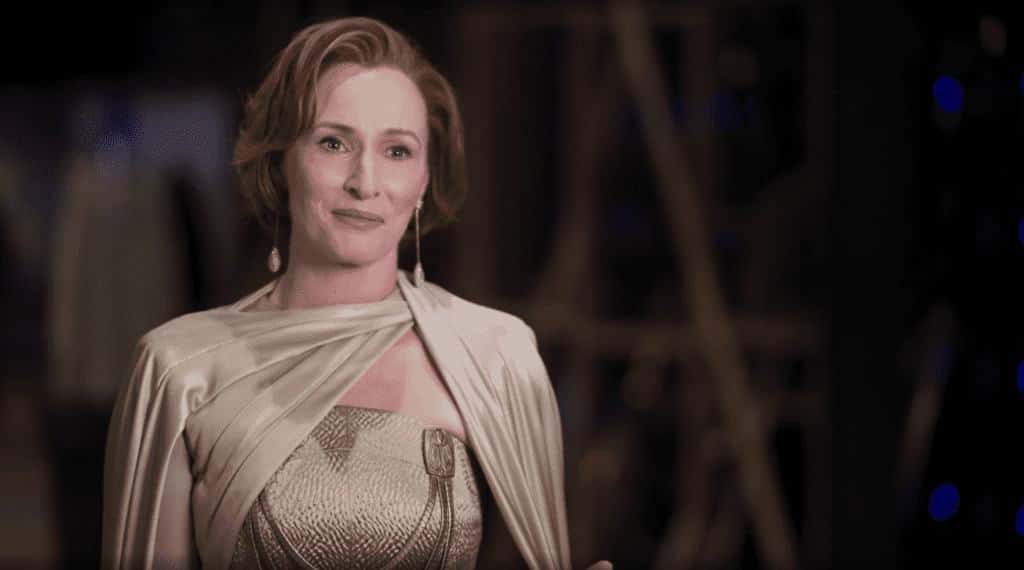
We’ve seen Diego Luna talk plenty about what it’s like returning to the Star Wars galaxy and what audiences can expect from his character, but now Genevieve O’Reilly has spoken at length about her return as Mon Mothma in Andor.
In an interview with Entertainment Weekly, O’Reilly revealed that she went back and watched Caroline Blakiston’s performance as Mothma after she landed the role in Revenge of the Sith. Whenever she returns to the role (she reprised the role in Rogue One and has also voiced the character in Star Wars Rebels), she studies Blakiston’s performance when she delivers the famous line about the Bothans….