Tag Archives: holocron

Colouring Clones

Welcome to a look inside The Holocron. A collection of articles from the archives of *starwars.com no longer directly available.

(*Archived here with Permission utilising The Internet Archive Wayback Machine)

Colouring Clones

Here’s a great PDF to print off and colour in. If the PDF doesn’t work, please click HERE to download it.

Click on the image to download.

This Article was Originally posted 2023-11-04 13:54:05.

Holiday Special: Lumpy Speaks

Welcome to a look inside The Holocron. A collection of articles from the archives of *starwars.com no longer directly available.

(*Archived here with Permission utilising The Internet Archive Wayback Machine)

Holiday Special: Lumpy Speaks

Patty Maloney, Lumpawarrump (“Lumpy”)

Patty Maloney is the only member of the Wookiee family still involved with acting [Peter Mayhew has since recounted his role as Chewbacca in Episode III after this interview was conducted]: Mickey Morton, who played Chewbacca’s wife Mallatobuck (a.k.a. Malla), passed away in early 1998. “He was the sweetest man,” remembers make-up effects artist Stan Winston. “He had a good sense of humor” [read more from Stan Winston below]. Paul Gale as Attichitcuk (“Itchy”), Lumpy’s

350-plus-year-old grandfather, has retired from acting. “He was just like being with family,” recalls Patty Maloney. “He was so much fun to work with. Paul had worked for Sid & Marty Kroft. That’s were I first met him. He played Hoo Doo on the road show that we did of Pufnstuf and was in Sigmund and the Sea Monsters.”

Maloney has been obsessed with acting since a very young age. “When I was about four years old my mother put me into dancing school and, the minute I walked out onto that floor and looked into the mirror, I went ‘(gasp!) This is it! This is what I want to do!’ I was really, really tiny and I even didn’t know that I was never going to grow any taller, so my dream was that I was going to be a chorus girl on Broadway. I studied dance from then on. That was my life. I would go right from school to dance classes. When the last class was over I went home and slept and got up the next day and did it all over again. I did this five days a week, and on Saturdays I was in dance class all day long. I loved it.”

She has had an extremely fruitful career, having worked on countless ’70s sitcoms and shows such as Charlie’s  Angels and the original Love Boat. “When I came to Cailfornia in 1972 with $500 in my pocket, I figured ‘When that’s gone, I’ll return home to Orlando, Florida. I never left because I never stopped working.” Maloney has played many costumed characters besides Lumpy, including McDonald’s Early Bird, Goofy Gopher, and Bonita Bizarre for a travelling Sid & Marty Krofft show, and Piglet on Disney’s Welcome to Pooh Corner. More recently [in 1998], Maloney was in an episode of Star Trek: Voyager. “I had a great time in that. It was an episode called ‘The Thaw’. There wasn’t a mask on my face. It was all done with make-up. We were aliens that invaded the crews’ minds.” When she reflects on her career, Maloney cannot single out a favorite project. “I can’t think of anything that I haven’t liked doing.”

FAX: Do you remember auditioning for the role of Lumpy?

MALONEY: Oh, I sure do. I probably auditioned with ten other people, I was the only female that I’m aware of that auditioned for the part. I was surprised, being a female, that I got it but I was thrilled with it. I just loved doing Lumpy.

FAX: What was it like working with the cast of Star Wars?

MALONEY: I thought it was great! It was like icing on a cake to be able to work with those people. Harrison Ford was just the most wonderful person to work with. He was so nice to me. While we were shooting the scene where Han and Chewie arrive at the Wookiee planet, he had a line were he had to say “My he’s grown, hasn’t he?” and he’dsay. “My she’s grown, hasn’t she?” (laughter) And they say, “Cut! Harrison, Lumpy’s a boy,” and he would say, “Oh yeah, that’s right. Let’s do that again.” And in the next take he said “My she’s grown, hasn’t she?” They would go “Cut! Harrison!” He would go “Oh, I know, but I can’t look at her when she doesn’t have this mask on, and think of her as a boy when she gets into this thing.” He was wonderful, and everyone else was great.

We had Ben Burtt, the man who does the sound effects for Star Wars. He came into the dressing room one day and he had me do a tape of my voice, and then he engineered it to all different sounds: high, low, fast, and slow. He sent me a tape that was incredible, just so that I could hear what you could do, engineering voices. He was so fascinated with my voice that he wanted it just for his own.

FAX: How would you describe Lumpy?

MALONEY: Lumpy was like an impish little boy that was rebellious. Very active and curious about everything. If his mother said “Take out the garbage” he would reply “I don’t want to do that now! I’m too busy doing something else.” He loved his grandfather and adored his father, which was obvious when Chewbacca came home. He was just an inquisitive, active, and happy Wookiee. He was not really afraid of the stormtroopers, but a little timid of them when they would get upset with him.

FAX: You obviously had to convey a lot of information with mime, since the first half-hour of the show involved the Wookiees who don’t speak English.

MALONEY: Exactly. Well they had a Wookiee language, and we even went to a class to listen to it on tapes to educate us on what their language was like, and if we heard a particular sound, we knew what it meant to us. But it was basically doing mime. The feelings had to come from the whole body in order to get across sorrow and happiness. It was just a wonderful experience.

A lot of the scenes — such as where I’m at the holographic chess table watching alien acrobats — were done where I couldn’t see any of it. It wasn’t there in front of me at all. The director would say, “They’re swinging up to your right,” and I would look up, or he would say, “They’re finished so you can applaud” and I would clap. It was all done by being spoken to, not by any visual references, which was really interesting to do because it’s hard to do that. When I saw it all put together I went “Whew! That’s amazing!”

FAX: Lumpy, Malla and Itchy’s faces were more expressive than Chewbacca’s. Also, Lumpy’s eyes conveyed a lot of expressions.

MALONEY: Yes. The only part of me that you saw were my eyes, and the area around them was painted black. So the expression that I had to give came out of my eyes. It was a new experience because they had just started doing electronic faces. Stan Winston had made the mask for me. I had wires that went down my arms with little rings on my fingers that I could pull and make the nose twitch, make the lips curl up and smile a little bit and open up the mouth alittle bit so the teeth would show. Chewbacca, on the other hand, was more solid. I don’t think he had that kind of movement in his face. It was really fascinating to do it. When they wanted to do a tight close-up. and I had to use my hands to pick up props or something, Stan Winston would sit behind me and work the strings for me.

There were so many things to be done simultaneously in the close-ups. In the long shots, I had to control the cables myself because he couldn’t follow me around.

FAX: It must have been difficult operating your facial expressions with your hands, and doing body gestures simultaneously.

MALONEY: Yes, but it was just a matter of coordination. I thought of it as a dance routine: you get a rhythm going and you almost count it. I almost felt the music without the music being there.

FAX: What were your favorite sets?

MALONEY: I particularly liked Lumpy’s bedroom, which was supposed to be upstairs. It was like going up into a tree. I loved all the toys that they put in there for Lumpy. The scene that I liked the most was when Lumpy went upstairs and found that the troopers had destroyed his toys and pulled the head off the Bantha and how sad it was that his favorite toy had been destroyed.

FAX: How long did the filming last?

MALONEY: I think it was about ten days. We worked very hard and we worked very long hours. Sometimes we would work until two or three in the morning but we just laughed and had fun. It was hot being in that costume but everybody was so wonderful to work with that I forgot about it. One of the most wonderful things was that when I finished the show they sent me a bonus, which you hardly ever get in this business. They also had a director’s chair delivered to my house with the name Lumpy on one side and my name on the other. Smith-Hemion, the producers, did the Emmy Awards for a long time and they’re a wonderful production company.

Read on for some comments by make-up effects artist Stan Winston…

Stan Winston, Wookiee Make-up

By Ross Plesset

One of the most impressive achievements in The “Star Wars Holiday Special” was the creature make-up. Stan Winston created Chewbacca’s family using leading-edge technology. (Winston was not involved in all of the special effects make-up for the show. According to Miki Herman, Don Post Chewbacca masks were used for the Wookiee crowd scene at the climax. For the recreation of the famous Star Wars cantina, Lucasfilm provided the original masks while Rick Baker and crew provided some new characters).

Several people had input into the Wookiee’s design. Many of their characteristics can be attributed to Ralph McQuarrie. “I drew an old Wookiee getting up out of his chair and several females and children,” he says. Stan Winston and his colleagues also contributed to the designs. Recalls Tom Burman: “I helped [Stan] with some ideas for the hair on the Wookiees’ bodies and my brother Ellis Burman worked with him on the mechanical faces.”

Winston describes his work on the show, which he considers a pivotal point in his career:

“It was quite an opportunity for me. I was able to use a Stuart Freeborn concept, which was very in inspirational to me and my whole career, as a spring board to advance the technology in the direction of where we are today. Stuart had developed the lip articulation for the apes in 2001 and then had created Chewbacca for Star Wars. For the “Holiday Special” they had to have this family of Wookiees and, to my good fortune, Stuart wasn’t available. I had done some lip articulation on The Wiz with the flying monkeys, and this was a chance to take it a step further. The production company sent me the original Chewbacca head so I was able to look at it and see how Stuart had originally done it. I used that as my inspiration to take it to another level, where I could put some expressions into the faces besides having the mouths open and pull back. It allowed me to move into the animatronic face phase of my career.”

This Article was Originally posted 2022-10-10 16:00:31.

Drawing a Tauntaun

Welcome to a look inside The Holocron. A collection of articles from the archives of *starwars.com no longer directly available.

(*Archived here with Permission utilising The Internet Archive Wayback Machine)

Drawing a Tauntaun

Ever wanted to draw Star Wars characters and vehicles just like the professional comic book artists? In this step-by-step series, Star Wars artists and illustrators show you how to draw some of the most beloved characters in the saga.

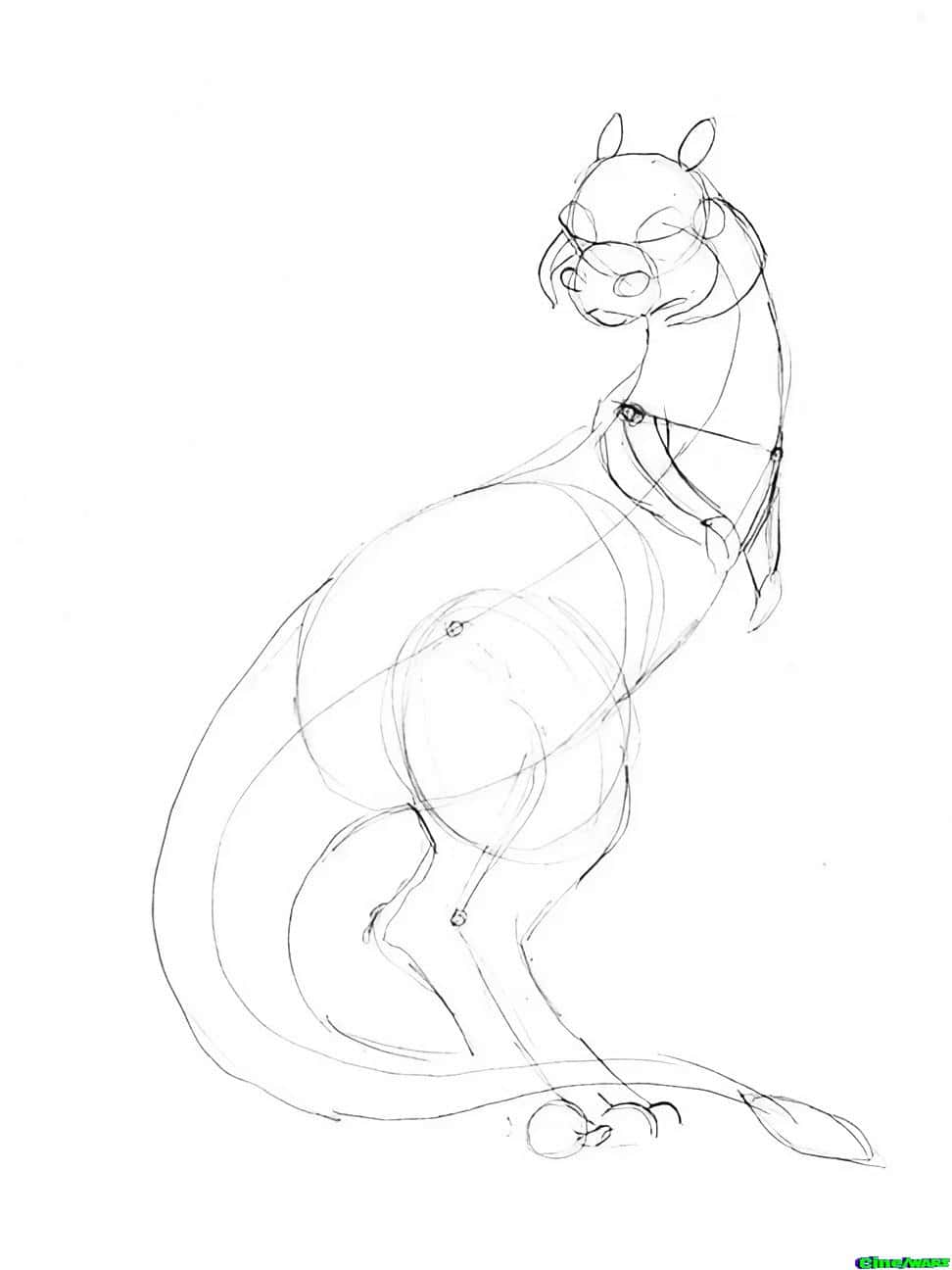
Creator of the comic Mouse Guard, artist David Petersen explains with these easy-to-follow steps how to draw a tauntaun.

For his drawing, David Petersen used:

  • a 0.5 mechanical pencil with HB lead
  • a variety of erasers (white, kneaded, and click)
  • a SAKURA Pigma Sensei ink pen
  • Strathmore Bristol

“However, as an artist, you should always find the materials you enjoy and feel most comfortable with,” Petersen says. “You can do just as nice of a drawing with a traditional wooden pencil or a ballpoint pen as you can with expensive art supplies.”

Steps 1-4 are drawn lightly with pencil. No pen, no dark lines. Finished lines and details will come at the end.

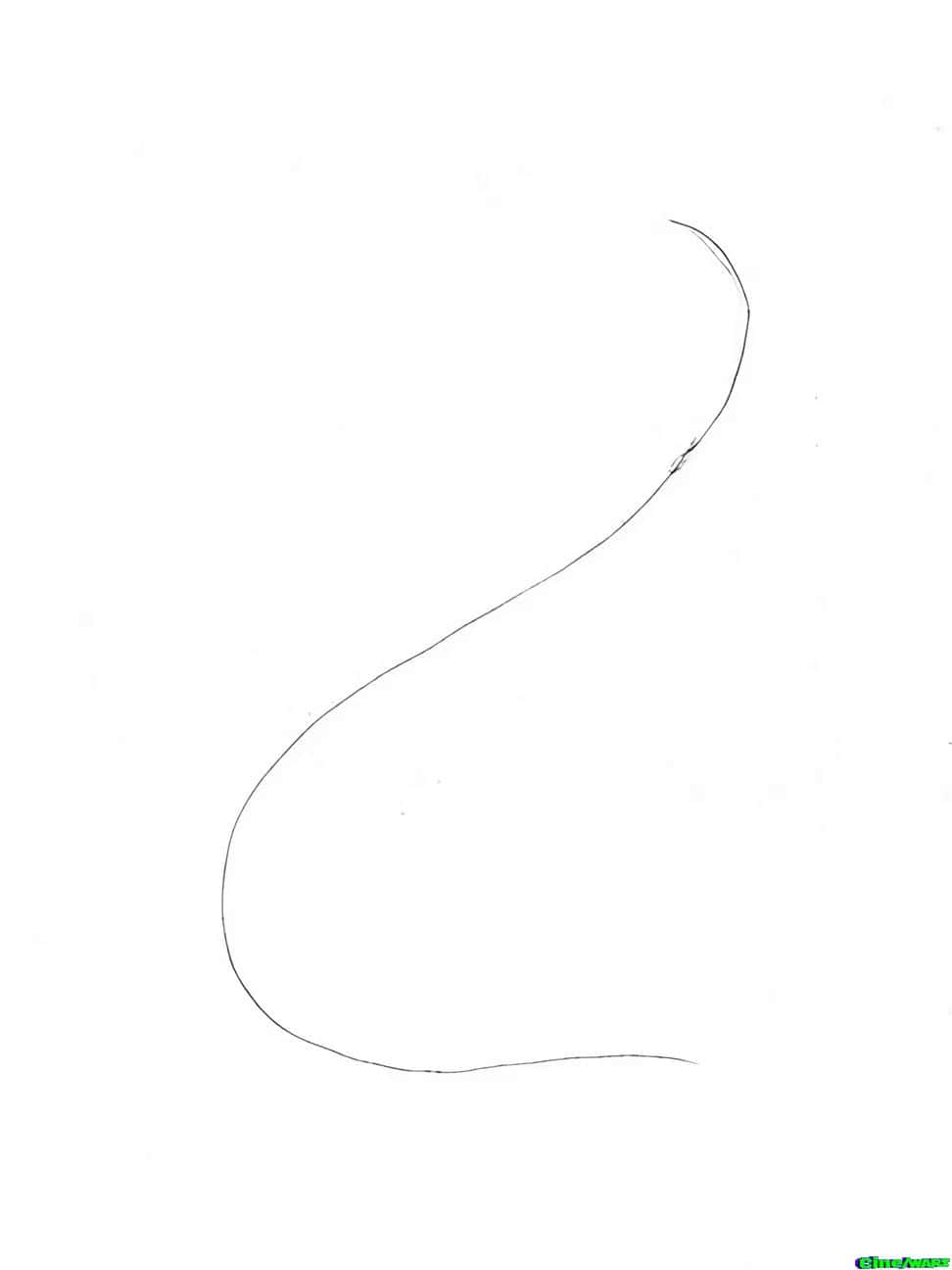
Step One:
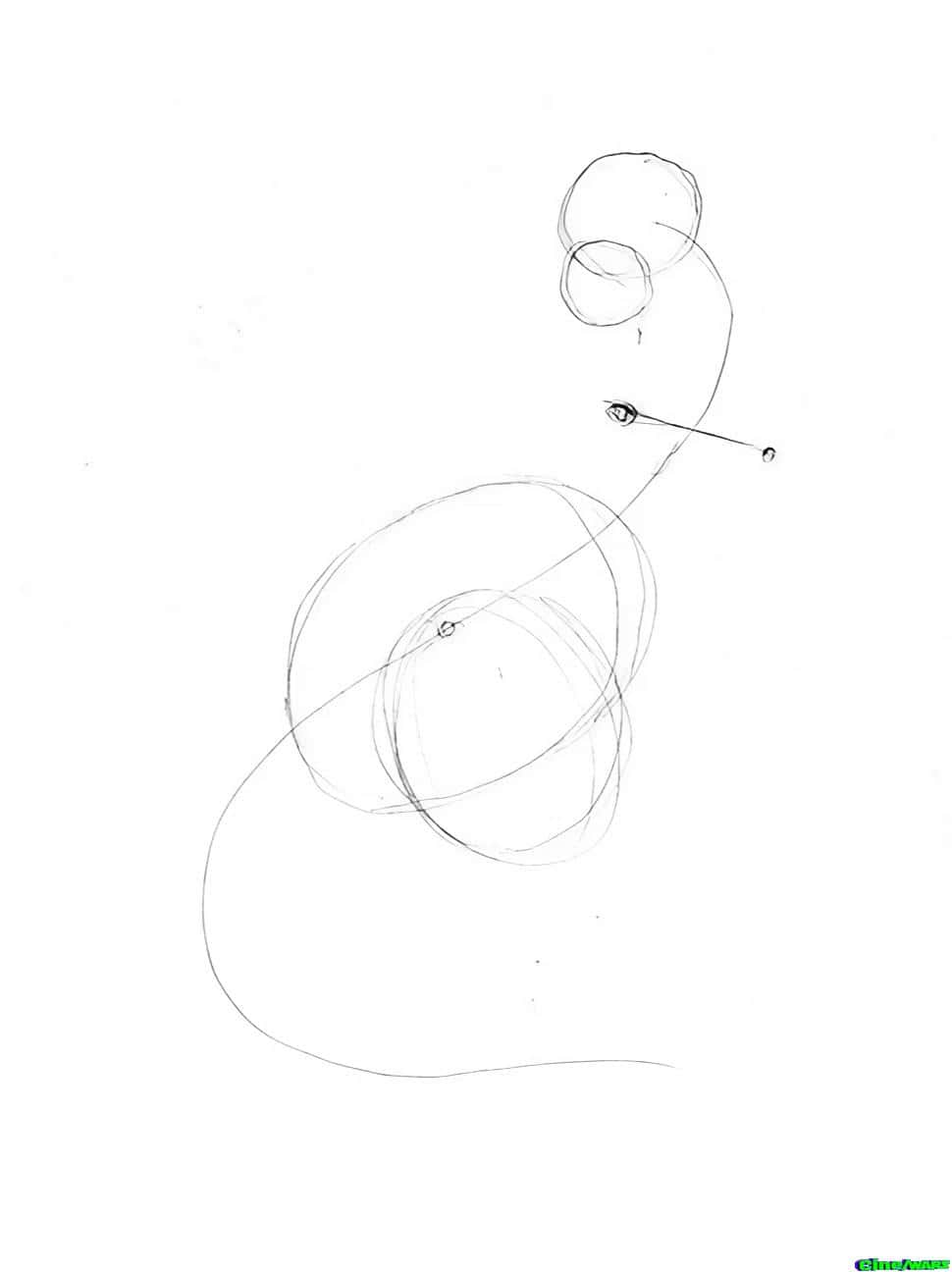
Start with the tauntaun’s spine line. I started with this rough “S” shape so that I know my drawing is going to fit on my paper.

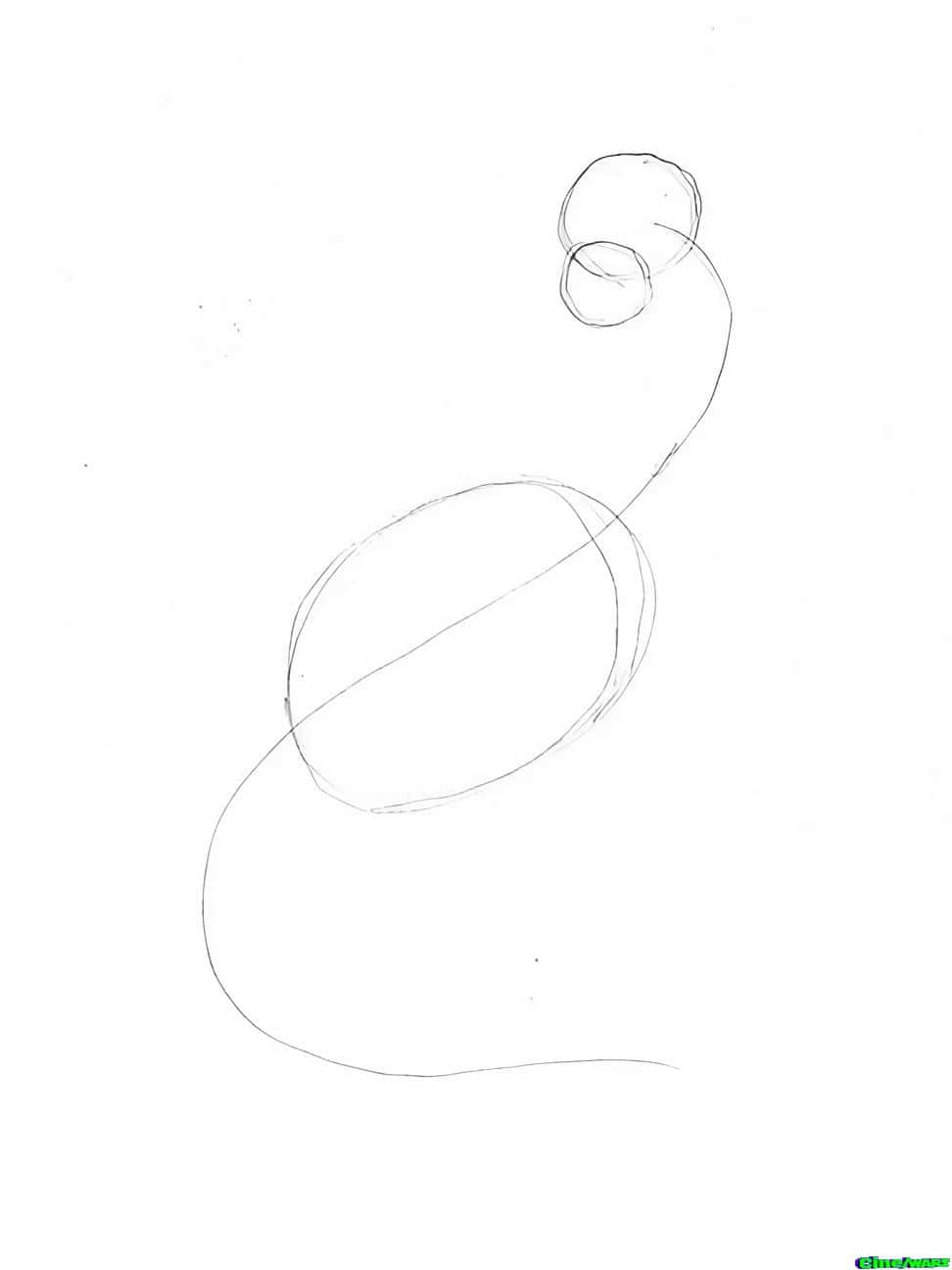
Step Two:
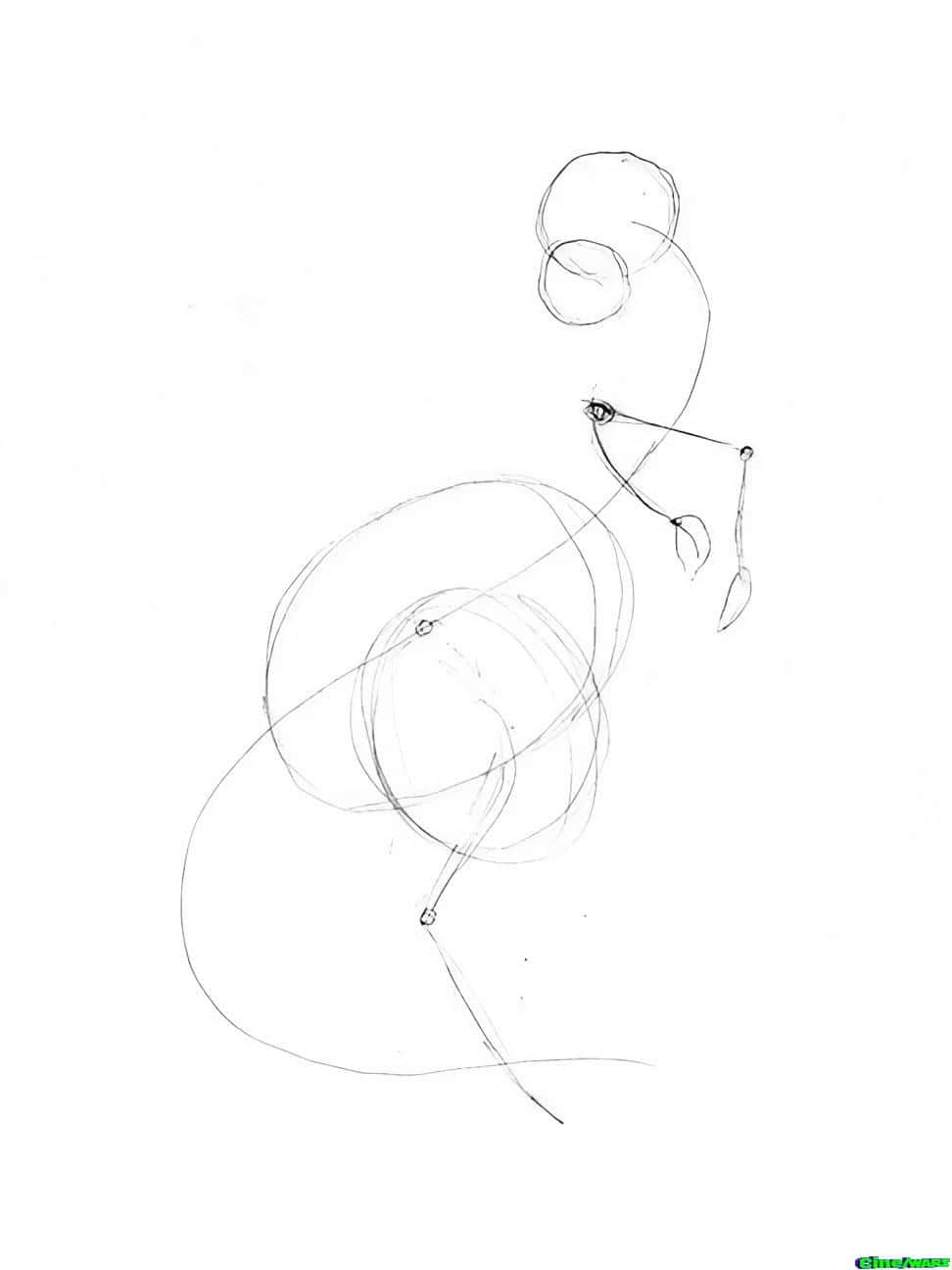
By using rough and simple shapes like these ovals and circles, I can start filling out the body, head and snout of the tauntaun.

Step Three:
Make a line across where the shoulders will be and add little circles for where the shoulder joint will go. Another oval shape gets added for the start tauntaun’s big leg.

Step Four:
Tauntauns have little T-Rex like arms, so starting at the shoulder joint, add lines to show where the arms and hands go. Add the bottom of the leg facing you. Don’t worry about the back leg yet, we will get to that later. Tauntaun legs have a knee joint that bends backward from what we humans have.

Step Five:
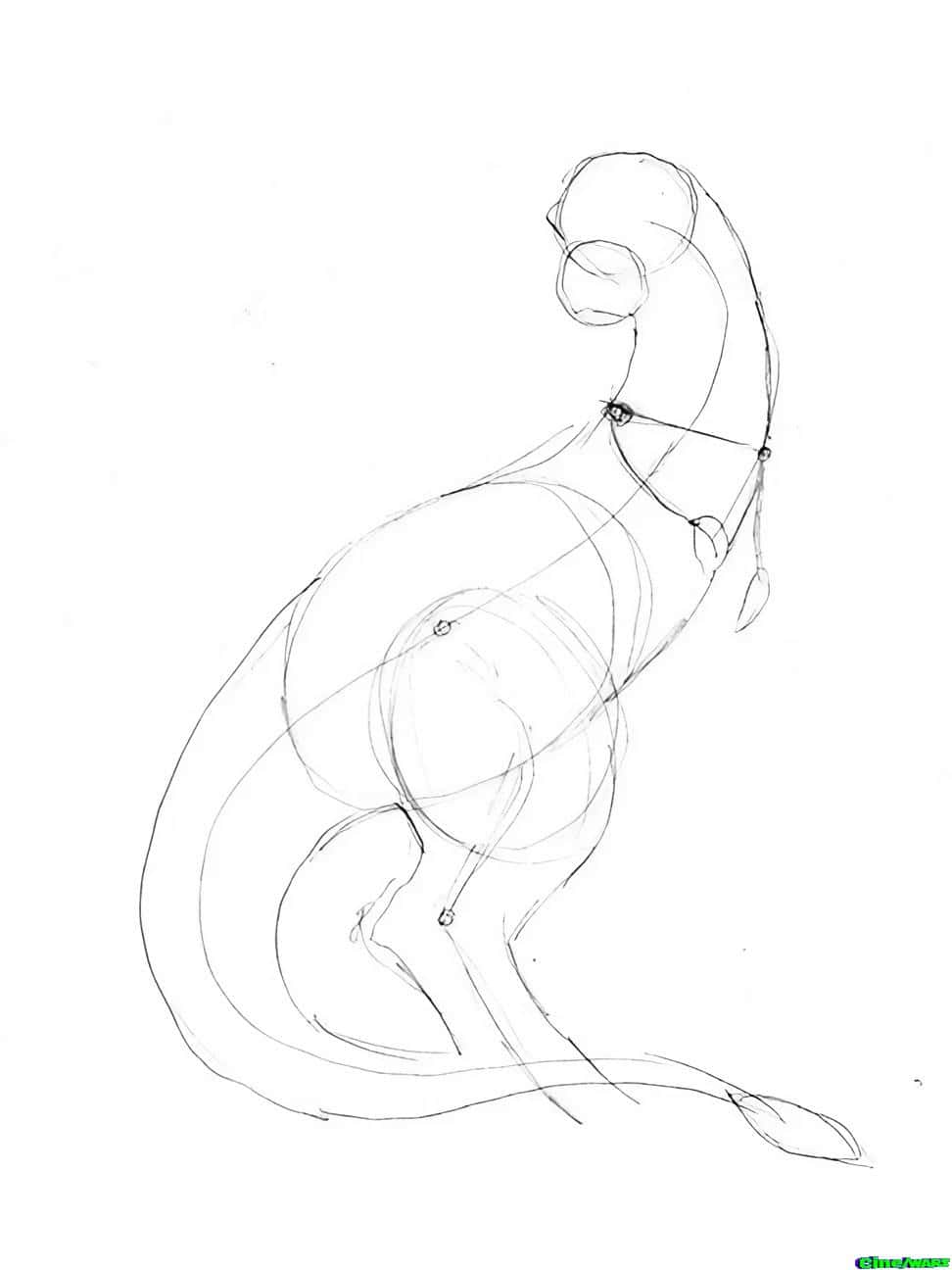
Now it’s time to start filling out the body shape. Add the lines for the tauntaun’s outer neck, belly, leg and tail. Don’t forget the little spade shape on the end of the tail.

Step Six:
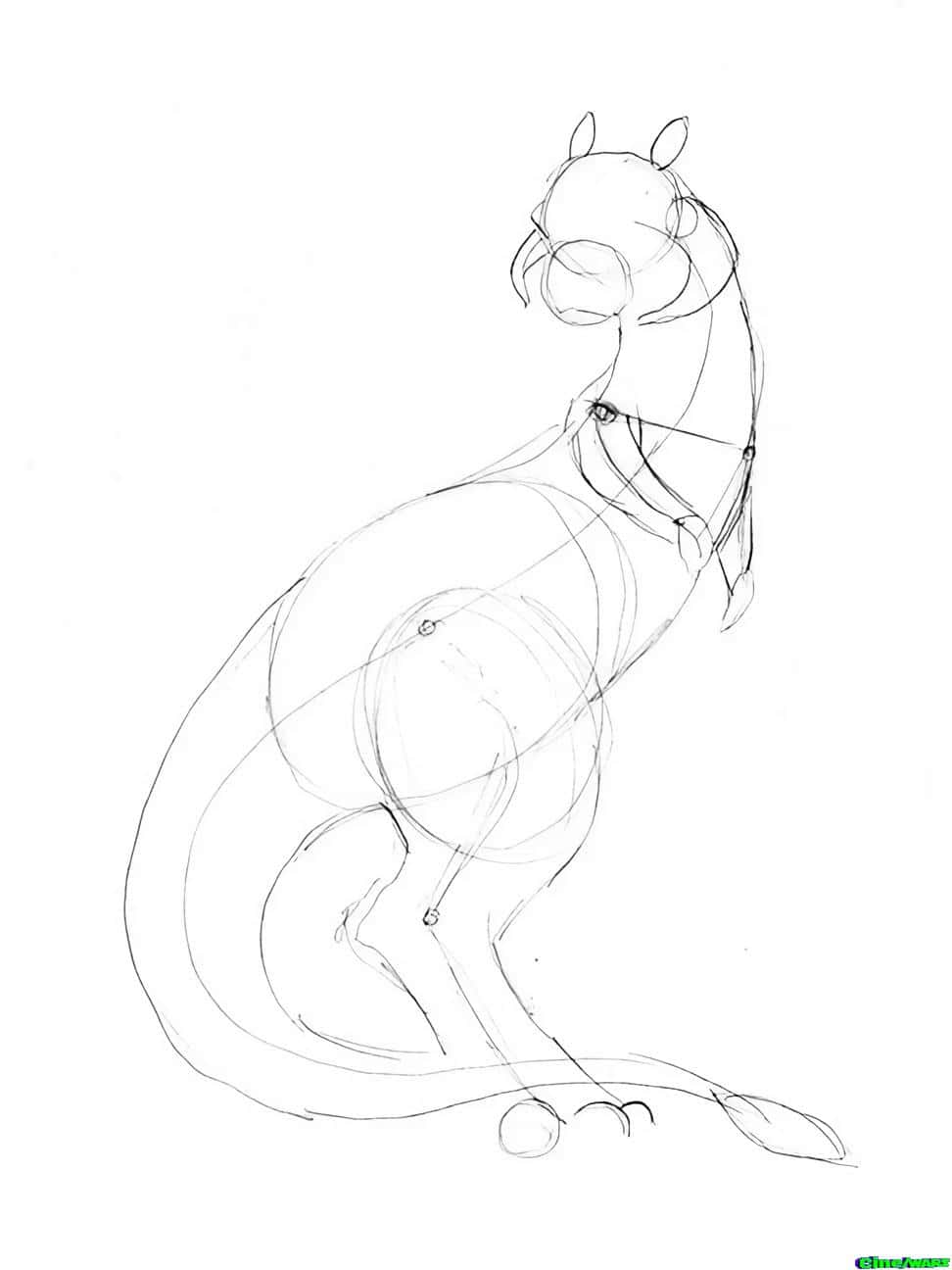
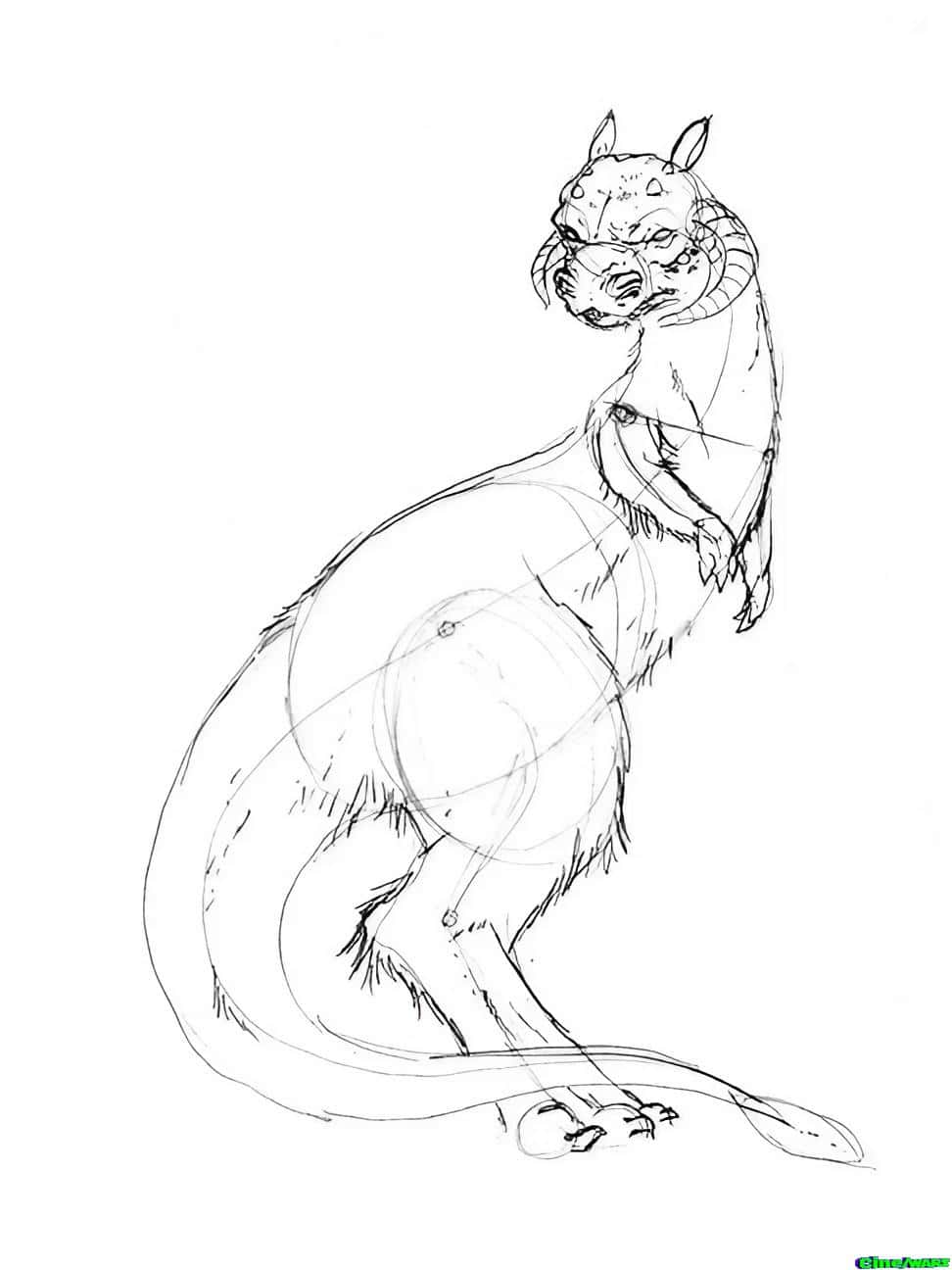
The same way we filled out the body in Step 5, we do the same for the arms in Step 6. Three little ball shapes at the bottom of the foot will form the toes. On the head, add two little ovals for the ears, draw in the line for the mouth, and add the horns. The horns are a little tricky, but they are basically shaped like a crescent moon that lost its tip.

Step Seven:
Using circle shapes, make guides for where the nostrils will go (tauntauns have two pair) and where the brow ridges are. There are a lot of steps here about placing where things go. If you jumped right in to drawing features, you might find that one eye is higher than the other is or they are spread too far apart. That is why these simple shapes help you see if the placement is right. If you don’t think you have it right, just give a quick rub of the eraser and try again!

Step Eight:
Add the first set of nostrils and make two almond-shaped circles where the eyes will go. Tauntauns have some little horn bumps that protrude from their skin. I added little nubby shapes where I want mine to go on the forehead and cheek.

Step Nine:
The second set of nostrils gets added under the first set. Start working on details like the ridges on the horns, the fold around the nose and cheeks and the mouth. Add furry lines on the body (something that I’ll do a lot more of when it’s time to ink the drawing.)

Step Ten:
This step is just more of going over the lines you like to bring out the forms of the nose, eyes, hands (three fingers each) and add fur.

Step Eleven:
This is the last pencil step. We finally get that back leg! Because we wouldn’t see much of it, I waited until I had the shape of the front leg all drawn. Work on the eyes by adding lids and pupils. The bottom of a tauntaun’s take is kind of scaly, like the belly of a dragon, and the spade shape at the end of the tail had some similar ridges on it.

Step Twelve:
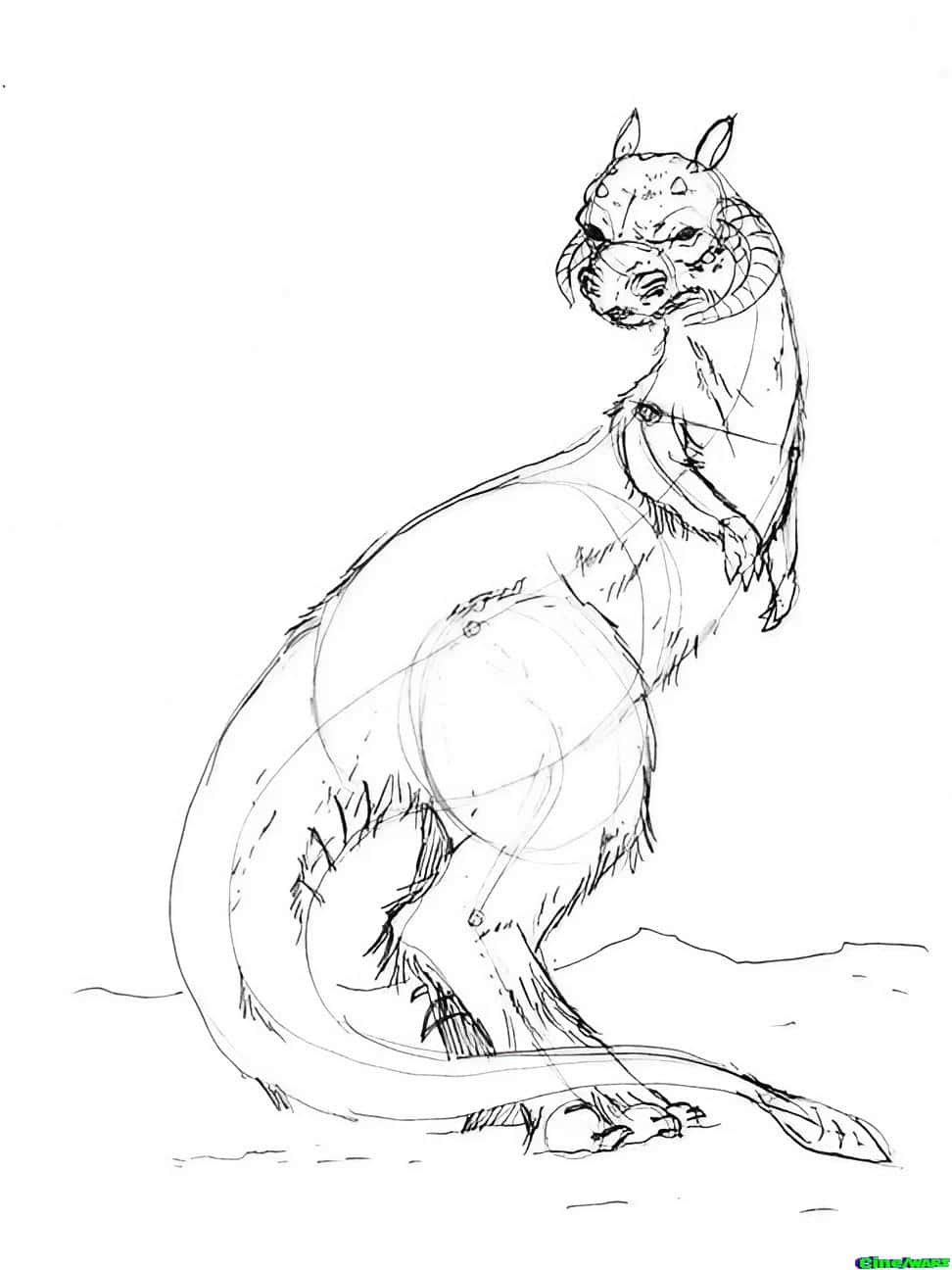
Using my ink pen, I go over the lines I like to finish the drawing. A lot of the details of my finished artwork is all done in the inking step. I focus on textures: lines that taper together or are all in the same direction for fur. Tauntauns are rather furry, they have to have it to live on ice cold Hoth!

Dots can be added to make snow textures on the ground. Smooth circles can look like falling snow. I find that when I ink it’s fun to make noises like the thing you are drawing. It helps get you to think more about what that think is like, how it moves or would feel like to touch, perhaps even how it would smell — bad on the outside, worse on the inside!

Step Thirteen:
Here is the final inked piece. Normally, I would erase the pencil lines using my softer kneaded eraser, but I left them in to show you that all those silly lines and shapes really went into making this final tauntaun drawing.

Step Fourteen:
You can take this farther and color the drawing with color pencils or markers or watercolors. If you are worried about messing up and ruining your drawing, it’s possible to photocopy the drawing and work on the copy.

Hope you enjoyed our trip to the Hoth zoo. Keep practicing drawing!

This Article was Originally posted 2023-12-08 15:30:42.

Drawing Boba Fett

Welcome to a look Inside The Holocron. A collection of articles from the archives of *starwars.com no longer directly available.

(*Archived here with Permission utilising The Internet Archive Wayback Machine)

Drawing Boba Fett

Ever wanted to draw Star Wars characters just like the professional comic book artists? In this step-by-step series, Star Wars artists and illustrators show you how to draw some of the most beloved and memorable characters in the saga. So get your pencils and paper ready!

To show you how to draw one of the galaxy’s most-feared bounty hunters — Boba Fett, Star Wars illustrator Joe Corroney explains his easy drawing steps with examples below.

Steps 1-7 are to be drawn lightly with a pencil. No pen, no dark lines. Finished lines and details will come at the end.

**Missing**
Step One:
Draw a simple circle with a vertical line down the center and another horizontal line just below the halfway point through the middle of the shape. Use the top or bottom of a small cup to draw your circle if you like since they can be tricky to draw freehand. Remember that these lines are just temporary so if you sketch them lightly they’ll be easy to erase later.
Step Two:
Draw four more connecting lines below the circle to represent the lower shape of Boba’s helmet. You’ll be using the upper half of the circle as part of your final shape.
Step Three:
Using the first two lines you drew as our guides, draw the T-shaped visor for the helmet.
Step Four:
Add these ellipses and curve lines below the visor on both sides to finish giving the helmet its shape. If you mess up it’s okay, just erase your sketch lines and try again!
Step Five:
Now you can draw the side panels and the antenna scope for his helmet at the sides of your circle. You’ll notice this is where our drawing of Boba Fett finally starts to come together.
Step Six:
Now you should start erasing your guide lines and doing some general clean-up on your line work. You can tighten up your drawing by making the lines you want to keep a little darker with your pencil. Begin shading in the visor and other parts of the helmet like the inside curves. This gives your drawing a sense of lighting and makes it feel three dimensional. To add some reflections inside the visor leave some white areas when you shade it or just use your eraser make them.
Step Seven:
Almost there… now we just need to start adding the necessary details to take your art to the next level. Add little arrows above the top-middle of the visor and a well placed dent (or two) in the helmet along with the rectangular markings on the right side. Add more shading and little cracks, scratches and scuffs in the helmet to make it feel used and weathered. This is my favorite part of drawing Boba Fett! Have fun drawing at this stage since it’s the all of the little details that set him apart from other bounty hunters and makes him look so cool to begin with.
Step Eight:
You just drew Boba Fett! Be sure to sign your name on your artwork, hang it on a carbonite block (or your refrigerator even) and proudly display it for your friends and family!
Step Nine:
Once you’ve got Boba down, try your hand at illustrating his bounty hunting dad, Jango Fett. To begin, simply follow Steps One through Six. Now add those same little arrow details along with thin pin stripes across the helmet just above the visor. Jango’s helmet is more polished since it’s not as beat up as Boba’s so instead of adding lots of dents and scratches experiment with different shading on the helmet and reflections in the visor. If you really want to impress your friends make up new markings and details on your helmet to create your own Mandalorian super-commando!

This Article was Originally posted 2022-10-21 15:51:53.

The Clone Wars Episode Guide: Bounty Hunters

Welcome to a look inside The Holocron. A collection of articles from the archives of *starwars.com no longer directly available.

(*Archived here with Permission utilising The Internet Archive Wayback Machine)

The Clone Wars Episode Guide: Bounty Hunters

Episode No.: 39 (Season 2, Episode 17)
Original Air Date: April 2nd, 2010
Production No.: 219 (Season 2, Episode 19)

Written by Carl Ellsworth
Supervising Writer: Drew Z. Greenberg
Directed by Steward Lee
In memory of Akira Kurosawa

Key Characters: Anakin Skywalker, Obi-Wan Kenobi, Ahsoka Tano, Sugi, Embo, Rumi Paramita, Seripas, Casiss, Dilanni, Hondo Ohnaka
Key Locales: Felucia

Cast:
James Arnold Taylor as Obi-Wan Kenobi and pirate trooper
Matt Lanter as Anakin Skywalker and Muk Muk monkey
Anna Graves as Sugi and Rumi
Ashley Eckstein as Ahsoka Tano and village child
Jim Cummings as Hondo Ohnaka
Greg Baldwin as Casiss, Seripas and Gwarm
Stephen Stanton as Dilanni and pirate scout
Dave Filoni as Embo
Tom Kane as narrator


Full Synopsis:
“Courage makes heroes, but trust builds friendship.”

Newsreel:
The death toll rises! As the battles intensify, and threaten a growing number of Republic worlds, planets are left to survive on their own. While the Jedi struggle to fight a war
on many fronts, a series of medical stations have been established as a lifeline for those in need, but the facilities are easy prey for Separatist attacks. After losing contact with
the medical station orbiting Felucia,
Obi-Wan Kenobi, Anakin Skywalker and Ahsoka Tano are sent to investigate….

ACT I

A Jedi shuttle pops out of hyperspace high above the florid world of Felucia, and immediately stumbles upon an automated vulture droid deployment station. The orbiting holder blossoms, revealing six vulture droids that immediately scramble and pursue the Jedi craft. Aboard, Anakin Skywalker jinks and jukes the vessel to avoid enemy fire, but a lucky blast cripples the shuttle. It plunges through the atmosphere, and its crew is forced to eject. Their spheroid survival capsules bounce through the Felucian wilderness, coming to rest in the thick of the alien jungle.

Avoiding a herd of jungle rancors, the three Jedi set aside their bickering and wander to a nearby spice farming village. It appears abandoned, until a closer look reveals that is valuable nysillin crop is ready to be harvested and all the supplies are still present. Anakin snoops in the barn, finding a rugged starship that seems out of place. Investigating one of the homes, Ahsoka and Anakin find Felucians cowering in the cellar. The Jedi are soon surrounded by heavily armed bounty hunters.

The hunters are lead by a lithe Zabrak female named Sugi, who orders the Jedi to drop their weapons. Accompanying her is the fearsome Embo, a Kyuzo with a heavy bowcaster, a rifle-toting female Frenk named Rumi Paramita, and a silent, armored hulk named Seripas. When Obi-Wan enters, blade extended, it turns into a more even standoff, which is interrupted by the pleas of Casiss, the Felucian village elder.

The Jedi discover that the Felucians have hired these bounty hunters as protection against pirates. The brigands routinely raid the village, demanding tribute. Defenseless, the Felucians have turned to mercenary protection. Cassis hopes with the Jedi bolstering their ranks, they can drive off the pirates for good.

Kenobi’s first priority is securing transport off Felucia and reporting to the Republic the status of the missing Felucian medical station. He fears if the Jedi linger here, they may draw the attention of the Separatists, bringing far more worse trouble down upon the heads of the farmers.

The pirates suddenly arrive and confront the villagers. Obi-Wan and Anakin are surprised to see a familiar face: these are the Weequay pirates they previously faced on Florrum, led by the oily Hondo Ohnaka.

ACT II

Hondo acts all chummy with the Jedi, but he’s here to collect the nysillin. He offers to buy off the bounty hunters if they step aside, but Sugi will not renege on her deal. Kenobi tries to buy transit off Felucia from Hondo, but the Weequay has no interest in Republic credits. He makes his demands clear, ordering Cassis to harvest the crop so he can collect it the next day. The Weequay pirates then leave the village.

Kenobi and the Jedi begin studying the tactical layout of the village, advising the Felucians and their bounty-hunter protectors. One particularly pessimistic farmer, Dilanni, frets that four hunters will not be enough. Anakin realizes the best option is to train the villagers to defend themselves.

The next morning, the Felucians harvest the nysillin and place the bushels in the barn, while Anakin instructs a group of villagers in the use of improvised pole-arms. Ahsoka helps others master the slingshot. It’s a long process — the villagers have much to learn. Meanwhile, Obi-Wan and Sugi discuss tactics, and the use of the barn as a fallback position.

The well-armored Serapis clears some vegetation, but is suddenly pinned by a falling tree. Ahsoka rushes to his aid to discover that Seripas in truth a tiny, frail alien piloting an armored suit.

ACT III

With practice, the villagers get better. A pirate scout spots this activity. Sugi sees the spy, and dispatches Embo. The hunter destroys the pirate’s speeder bike, avoids enemy fire, and kills the Weequay. Kenobi realizes that when the scout fails to report to Hondo, the pirates will return in force. The farmers get into position while the Jedi activate an energy fence around the village.

Hondo’s pirates show up riding speeder bikes, while Hondo himself is aboard an armored repulsortank. The battle erupts, first as the bikers strafe the village. Embo leaps atop one of the bikes, commandeering it. Felucians riding atop tee-muss beasts charge the bikers, knocking them off their mounts with their polearms. Felucians use their tractors to push over weakened trees atop other bikers.

Serapis’s armored suit is blasted by an incoming pirate, forcing the tiny alien to abandon it. Even still, Serapis leaps atop a speeding bike and batters a Weequay pirate, tripping the bike’s brakes and sending the pirate tumbling away.

From atop the bluff, Hondo opens fire with the repulsortank. The explosive blasts knocks out Embo, the hunters’ most formidable warrior. With heavy fire raining down on them, the Jedi, hunters and villagers retreat to the barn. Anakin Force-leaps atop the bluff and lands on the tank. Hondo holds him off with an electro-staff, while the pirate chief’s monkey lizard distracts the Jedi. Skywalker kicks Hondo off the cliff, but the tenacious Weequay clings to the ledge. The other pirates see their leader in trouble and retreat.

Hondo pleads for help. Anakin pulls Hondo up, but the treacherous Weequay shoves the Jedi into the path of the tank’s heavy cannon. Hondo’s loyal monkey lizard opens fire, forcing Anakin to leap to safety. This gives Hondo the time he needs to escape. His pirate forces pick him up aboard their retreating flying saucer.

With the pirates gone, Casiss thanks the Jedi for their efforts. Anakin deflects the praise, telling the Felucians that they have saved themselves. Sugi offers Kenobi and his companions a ride off Felucia.


Trivia & Details

  • In the script, some of Embo’s dialogue was presented as English. His first words to Anakin were “You’re outmanned, laserblade.” This prompts Anakin’s reply, “It’s not always about the numbers.”
  • The episode begins with an unusual title card, specifically mentioning Akira Kurosawa, an influential film director greatly admired by George Lucas. The original Star Wars was very much inspired by the works of Kurosawa, particularly the 1958 movie The Hidden Fortress . Another Clone Wars episode, “Lightsaber Lost,” is a nod to Kurosawa’s work — the 1949 film, Stray Dog. “Bounty Hunters” is the clearest tribute yet to Kurosawa, and his legendary movie The Seven Samurai. Its tale of a beleaguered village hiring mercenaries for protection against brigands has inspired a host of movies — most famously the American remake, The Magnificent Seven, as well as comedies like ¡Three Amigos! and A Bug’s Life. An early storyline in the Star Wars Marvel Comics series in 1978-1979 has a similar story, with Han Solo leading a group of hired guns to protect a village threatened by bandits.
  • The Aurebesh text on the escape capsule reads: “CAUTION – Explosive Extrusion”
  • If Sugi’s blaster pistol looks familiar, it’s no accident. It’s the same type of weapon brandished by Boba Fett in Star Wars: Episode VI Return of the Jedi.


Memorable Quotes

  • “Why do you even ask for my opinion? We never do things my way.”
  • “We crashed the ship your way.” — Anakin Skywalker and Obi-Wan Kenobi

“Well there’s one thing I learned where I grew up: if you want to know what a farmer’s up to, look in the barn.” — Anakin Skywalker

“Don’t look! I’m — I’m having a… a suit malfunction!” — Seripas

“You know what I always say… speak softly, and drive a big tank.” — Hondo Ohnaka

“This effort… is no longer… profitable!” — Hondo Ohnaka, retreating with dignity

This Article was Originally posted 2023-06-17 12:00:10.

The Clone Wars Episode Guide: Wookiee Hunt

Welcome to a look inside The Holocron. A collection of articles from the archives of *starwars.com no longer directly available.

(*Archived here with Permission utilising The Internet Archive Wayback Machine)

The Clone Wars Episode Guide: Wookiee Hunt

Episode No.: 66 (Season 3, Episode 22)
Production No.: 318 (Season 3, Episode 18)
Original Air Date: April 1, 2011

“A great student is what the teacher hopes to be.”

Written by Bonnie Mark
Directed by Dave Filoni

Cast:
Ashley Eckstein as Ahsoka Tano
Sunil Malhotra as Jinx
Matt Lanter as Anakin Skywalker | Clutch
Cam Clarke as O-Mer
Jeff Anderson as Smug
Zach Hanks as Garnac
Dee Bradley Baker as Sochek | Goron
James Arnold Taylor as Lagon | Plo Koon
Richard Green as Lo-Taren | Krix
Tom Kane as the narrator | Yoda
Anna Graves as Sugi
Chewbacca as Himself
Special thanks to Peter Mayhew for being the heart and soul of Chewbacca


Synopsis: As Ahsoka and her youngling allies struggle to evade the Trandoshan hunters, their efforts receive an unexpected boost when a new captive — Chewbacca the Wookiee — arrives. Chewie scrounges parts from a wrecked Trandoshan slave ship, assembling a communicator to send out a distress signal. Help arrives in the towering, shaggy form of Wookiee warriors led by General Tarfful. Freed from captivity, Ahsoka returns to the Jedi Temple and is reunited with Anakin Skywalker.

New Characters: Chewbacca, Tarfful

Returning Characters: Ahsoka Tano, Jinx, O-Mer, Garnac, Lo-Taren, Anakin Skywalker, Plo Koon, Sugi, Seripas, Yoda

Worlds Visited: Wasskah, Coruscant

Secrets Revealed

  • Rather than a beach, the original script described new prey being dropped off within a canyon.
  • The Trandoshan slave ship pilot carries a shotgun, a rare example of a projectile weapon in Star Wars seen in the Republic Commando video game.
  • When Chewbacca says his home world is very close, he’s not kidding. According to the Expanded Universe, Kashyyyk and Trandosha are in the same star system.
  • The critter that attempts to pounce on the birds (convorees) outside of the youngling camp is a momong, a Trandoshan monkey.
  • The side of the Halo has a painting of a rather demented looking Tooka doll holding a knife with aurebesh text that reads: “Nice Playing With Ya”
  • Many of the background Trandoshan characters have interesting sources for their (usually) unspoken names: Gilas is named after the Godzilla Monster, Angilas. Ratter is named after a rattlesnake. Some are named after famous fictional reptiles: Goron is named after the Gorn from Star Trek, Lagon after The Creature from the Black Lagoon and Smug after Smaug, the dragon from The Hobbit. Ramy is named after Mary Franklin, known to Star Wars fans as the editor of Bantha Tracks and a huge fan of Trandoshans.
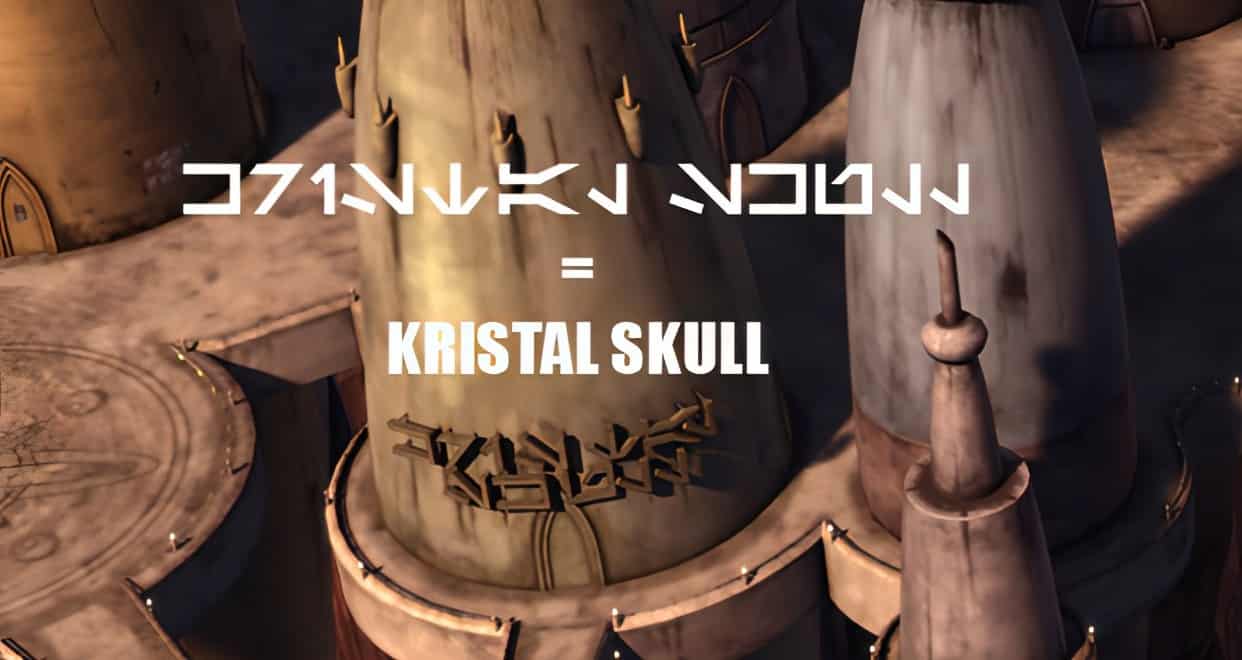
  • Among the trophies in the Trandoshan hunting lodge are wampa and Wookiee pelts; stuffed and mounted heads of an Ithorian, a Gungan, a Gran, a Skrilling, a reek, a rancor, a dragonsnake; an ancient Mandalorian Neo-Crusader helmet; teeth that may or may not belong to a Zillo beast, a fully mounted gundark and narglatch; and a suspiciously familiar-looking crystal skull.

And that’s all folks for this incarnation of The Clone Wars Episode Guides.  After this, the format changed.  I will be doing a couple of Video Galleries covering the Episode Guides up to and including the final season, so expect them very soon.

This Article was Originally posted 2023-07-18 12:00:47.

Mondo Star Wars Prints by Olly Moss

Welcome to a look inside The Holocron. A collection of articles from the archives of *starwars.com no longer directly available.

(*Archived here with Permission utilising The Internet Archive Wayback Machine)

Mondo Star Wars Prints by Olly Moss

“Return of the Jedi” print by Olly MossCollectors and fans who’d like to add something a little different to their Star Wars art collection should check out this new series of art prints from Mondo.

Mondo is the Alamo Drafthouse’s collectible art boutique, featuring designs from world famous artists based on licenses for popular TV and movie properties including Star WarsStar Trek and Universal Monsters.

These prints are VERY limited in run and are snatched up by collectors quickly, selling out in mere minutes. So if you want to know which prints are on sale and when, follow MondoNews on Twitter!

Here’s the most recent print Original Trilogy Prints by Olly Moss — 24″x36″ screen print. Hand numbered. Printed by D&L Screen Printing. Each has an edition of 400. These prints go on sale Monday, Dec. 20, 2010.

Olly Moss tells Wired:

“It was so intimidating! There is such a wealth of great Star Wars art out there already, from paid professionals and from enthusiastic fans. I suppose my main aim was to make a set of Star Wars posters that were a little different from what people are used to seeing from the franchise, but still retained that essential Star Wars feel. I started by re-watching the original movies with a sketchbook on my lap, and just sort of went from there.”

“Star Wars” print by Olly Moss

“The Empire Strikes Back” print by Olly MossMore Mondo Prints:

“Ten Banthas” by Jay Ryan.

“Sanctuary Moon” by Daniel Danger.

“Han Shot First” by Florian Bertmer.

“A Linch Pin Droid” by Kevin Tong

“A Wretched Hive” by Martin Ansin

“Attack Position” by Rich Kelly

“Luke’s Destiny” by Frank Stockton

“Palace” by Tom Whalen

“Salacious Crumb” by Rhys Cooper

“Bounty Hunters – Wave 1″ by Ken Taylor

“Bounty Hunters – Wave 2″ by Ken Taylor

“Dawn of Tatooine” by Shan Jiang

“Great Warrior” by artist Todd Slater

“Father: Encounter on Dagobah” by artist Tomer Hanuka

This Article was Originally posted 2022-09-19 18:33:22.

The Clone Wars Episode Guide: Season Five – Part 4

Welcome to a look inside The Holocron. A collection of articles from the archives of *starwars.com no longer directly available.

(*Archived here with Permission utilising The Internet Archive Wayback Machine)

The Clone Wars Episode Guide: Season Five – Part 4

As I said in the previous post, the format changed for the Episode Guides, so I have created two Featurettes covering clips and interviews from The Clone Wars – Season 5 so I hope you enjoy them.

Expect the same for the rest of the Seasons and expect Season 6 soon.


The Clone Wars Episode Guide: Season Five – Part 4

This Article was Originally posted 2023-08-03 13:45:17.

Drawing a Holiday Wampa

Welcome to a look inside The Holocron. A collection of articles from the archives of *starwars.com no longer directly available.

(*Archived here with Permission utilising The Internet Archive Wayback Machine)

Drawing a Holiday Wampa

Ever wanted to draw Star Wars characters and vehicles just like the professional comic book artists? In this step-by-step series, Star Wars artists and illustrators show you how to draw some of the most beloved characters in the saga.

Star Wars illustrator Nicole Falk explains with these easy-to-follow steps on how to draw a wampa family trimming the tree during the holiday season.

Step One:
Draw lightly with pencil all the basic shapes that make up an adult wampa, a Christmas tree, a little wampa and a misfit C-3PO in the box. Draw ovals, circles, rectangles, and connecting lines. This will help place where the body, arms, head and everything else will go. This is also where you decide the outline for your pose.

Step Two:
Next sketch in the shapes of the wampa, and everyone else on top of your original outline. Draw a rounder, teddy bear-like shape for the wampa. Add in his tusks, same with the little wampa. Make a shapelier Christmas tree. Start to draw in a body shape for the C-3PO in the box, give him a Santa hat and an elf collar! For his arms, since he is a droid, there are some nice easy lines to follow like more straight lines and rectangles.

Step Three:
Here you can start adding in the lines that create a more detailed and 3-D look. For starters, draw in a slightly curved line behind the entire drawing, about 2/3 down on the page. This is to separate your wall from your ground. Now your characters look like they are in an environment, and not just floating in space. For the big wampa, add in his little hair on top and make his tusks bumpier on the edges. Later when we add lines through them it will make sort of a ring pattern on each tusk. Make his body softer by rounding those lines and shaping a body form, add in his chubby fingers. Do these steps to the little wampa as well. The C-3PO in the box will need his face drawn out. Follow the lines to create his eyes, nose and mouth, the extra lines on the side of his head and under his chin to create depth. Make his arms appear more droid like and less human by sectioning them at different points. The body is the shape of a bouncy coil, so just zigzag some lines over the curved lines you had before. The Christmas tree could use some more form to it! Try giving it some more detail on the edges, you can design your tree however you like! Add some presents underneath as well, some in front and some in back.

Step Four:
Here is where you can add in a lot of the detail. On the wampas, add in some hair lines to give them a fuzzier and furrier hairdo and draw in their faces with eyes, eyebrows, nose and mouths. Give them whatever expression you want, the example here shows the big wampa being surprised by how lovely the star he just put on top of the tree looks in all its shining glory! Add in those tusk lines, and make the fingers and toes more detailed. C-3PO needs some eyes and add in some lines to that zigzag body too. This will make C-3PO look like he just popped out of the box. Turn the box into an R2-D2 by adding in some of his details, this is done with just some more rectangles and circles. The Christmas tree can be trimmed now, add in some lights and fun ornaments. Also to make the presents look wrapped draw some ribbon around them going horizontal and vertical on each package and shape. Next draw a wallpaper design. I did a striped background for this piece. And lastly, some shading will help put those characters on the floor better. Since the adult wampa is reaching, one foot is lifted, so the shading shouldn’t touch that raised foot. Same thing for the C-3PO in a box, he just sprung out so he is high in the air so place the shading further away from him. Anything else that is directly on the floor can have shading placed right underneath them, like the presents and the little wampa. Also have him playing with some cool action figures!

**Missing**

Step Five:
Next go over the pencil with some dark pencil or ink. Use a pen, a dark-colored pencil or a fine tip marker. Be careful, stay on those lines, after all your hard work, keep this part clean!

Step Six:
Now you can color your wampa Christmas anyway you want. Use colored pencils, crayons, watercolors or markers. You can even color it on the computer. It’s completely up to you. Don’t forget things that are shaded should always be a little darker, like under the tree and under the presents and wampas. This step I did all the base colors and will add highlights (and fur) in the next step.

Step Seven:
Here I used white pen to make all the wampa fur and add some highlights. I hope you enjoyed my wampa Christmas drawing, have a happy holiday!

This Article was Originally posted 2022-11-02 15:45:58.

Caught on the Cam: Justin Dix

Welcome to a look inside The Holocron. A collection of articles from the archives of *starwars.com no longer directly available.

(*Archived here with Permission utilising The Internet Archive Wayback Machine)

Caught on the Cam: Justin Dix

If polishing C-3PO’s golden suit sounds like your idea of a dream job, then you have plenty in common with Droid Technician Justin Dix. Fans watching the webcam closely during the filming of Episode III in Sydney, Australia, may have found themselves staring at him as he tirelessly worked on C-3PO’s suit and helped actor Anthony Daniels get into the complicated costume on the set.

“My job on Revenge of the Sith as the Droid Technician was to oversee the aesthetic look of the droids, basically making up new action figures, also looking after the needs of Anthony Daniels on and off screen, which keeps the whole droid crew busy,” Dix explains with a smile.

Growing up in Melbourne, Australia, Dix was a Star Wars fan as a child. “I have always been a fan for as long as I can remember,” Dix says. “Though I never in my wildest imagination thought I would ever work on one of the film. Like all kids, when I first saw Star Wars, I believed this space adventure was real with all the creatures that populated the strange worlds in which these films allowed us to visit.”

Before his work on Revenge of the Sith, he also was part of the crew for Attack of the Clones.

“Actually Episode II was my first feature film I worked on,” Dix admits. “I was offered a job on Lord of the Rings at the same time, but come on, this is Star Wars! Before that I was making independent films for about 10 years.”

In a typical day, fans watching Dix on the webcam could see him polishing or fixing C-3PO’s metal costume, helping Anthony Daniels put on and take off the costume during production and assist Industrial Light & Magic modelmaker Don Bies with the other droids.

As Dix worked on the droids with Bies, Dix also came up with the idea of approaching Lynne Hale (Lucasfilm Director of Publicity) if they could create a contest to let the fans pick a droid design to be featured in Episode III. The Droid Department created a variety of designs. Bies and Dix presented George Lucas with the options, which resulted in four final choices that were put before members of Hyperspace, who chose #4 — the bronze and copper droid that would become Obi-Wan Kenobi’s droid R4-G9.

Speaking of Obi-Wan Kenobi, actor Ewan McGregor was a frequent visitor to the Droid Shop. In fact, webcam fans caught McGregor acting rather mischievous one day in the shop.

“Ewan would often come in and visit the Artoo unit, sometimes by himself and sometimes bringing friends or family,” Dix says. “I think he has a soft spot for the little guy. The day he was captured on the webcam at my desk, we were talking about something, probably the Threepio suit now being gold. I mentioned to him that the webcam was there so he started hamming it up, putting on the Threepio head, making gestures. The scary thing was a few minutes later a picture message came through on my phone. A friend of mine looking at webcam footage in Queensland, grabbed a shot of Ewan and me and sent it straight to my phone. I showed it to Ewan, we all looked at the webcam in shock. Big Brother is watching!”

While Dix was on the Revenge of the Sith set, he became part of history and none other than famed photographer Annie Leibovitz was there to capture the moment.

“I couldn’t believe it when Annie Leibovitz showed up to photograph the entire cast with the new and classic characters together for Vanity Fair,” Dix remembers. “It was so cool to have Annie suggest that the Droid Department jump in for a shot for the article too.”

But not all of Dix’s most memorable moments were related to Revenge of the Sith. In fact, probably the most important event that happened on set for Dix had something to so with the always helpful duo of R2-D2 and C-3PO and a special ring.

“While my girlfriend was visiting me as we were working on the Jedi Temple set, I had Artoo deliver her an engagement ring,” Dix says. “I wrote a little script for Threepio for him to say, ‘Master Justin, Miss Kimberly so good to see you fully functional, Artoo has a gift for you. A gift , what gift?’ The whole thing was filmed by the documentary team, so you never know — it could end up being a webdoc!”

If fans watched the webcam long enough, they may have spotted Dix looking up at the webcam and waving to fans watching across the globe.

“It was really fun having the webcam there,” Dix recalls. “I used to be one of those fans, still am. I know that some fans would watch every little thing just for a clue, out of focus or not, as to what is in store. It was also a great feeling to get to be the one showing the world that C-3PO is going to be gold by pulling the metal out of a case and working on it.”

This Article was Originally posted 2022-09-27 16:35:57.

Designs of Ep II: Supreme Office Space

Welcome to a look inside The Holocron. A collection of articles from the archives of *starwars.com no longer directly available.

(*Archived here with Permission utilising The Internet Archive Wayback Machine)

Designs of Ep II: Supreme Office Space

October 01, 2001 – Ruling the galaxy requires elbowroom, a neatly organized work environment, and a heck of a view. Audiences got a glimpse of Senator Palpatine’s decorative tastes in his crimson-hued apartment in The Phantom Menace. In Attack of the Clones, Palpatine returns ten years later, as Supreme Chancellor, with surroundings that match his elevated political position.

“Doug Chiang asked me to give Palpatine’s headquarters an all-seeing view onto Coruscant,” recalls Concept Artist Jay Shuster, “It was an ideal theme in that it embodied who and what this man is all about.”

“People’s first impressions of the space may range from ‘Hey, this guy’s loaded,’ to ‘Nice view… that view could be corrupting,'” says Shuster. “Both reactions are valid: the design of Palpatine’s headquarters lends him an air of ‘Big Brother- hood’…as in Orwell’s 1984. Where does an ego like Palpatine’s go after he has an office space like this?”

Construction

Upon receiving Shuster’s illustrations, Production Designer Gavin Bocquet and his crew began examining the set in three-dimensions through detailed foam-core and whiteboard models.

“There’s a lot of stuff that goes on in there,” says Bocquet. This set was almost entirely built, as opposed to some of the other environments that consisted largely of bluescreen. “We basically worked almost 360-degrees. George [Lucas] wanted us to leave maybe 10 percent of the wall out on the right as you come in. That did give us an opportunity to move the camera crane in and out through the gap.”

The set, built in Fox Studios Australia, was finished in about seven weeks. “There were a lot of finishes to be done,” explains Bocquet.

The finished textures and details required even more effort than usual thanks to the incredible resolution of the new digital cameras. “It really does pick up a lot of your middle and background detail. It’s much more unforgiving in certain instances than celluloid is. In the film world, we’re always doing things theatrically, in a way that works for the cameras. But if you’re standing there, it might not look right. With the digital camera, we had to be a more careful since things that were in the middle distance were actually showing up more as scenic work than actual finishes. We had to take our finishes a bit further than we did before.”

Several stylized statues stand as sentinels in Palpatine’s quarters. What started off as tiny elements in Jay Shuster’s drawings were transformed into full pieces by Bocquet’s crew.

“We produced about five or six little maquettes of military figures, inspired by medieval Japanese or Chinese ones in that stately position,” says Bocquet. The assortment of six and 12-inch tall maquettes were brought to George Lucas, who selected two of them.

The finished statues were carved out of polystyrene with plastic coverings, topped with a bronzen paint finish.

There are numerous visual cues in the office revealing the evolution of the galaxy and its politics. During tense meetings of enormous importance, Palpatine sits in a very distinctive looking chair. “If anybody’s got any sort of Star Wars history in their head, they’ll notice that there’s something pretty familiar about it,” says Bocquet.
“I honestly couldn’t say whose suggestion that was,” says Bocquet. “We didn’t have the original chair. We had the drawings from Return of the Jedi, so we had to sculpt and model from that. It was quite difficult, because it was quite a sculpted, funny shape.”

The colors of Palpatine’s quarters are also an evolutionary element. It was Bocquet’s crew that came up with the red colors of Palpatine’s apartment in Episode I; they were originally going to be pastel-hued, much like Bespin’s Cloud City. “Yes, we were quite bullish in Phantom Menace to suggest to George that the room should be that crimson, blood-red color,” says Bocquet. “It was almost meant to be sort of a cocoon womb-like environment for Palpatine in there.”

The colors of Attack of the Clones visually bridges the prequel and original trilogies. “The color scheme in Empire and Jedi were very much in the monotone grays, graphites and blacks. We suggested to George that we should introduce part of that color scheme to this predominantly red environment. If you look at it, you’ll see that it’s sixty percent in the red range, and forty percent in the graphites and silvers. If this set’s required for Episode III, then probably by that time, Palpatine’s environment will move predominatly to the graphites and grays.”

This Article was Originally posted 2022-08-26 13:36:22.

The Clone Wars Episode Guide: Overlords

Welcome to a look inside The Holocron. A collection of articles from the archives of *starwars.com no longer directly available.

(*Archived here with Permission utilising The Internet Archive Wayback Machine)

The Clone Wars Episode Guide: Overlords

Episode No.: 59 (Season 3, Episode 15)
Production No.: 309 (Season 3, Episode 9)
Original Air Date: January 28, 2011

“Balance is found in the one who faces his guilt.”

Written by Christian Taylor
Directed by Steward Lee

Cast:
Matt Lanter as Anakin Skywalker
James Arnold Taylor as Obi-Wan Kenobi
Ashley Eckstein as Ahsoka Tano
Lloyd Sherr as Father
Adrienne Wilkinson as Daughter
Sam Witwer as Son
Liam Neeson as Qui-Gon Jinn
Pernilla August as Shmi
Dee Bradley Baker as Rex
Tom Kane as the narrator


Synopsis: A mysterious force draws Anakin, Obi-Wan and Ahsoka to a distant planet, and its inhabitants — a family of exceptionally powerful Force-wielders — in an attempt to determine whether Anakin is truly the Chosen One. The patriarch of this family, known only as the Father, has spent ages maintaining the balance between his Daughter, who is strong with the light side of the Force, and his Son, who aligns with the dark. The Father reveals his days are numbered, and he seeks Anakin to take his place as the fulcrum of this balance. A series of tests proves that Anakin is capable of controlling both offspring, as the Father does, but Skywalker refuses to take the Father’s place.

Returning Characters: Anakin Skywalker; Obi-Wan Kenobi; Ahsoka Tano; Clone Captain Rex

New Characters: Father; Son; Daughter; Shmi Skywalker; Qui-Gon Jinn; Admiral Tenant

Worlds Visited: Mortis


Secrets Revealed

  • This trilogy of episodes dives into concepts of the Force and ancient Jedi prophecy like never before, and represent an unusually deep exploration direct from George Lucas of some of the saga’s biggest concepts. While there will undoubtedly be questions about how much that is experienced in the Mortis realm can be defined as “real,” the answers will surely depend on your own point of view.
  • The Mortis monolith seen at the start of the episode is over five kilometers tall, wide and deep.
  • As the keeper of the balance, the Father quite literally sits at the center of a scale-like statue, with gong-like discs emblazoned with icons representing the daughter (to his right) and the son (to his left). Flanking this are statues of their beast forms: the griffin and the gargoyle.
  • In addition to notable guest appearances by Liam Neeson and Pernilla August, this episode also stars veterans of Star Wars: The Force Unleashed in key roles. Sam Witwer, who played Starkiller, plays the Son, while Adrienne Wilkinson, who played Maris Brood, plays the Daughter.
  • The Father describes his family as anchorites. Lest anyone think this is a proper term for a species or culture, it isn’t. This uncommon word, never before spoken in Star Wars, an anchorite is someone who has withdrawn from society to become somewhat of a religious hermit. The only term that so far describes the Mortis beings are “Force-wielders”.
  • Although the Force-wielders are intentionally depicted as vague and mysterious, their animation models nonetheless have the following definitions: The Father is 2.48 meters tall, the Daughter is 2.13 meters tall, and the Son is 2.2 meters. The Daughter’s griffin form stands 2.58 meters tall, while the Son’s gargoyle form is 4.79 meters tall. They both have wingspans over 11 meters.
  • Slight refrains of John Williams’ Episode I score can be heard during Qui-Gon’s appearance, as well as the Force theme when Obi-Wan speaks of Anakin
  • The Republic fleet officer seen during the newsreel is not named in the episode. He is Admiral Tenant.


This Article was Originally posted 2023-07-11 12:00:31.

Snagging a Piece of Special Effects History

Welcome to a look inside The Holocron. A collection of articles from the archives of *starwars.com no longer directly available.

(*Archived here with Permission utilising The Internet Archive Wayback Machine)

Snagging a Piece of Special Effects History

By Pete Vilmur

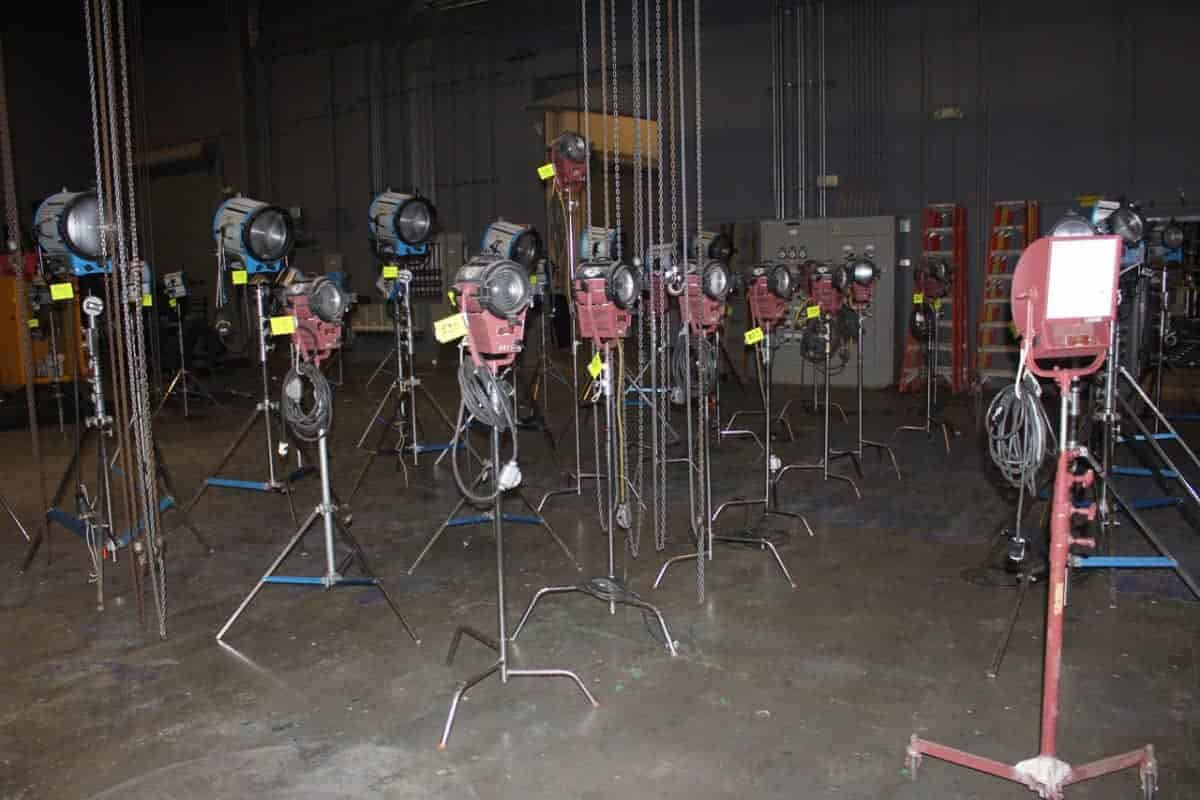
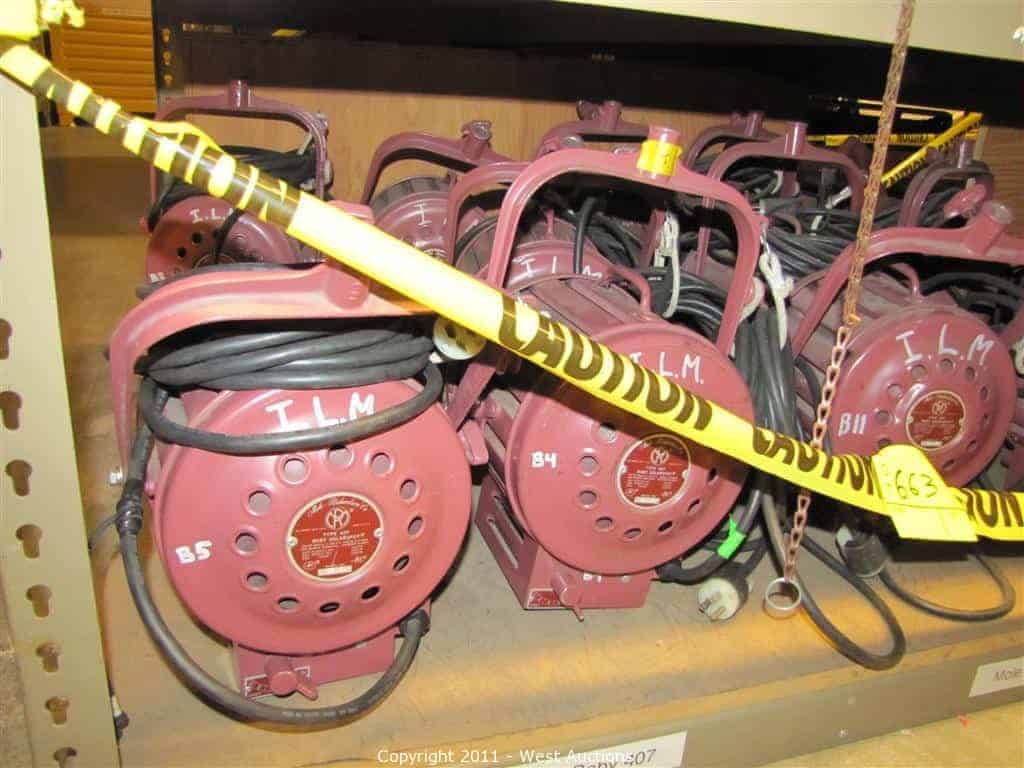
Ever since 1980, when the second issue of an industry magazine called Cinefex gave extensive coverage to the making of The Empire Strikes Back’s special effects, I’ve pretty much been an fx geek. Setting up models against a blue screen — state of the art for the special effects industry in the ’70s and ’80s — the artists at Industrial Light & Magic would create the X-wing run down the Death Star trench, the snowspeeder attack against the AT-ATs, and the speederbike chase through the Endor forest, to name a few. These set-ups would include the models, the pylons propping them up, stage lights, the blue screen, and of course the camera — items that recently became available in an auction staged out of the old ILM facility in San Rafael, California.

Naturally, as an effects junkie and a resident of the Bay Area, this was destined to be a red-letter day.

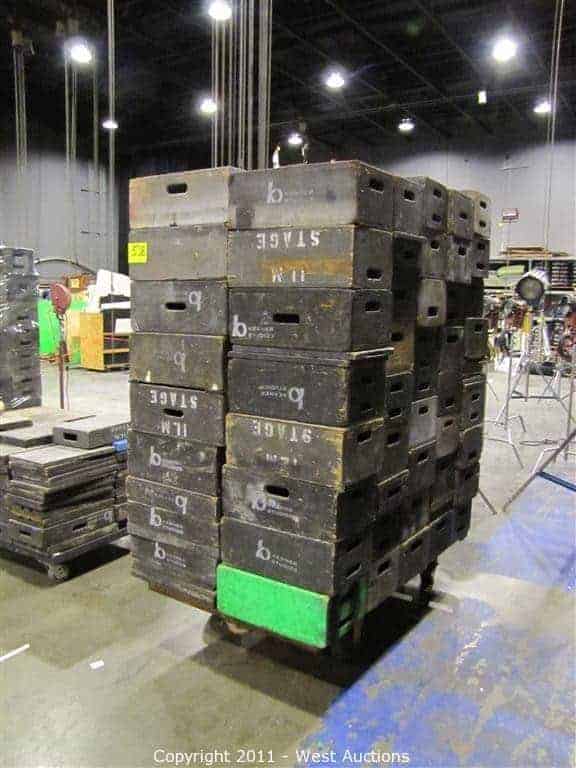
Large crate from the ILM stage containing blue screen material

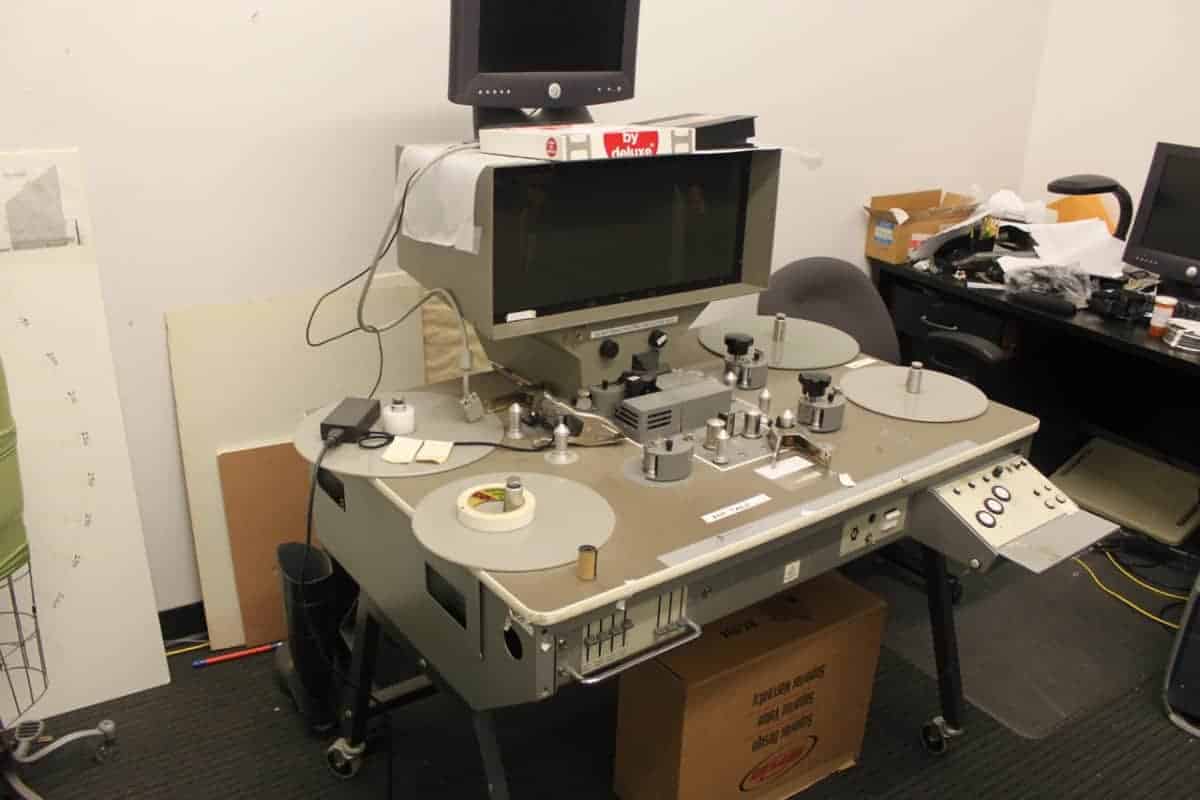
Because ILM has gone almost exclusively digital in the last decade or so, it shed off its modeling division a few years ago, with the new owners inheriting much of the old studio supplies that had served ILM for so long. But with the new studio recently disbanding, all the old lights, cameras, editing tables and booms — not to mention tables, desks, and even the contents of their drawers — were going to the auction block. With hundreds of lots available — several of which were literally room-fuls of stuff — there was a lot to scrutinize.

Pouring over scores of photos depicting the tools that created some of the most memorable effects shots in history, I’d marked about ten items of interest, two of which I and a colleague were ultimately able to win. I didn’t get everything I’d hoped to, but was glad to be able to take home a little piece of history in the end.

Below is a selection of some of the more interesting pieces of last week’s auction, at least interesting to those with a bent for analog-era special effects (Note: the photos below are a combination of our on-site photos and those posted by the auction house).

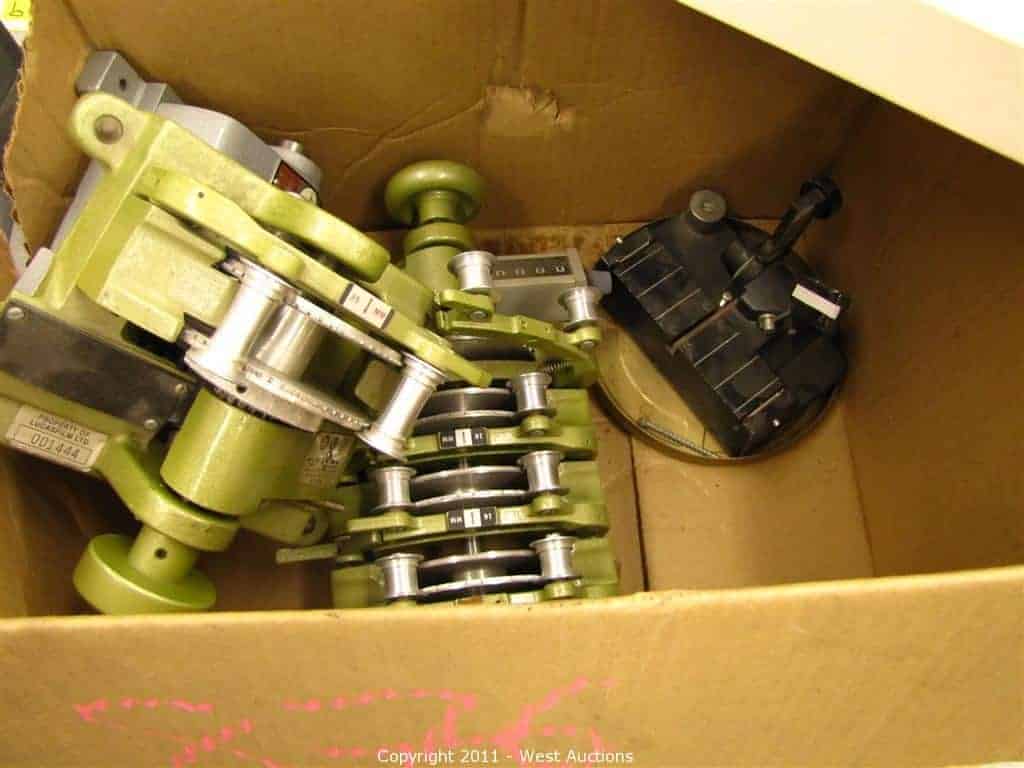
The “Vista Cruiser” motion control head used for Return of the Jedi

Stage lights and stands

An old ILM label affixed to a light stand

ILM stage blocks

A label indicating this piece was once owned by the Maker himselfThe “Nikon-flex” camera used to shoot the mine car chase in Temple of Doom

Large lights marked “ILM”

An editing table allegedly once owned by George LucasDirector’s chair allegedly once used by ex-ILM alum and Mythbuster Adam Savage

A trio of model pylons for shooting against blue screen

This Article was Originally posted 2022-11-04 16:32:17.

A Visit to the Archives

Welcome to a look inside The Holocron. A collection of articles from the archives of *starwars.com no longer directly available.

(*Archived here with Permission utilising The Internet Archive Wayback Machine)

A Visit to the Archives

The Lucasfilm Archives, justifiably renowned among legions of fans as the final resting place for everything from Darth Vader’s lightsaber to the Holy Grail that just eluded the grasp of Indiana Jones, is much more than just a prop mausoleum. It’s an active private collection where on-going programs of conservation and restoration ensure that precious items that aren’t really made to last, but that have become icons of popular culture, can survive for future generations to enjoy in exhibitions around the world.

And in an age where the “common wisdom’ had it that digital technology would replace the need for most hand-built props and models, the opposite seems to have happened. The Archives has grown larger and more sophisticated in the wake of Star Wars: Episode I The Phantom Menace than at any time since it was established shortly after completion of production of Return of the Jedi. “This is truly a unique collection” says Paloma Anoveros, the Collection Manager since October 1996. “Most production companies don’t keep the props, costumes and models that they generate for films. But I think that since Star Wars was a trilogy, the idea of reusing objects made sense. Later it became clear that these were films that were making an impact, and that these objects had an extremely iconographic power in our culture.”

Most Lucasfilm movies are represented in the Archives: The Indiana Jones Trilogy, the Star Wars films, WillowTucker, and even American Graffiti.

With the initial success of Star Wars, and the immediate realization that a second film would be made, Industrial Light & Magic kept a number of the props from the first film to see if they could be used again. It did the same thing for The Empire Strikes Back. The production company also sent some of the large pieces back from England for storage in California. But it wasn’t until around the time of the taking of a very famous photo–George Lucas amidst a sea of some of the most famous spacecraft, droids and other props from his trilogy–that Lucas decided it was time to set up a proper Archives.

It was also around that time that some of the earliest exhibitions of Lucasfilm props took place: The World Science Fiction Convention (Los Angeles, 1984), The Star Wars 10th Anniversary Celebration (Los Angeles, 1987) and several Marin County Fairs.

The first Archives was a makeshift rental in an industrial park, but at least it served as a gathering spot for all of the props, costumes, models and artwork. Several years later, the first climate-controlled Archives building was erected. A second structure has been added to accommodate Episode I costumes and props including the massive miniatures such as Theed city and the Mos Espa Arena. Currently, the Archives take up about 50,000 square feet of space.

The Archives also has a film department which houses production elements such as dailies, original sound recordings and continuity reports and audition reels and outtakes. The daily operations of the film archive include providing requested materials to departments such as Production and Publicity, while safeguarding the transition of materials to a cool, dry environment which will keep them protected for years to come.

“A normal museum usually grows steadily,” Anoveros says, “But we grow tremendously in spurts. Last year the collection more than doubled due to Episode I and other collections, so we have to be creative on how to address issues like this.”

Anoveros’s background is in artwork conservation and collections management. On her staff are two full-time model and costume archivists (Danielle Roode and Susan Copley), a film archivist (Sandra Groom), and project personnel like interns from museum studies programs.

Despite her museum and conservation background, Anoveros knows that, first and foremost, she serves an active film production company. “This is very much a collection in use, with props and models that may be needed at any time for production,” she says. “My role is not to prevent use but to minimize damage while things are being used. So I talk to the person who needs something for reference and ask, ‘Do you need the actual object, or would a great photo do?’ Or if it’s for filming, I make sure it’s packed and transported correctly and handled properly to minimize damage.”

For Episode I, the Archives got requests early on from the Art Department for props for reference for continuity purposes. It sent large amounts of material to Leavesden Studios outside of London for use in the actual film–everything from masks and costume to R2-D2 units and Luke Skywalker’s original landspeeder. A little closer to home, ILM borrowed props for blue-screen use or for reference for computer-graphic use. All of it needed to be logged, tracked, packed, shipped, and eventually brought back.

“A very important aspect of what we do is cataloguing the objects” Anoveros says. The Archives is implementing a bar code system because objects move in and out so quickly during filming. Then, if it needs to be sent out it can simply be scanned. Among the challenges faced by Anoveros and her staff is that objects built as film props, for the most part, aren’t built to last.

“We have modern materials and no one knows how they are going to perform long-term,” Anoveros says. “Many of these objects are fragile, and meant to be used under careful supervision in front of blue screen, and it’s a continuous challenge how to preserve them. For example latex, used widely for masks and creatures. There is no treatment for deteriorated latex. We try to provide stable environmental conditions and appropriate support for their preservation. Once latex deteriorates there is no treatment to recover it.”

Currently, the Archives doesn’t perform restoration work on-site, but hires trained professionals when necessary. “Sometimes we get work done at the ILM department where they created the actual object, or we contract it to conservators in the field who are experts in different materials,” Anoveros says. The Archives keeps a priority list based on how important a piece is, whether it might go on display at some point, and whether it will deteriorate further if it isn’t fixed.

“We try to focus on preventative conservation, which is avoiding damage before it happens to objects,” Anoveros says. “We try to keep things in stable environmental conditions by keeping the temperature at a constant 65 degrees Fahrenheit and 50-55% relative humidity. We have implemented a pest management system to prevent pest infestation. And in terms of storing objects, we try to provide the proper support for all objects, like costumes and masks to make sure they don’t sag or stretch and deform.”

The Archives collection is incredibly diverse. “We have models from full size spacecraft to miniatures, and from screen quality to foam-core prototypes,” Anoveros notes. “We have traditional costumes from Imperial officers to incredible Queen Amidala gowns to Gamorrean guards with all the foam layers of ‘fat.’ There are thousands of pieces of concept art and production paintings. There are original matte painting. These are usually done on glass, some are on board and some very large ones on canvas. This section of the collection isn’t likely to grow since matte painting are now done digitally.” The Lucasfilm Archives has multiple copies of some objects. “It’s just the nature of production,” Anoveros says. “For example, look at all of the version of R2-D2. One was worn by Kenny Baker and is considered a costume; one just has the ability to turn its head; another has the ability to drop its third leg. So these all add history to the collection.

One of Anoveros’s most weighty recent responsibilities was proposing what to keep for the Archives from Episode I. “I started first looking at the objects keeping in mind the issues of significance, quality, storage, transportation, and maintenance costs. The few pieces we could not keep-like the really large sets-we documented really well.”

In the last few years, much of the time of the Archives staff has been devoted to organizing public exhibitions of the treasured memorabilia in conjunction with Lucas Licensing Ltd., another unit of Lucasfilm. “Since we are a private collection that does not have the facilities to be able to be open to the public, we try to take part in well-organized public museum exhibitions when possible,” Anoveros says. In the last several years there have been two very popular separate exhibitions in Japan and one in San Francisco. There was even an amazing three-day exhibit at the Star Wars Celebration fan convention in Denver last May.

But the real attention getter was the year-long National Air and Space Museum’s Star Wars: The Magic of Myth, which is currently on a two year tour of U.S. museums organized by SITES. Coming up in April in London is a similarly ambitious exhibition, The Art of Star Wars, at the Barbican Art Centre.

“Currently, the exhibitions have been taking 90% of our time,” Anoveros says. “Of course, that slows down once the exhibit goes up, but when you’re moving 250 objects, that takes a lot of time. We work with the organizing institution in terms of developing exhibit plans and guidelines, and we give suggestions of what we think might work. We think we know our fans and what they expect to see. It’s a continuous dialog to develop the curatorial point of view, and we participate actively with them in selecting the objects.”

High on Anoveros’s agenda is better maximizing her existing space as the calendar pages keep turning. Before too long, she’s going to be getting a telephone call from Episode II Producer Rick McCallum: “Paloma, I’ve got a bunch of stuff for you to take a look at!”

This Article was Originally posted 2022-06-25 13:24:52.

Ian McDiarmid: Dark Force Rising

Welcome to a look inside The Holocron. A collection of articles from the archives of *starwars.com no longer directly available.

(*Archived here with Permission utilising The Internet Archive Wayback Machine)

Ian McDiarmid: Dark Force Rising

January 24, 2002

The Man of Mystery

He was Senator Palpatine in The Phantom Menace and the Emperor in Return of the Jedi. Now, in an exclusive Insider interview, Ian McDiarmid talks about bridging the gap as Supreme Chancellor Palpatine in Episodes II and III of the Star Wars saga.
When Darth Vader first burst on the scene in 1977, storming into the Rebel Blockade Runner amid smoke, stormtroopers, and blaster fire, it was impossible to think of him as anything but the ultimate villain of Star Wars. It seemed there could be no soul darker, no mind more evil, no heart more cold.

That was before we met the Emperor.

As Darth Vader himself put it, “The Emperor is not as forgiving as I am.”

Sure enough, in Return of the Jedi, we learned quickly that Vader was but a pawn in his master’s dark game of galactic domination. The Emperor, from the moment he first touched down on Death Star II, made it clear that it was he who was in charge all along. By the end, we saw that Vader could actually be a hero, and that the ultimate villain of the Star Wars saga was a hunched-over old man with piercing yellow eyes, black robes, and a distinctively chilling voice.

To pull off the crucial role of the Emperor (who first appeared briefly as a hologram voiced by Clive Revill in The Empire Strikes Back), George Lucas and Jedi director Richard Marquand turned to Ian McDiarmid, a charismatic British stage actor then in his mid-30s. McDiarmid sunk his teeth into his first major film role, emerging from marathon make-up sessions to create a modern day icon of cinematic evil.

No wonder that 16 years later, Lucas again enlisted McDiarmid to play a young Senator Palpatine in Star Wars: Episode I The Phantom Menace, making him one of the few performers from the classic trilogy to reprise his character in the prequels.

Once again drawing on a tremendous reservoir of experience in the theatre, McDiarmid (who in the meantime had also appeared in the Frank Oz-directed comedy Dirty Rotten Scoundrels and the Oscar-nominated Restoration) played Palpatine as a smooth charmer who manages to maneuver Chancellor Valorum out of office’ and himself in’ even as his home planet of Naboo is under siege, and all with a smile on his face and a spring in his step.

Naturally, McDiarmid returns for Episode II, luxuriating in his character’s new position as Supreme Chancellor and looking forward to continuing his rise in Episode III. No longer the new kid on the block, McDiarmid is now a Star Wars vet and fan favorite from both the classic and prequel eras.

In between filming Episodes I and II, the Scottish-born actor, an early drama school classmate of Denis Lawson (Wedge), took a role in Tim Burton’s blockbuster Sleepy Hollow (with Star Wars actors Christopher Lee and Ray Park) and continued to focus on running the Almeida Theatre, the thriving and popular North London playhouse where he serves as joint artistic director with Jonathan Kent.

The duo were awarded the Theatrical Achievement of the Year award by London’s Evening Standard in 1998 for their work transforming the once-obscure playhouse into one of the region’s most acclaimed theatres.

McDiarmid was starring at the Almeida as Prospero in Shakespeare’s The Tempest when the Insider caught up with him. The production was the last at the theatre before a 14-month renovation project, during which time the Almeida will continue to produce plays at a converted bus station across town.

The last time we interviewed McDiarmid (Insider #37), Episode I hadn’t come out yet, and we had tons of questions about Return of the Jedi. But this time, the first thing we wanted to talk about was Episode II — even though so much about the story is still top secret.

Let’s get this out of the way right off the bat. There is a lot about your work in the prequels that we can’t talk about yet. Why is it necessary to keep so much about Palpatine a mystery?

The principal answer to that, of course, is that he is a man of mystery. That is how he exercises, maintains, and increases his power — by choosing what he’s public about. He’s the great political manipulator of all time.

I found it interesting in Episode I to watch the wheels turning in Senator Palpatine’s mind. We sense he’s up to no good, yet we never see him actually do anything sinister.

Yes, that’s probably the most interesting aspect of the part for me. Palpatine appears to be a hard-working politician — and when you say the word politician, immediately you think about equivocation, which is the nature of the job. But at the same time, I know that underneath all that is an evil soul. The undercurrents are always there in his mind and in his gut.

Everything he does is an act of pure hypocrisy, and that’s interesting to play. I suppose it’s rather like playing Iago. All the characters in the play — including Othello until the end — think that “Honest Iago” is a decent guy doing his job, and he’s quite liked. But at the same time there’s a tremendous evil subconscious in operation.

The Exercise of Power

How do you as an actor convey trustworthiness to the characters around Palpatine while simultaneously signaling to the audience not to trust him?

I suppose that, in a sense, he is hyper-sincere — defensively sincere. He is a supreme actor. He has to be even more convincing than somebody who isn’t behaving in a schizophrenic fashion, so he’s extra charming, or extra professional — and for those who are looking for clues, that’s almost where you can see them. He’s super-sincere.
There’s a moment in one scene of the new film where tears almost appear in his eye. These are crocodile tears, but for all those in the movie, and perhaps watching the movie itself, they’ll see he is apparently moved — and of course, he is. He can just do it. He can, as it were, turn it on. And I suppose for him, it’s also a bit of a turn-on — the pure exercise of power is what he’s all about. That’s the only thing he’s interested in and the only thing that can satisfy him — which makes him completely fascinating to play, because it is an evil soul. He is more evil than the devil. At least Satan fell — he has a history, and it’s one of revenge.

But the Emperor — well, I don’t know all the details, but who does of the Sith? — is an independent agent who just lives for the exercise of power. He doesn’t know what scruples are, let alone have any. The only emotion that manifests itself truly is the one seen just before he meets his end, if that’s what he meets, in Jedi — and then that’s pure anger, when he realizes that he hasn’t succeeded in manipulating young Skywalker. So he has to kill him, and he tries to do that with unadulterated fury.

He has no sorrow about his mistakes, just pure anger?

Just anger. And his great strength is that he’s not fearful, which of course is also young Skywalker’s great strength, and ultimately Vader’s too. It’s understanding both sides of fear — how it’s important not to be fearful in order to not stop yourself from doing things you believe and know to be right. At the same time, it’s on the dark side — terror is what he specializes in. It’s what motivates him and governs his every action — his understanding of the nature of terror. He believes that everybody can be terrorized, or seduced by one thing or another.

But he’s ultimately proven wrong.

Yes, he is, but not until the end of the movie, at the very critical moment — as he succeeded with the father, will he succeed with the son? And he doesn’t, because the father refuses to let him succeed with the son — which is what makes it fascinating.

Did you ever sit down and discuss Palpatine’s backstory with George Lucas?

No, not really. But it’s what I feel to be true about the part — and by and large, I think it’s the same instinct that George has responded to.

But as George says, the fans always know what’s going on because they’ve absorbed the story in all its detail. You can sort of work it out. The story hasn’t changed. It’s a story George set out to tell when he made Episode IV all those years ago, and now he’s just telling it.

Do you know for sure whether you’re doing Episode III?

Yes, I will be doing Episode III, and that is now a fact.

Has he given you a specific idea about how Palpatine will evolve in Episode III?

He’s always said that Episode III will be the darkest. George feels people won’t necessarily like it because of that, but my feeling is the reverse. I think they’ll like it even more, because I think people are fascinated by the whole dark side of the saga. That’s why Vader is so interesting. He’s complicated, as we later find out. It’s that apparently seductive darkness that fascinates people. They want to know more about it. They’re not attracted by evil, but they’re attracted by the nature of it. It’s a very interesting thing to observe.

Why do you think people are so intrigued by evil characters?

I don’t know, but I think it might go back to your initial question — because it’s mysterious. It’s underneath. Milton, when he created Satan in Paradise Lost, which is one of the greatest creations in all of literature, made Satan as evil as Satan should be. But at the same time, Milton found him sympathetic as a soul in torment — his best poetic writing is for that character.

But that’s not the case with the Emperor, which makes it so interesting. He doesn’t have any of those potentially redemptive qualities. He hasn’t fallen. I imagine he’s evil from birth, which is a terrible thing to imagine. He’s not human.

So he has no awareness of how different he is from other people?

No — no conscience, none of these things. He’s untrammeled by humanity, by any feelings of guilt or responsibility or any of these things that bother all of us to a degree. And that’s why, up to a point, he’s entirely able to exercise his will. Of course, he’s immensely clever, too.

When you were shooting Episode II, were you thinking about how you were going to evolve the character from film to film?

I don’t really think about this. I play the lines, in the hope that something will emerge that’ll be interesting and useful to the movie. That’s what you do between action and cut, in these short bursts that are called scenes. But that’s what acting is — it’s about responding to the moment. And then you abandon it to George — but that’s one of the things I like about film. It’s the opposite from the theatre. You surrender your performance for other people to choose bits from, whereas in the theatre, you’re in control of the whole part, every evening, and the director moves to one side. It’s neither better nor worse — they’re just different experiences, and I find them equally fascinating.

A Return in Episode II

How has Palpatine — now the Supreme Chancellor — changed between Episode I and Episode II?

Well, we’re about 10 years on from Episode I, so he’s had a chance to get on with it. Of course, his status has obviously gone up, because his office is better. The power has now manifested itself. His office — through the windows, there will be lots of stuff added later on — was a big set, a real power base.
The costumes, too, have got much more edge to them, I think, than the mere Senator had. So we see the trappings of power. And I’m also slightly aged. In the last film, I had a fairly standard make-up on, but now, they’re starting to crinkle my face.

I’m sure it was still easier than the make-up you were under for Return of the Jedi.

Yes — that was a four-hour job, initially, although we got it down to about two-and-a-half in the end. But this was just a little bit of latex here and there, a little bit of skin-scrunching.

The last time we spoke (Insider #37), we talked a lot about Return of the Jedi. So this time, I’m just wondering, nearly 20 years later, what sticks out most in your mind about your first Star Wars experience?

Actually, I looked at it again the other day, because I was watching the re-issue of the three videos, and I thought, “Oh God, there’s such a young person underneath all that.” I have nothing but happy memories, because, as you know, it just happened out of the blue. I met George and I didn’t know what the part was or what I’d be required to do, because it was very secretive in those days. I just knew that he was called the Emperor, which didn’t sound bad. And I was right. I also remember I liked that chair.

What can you tell us about your latest Star Wars experience on Episode II? I understand you were in the first scene shot.

Well, the script came to us quite late, but I knew I was going to be in the first scenes because of the nature of the scheduling. I wondered if it might be because I was in the first scene shot for Episode I, or if it was coincidence, but indeed I was in the first filmed scene of Episode II.

There I was, with this new but absolutely committed and fantastic Australian crew, on that first day. Of course, everyone was properly nervous. I, at least, knew what it was like to stand on a pod against blue screen because I’d done that in Leavesden [for Episode I]. But I didn’t know what it was like to stand in the Supreme Chancellor’s pod, because that belonged to Terence Stamp in the last movie — so that was new.

We had a whole 12-hour day of filming, two scenes, on me, with a lot of speeches to do. So I had a bit of an opportunity to re-familiarize myself with [the character], in a highly pressured context because it was the first day, with a completely new crew. It was scary, but it was also exciting. Quite often, when the atmosphere is like that, when a lot is demanded of you, you sometimes find you have a little more in yourself than you thought you had. I hope that was true of me on the first day.

You had to rise to that occasion.

Yes — quite literally, because I was so many feet up in the air!

What was the mood like on that first day of shooting Episode II?

Well, it was very good, but I had the supreme advantage of being familiar with the set and knowing George and Rick and most of the team. But like everyone else, I didn’t know the Australian crew, and they of course didn’t know George because he had not long arrived. So they didn’t really know what to expect, and they were, as usual, thinking, “Oh my God, it’s Star Wars,” as everybody does.

But it was a great, practical day, and we got everything done that we needed to do. They work very hard — that’s the way Rick runs it and the way George likes to work, and I don’t think it’s a bad thing. You really do pump it out over a short period. The pressure is there all the time. But I like that — I always work better under that kind of pressure.

It seemed like, despite the pressure, everybody on the set was very friendly.

Oh, yes. The atmosphere was great, and it was terrific being in Australia. I’d never been to Australia before. It was a big difference from being down the road in London, but Star Wars and Australia go together very well. There’s something about the whole atmosphere there. The people are terrific — they’re so full of life, and they have a highly developed sense of the absurd, which always helps.

How long were you in Sydney?

I was out for a period of just under a month initially, and then I went back to do another scene a few weeks later. So I was there for about five weeks in all.

You mentioned the script coming in at the last minute for Episode II. How much time did you have with it before you started shooting?

Well, the script was very late indeed. I arrived in Sydney on a Wednesday, and I was given the script when I got off the plane. There wasn’t one available before that. And then we were shooting on Monday. I thought, inevitably, it will be in the Senate, and I’ll have some long speeches, and that was indeed the case.

Does it affect your acting when you don’t have much time to refine your performance?

Everybody likes to get it as soon as possible so they can immerse themselves in it, but I knew the situation. I was staying in a friend’s apartment who wasn’t there, so I had the peace and quiet to work on it over those few days, which is what I did.

Of Acting and Actors

What did you think of the script when you finally got it?

I liked it very much. George had always said that Episode II would be a love story, and it has a real sort of courtly delicacy about it. The whole relationship between Padmé and Anakin is very moving and delicately done, but it’s also quite passionate. It’s a strong relationship and a strong attraction that they have, and that’s present in the script. Episode I was the introduction, the grand overture to the whole project.

Episode II is the big step of the story, when they get together and when Anakin learns. He’s a great and fast learner and has a tremendous instinct. He grows up very quickly, perhaps too quickly.

When you first read the script, was there anything in there where you thought, “Oh, I can’t wait to do this?”

Yes. I could see how the character had developed. He wasn’t seeking a power base — he had one. So there was the whole notion of being able to enjoy that and use that fact to take things further. In the previous film, I had to try and persuade people, but now he’s more at home and more centered, and he has to do less. That doesn’t mean to say that he doesn’t go about things in a persuasive way.

Was there anything unique about shooting Episode II, or was it just business as usual for Star Wars?

It was nice to be able to have more to do with some of the characters — for example, to have a scene with Sam Jackson. And to be in the same movie as Christopher Lee — that’s almost an ambition realized, as far as I’m concerned, because I think he’s one of the two aristocrats of screen menace, along with Peter Cushing. I like to think I’ve picked up a few tips from him over the years. His Dracula — I’m sure he’s sick to death of hearing about it — is one of the great cinematic creations.

He’s a terrific man, charming and amusing and highly sophisticated. I think he’s particularly pleased to be in the movie because Peter Cushing, who was his good friend and working partner for so many years, was in the original Star Wars movie. I think that’s somehow appropriate and quite moving.

What was your first impression of Hayden Christensen, the new Anakin Skywalker?

I watched a rehearsal he had with George and Natalie, and I could see immediately that he is a fine actor. It was also immediately apparent that they had a real acting rapport and chemistry. It was great to see Natalie again, too, because she’s so wise. That’s the word I always think of with Natalie. She’s not very old, but she has a maturity that I really admire.

To me, one of the greatest little moments in the last film was your brief encounter with Anakin — and it was one of the last scenes shot, just a couple months before Episode I was released.

Did you take as much delight in playing that scene as your character took in telling Anakin — that he’d be watching his career “with great interest?”

Yes, the scene with Palpatine and Anakin. I tried not to put too much into that. George said, “Just say it,” and of course, he’s quite right. Knowing what it really means, it takes care of itself. And once again, the character was being charming — a boy had served his planet well, and he was acknowledging it, and that was it.

I think George had originally thought that we shouldn’t meet, and then having seen it all together, he thought that we should recognize each other, but just in a casual way. We filmed that one Saturday morning, very much later, and then I went to do some ADR [additional dialogue recording] work in the afternoon.

Did you notice any difference in George as a director from Episode I to Episode II?

I suppose just an increasing sense of relaxation. I know he initially hadn’t decided that he was going to direct both II and III, but he did say during I that he was really enjoying working with the actors. As far as I’m concerned, it’s entirely preferable, because then you have a direct line, as it were. Also, he doesn’t say very much, and I like that too, because what he does say then is entirely specific. That’s helpful, because the more specific a director can be, the more helpful he is.

You also recently worked with Tim Burton on Sleepy Hollow. What was that like?

It was the same kind of atmosphere. Tim — and George is like this too — would see something that happened, or that you were doing, and go for more of that. So it was a process that was always evolving. It wasn’t as if you were just filming a preconceived storyboard. You did feel that it was happening in the moment, which is when acting is really good. You feel that each take could be something fresh.

Other Projects

Sleepy Hollow brought you back to Leavesden Studios, where you shot The Phantom Menace with much of the same crew. But how was making Sleepy Hollow different from shooting Star Wars?

It was nice to play a character who was completely different from the Emperor. I like to play a character with fear. Poor Dr. Lancaster, he’s always in a state of terror — and he has good reason to be, because they’ve all behaved badly and they’re waiting to be found out. He was corroded by guilt. He couldn’t be farther away from the Emperor, who doesn’t know the word — he knows about corrosion, but he doesn’t know about guilt.

It was also interesting because there were enormous sets in that film. There was a whole forest in Leavesden as opposed to just sections, which we would have had in Star Wars. There was some blue screen, but not much. They built the whole village, which was truly spectacular. It looked very theatrical — I kept thinking, “There are so many plays we could do on this great forest set.” So from that point of view, it was completely different. But in its own way, the production design was as exciting as Star Wars.

Does having the set there in its entirety make a difference when you’re acting?

It doesn’t. They’re terrific to look at, but you’re always filming in small sections anyway. Movies are always done in small nuggets, and everything in front of you is a kind of chaos — it’s machines and people staring, and willing it to be right, and doing their best to make it right. Sets on movies, to me, are always about small contained areas. So it doesn’t matter whether something’s going to be filled in behind you later or whether it’s the actual thing. It’s a tiny corner of order among the chaos, and that’s one of the things I like about movies. Because if the camera moved two inches to one side, you would see how absurd it all was. You just have people standing there scratching their heads or chewing gum.

I hear that your current stage production of The Tempest has nearly movie-level special effects. Is it true you’ve got rain coming down, and you’re kind of destroying the stage and not really worrying about the damage?

Yes, well, we have some renovation work to do on the theatre. Part of the project is we need a new stage and we had to raise the roof. So we thought that this was the perfect play to go out on, because as you know from The Tempest, Ariel should fly, and we thought it would be great if he could not only fly but swim.

So the whole of the stage is a giant water tank. It doesn’t look like that to begin with — it looks as if we just put some water on the stage and built a pond, but we haven’t. We’ve sunk it. There’s a wonderful moment when Ariel actually dives in and swims, and the audience thinks, “Why hasn’t he hit his chin?” We make it look as if it’s very shallow and then he completely disappears. We can almost do it like the movies, but in theatrical terms. We can make people gasp, and I’m happy to say they do.

We’re on until the theatre closes down, and I wish we could do it more. Various people have said, “Why don’t you come and do it here?” And we say, “OK, but you’ve got to take your floor out and put a giant water tank in.” And they go, “Oh, well, maybe not.” It’s a one-opportunity show — unless there are other theatres in a state of partial renovation.

In the last few years, you’ve guided the Almeida to become a major theatrical force in London. How do you decide which projects to take on?

For this tiny theatre in North London, we’ve always tried to re-invent ourselves. Once you do something people seem to like, we think not, “How can we do that again?” but, “How can we do something different?” The happiest sight really is on the final performance of a show. It’s sometimes sad, but as you’re watching the set come out, at the same time you’re watching another new set come in. And it’s that process of always going on to the next thing that I think is the essence of theatre.

Do you ever have time to relax?

Well, I had a few days in Australia. That was quite nice. I had a week between filming and I went to Melbourne, so that was a week. As far as possible, I try and keep Sundays free to do very little, or nothing. But I feel if I had too long to relax, I’d stop. The body would wind down, and I wouldn’t be able to wind it up again. I understand why George can’t wait to get into the editing suite, because although it’s intense, it’s also relaxing, because it’s what you want to do.

Star Wars has been so popular for so long. Do you think it’s something that will remain in people’s minds for years to come?

I think it’s entered the general consciousness. Just listening to kids talk about The Phantom Menace, and seeing them respond, one does feel that, as George has always hoped, this is a myth that will continue and which succeeding generations will take different things from. I’m confident about that. It’s a great story, and that’s always what does it to people. A great story is what we need.

You mentioned kids who were into The Phantom Menace. Since Episode I, are you recognized more on the street than you were before?

I’m happy to say not nearly as much as I thought. Yes, people come up now and again, but I can still go on public transport, which I quite like doing. Most people who do come up to me say, “It can’t be.” To which I say, “I guess you’re right — it can’t, it isn’t.” And they say, “Oh, OK, sorry.” Now, of course, the minute I open my mouth, they recognize the voice. Then they realize, but by that time, I’ve gone onto another tube.

I was once chased through a tube station. They were saying, “You’ve got to stop, you’re the Emperor, you’ve got to stop.” And I managed to run faster than them. They only wanted my autograph — it wasn’t anything sinister. I thought, “This is ridiculous — why didn’t I just stop and give my autograph and move on?” But it had gone too far by then.

So when you’re not running from autograph seekers, or running a theatre, you’re on call for possible Episode II pick-up shooting and looking forward to Episode III?

Yes, if it’s needed, I’ll be very happy to go. And I’m certainly looking forward to Episode III, but that’s a while away. I’m looking forward to what must inevitably happen in Episode III — and let’s say no more than that.

by Scott Chernoff

This Article was Originally posted 2022-09-02 15:23:45.

Phil Feiner – Executive Vice-President, Pacific Title & Art Studio

Welcome to a look inside The Holocron. A collection of articles from the archives of *starwars.com no longer directly available.

(*Archived here with Permission utilising The Internet Archive Wayback Machine)

Phil Feiner
Executive Vice-President, Pacific Title & Art Studio

Phil Feiner became involved in the work on the Star Wars Trilogy Special Edition when he was invited to screen a newly made answer print of Star Wars by Ted Gagliano of Fox. When asked his opinion, Feiner could only reply that the print, from the original 1977 negative, “looked awful . . . with white dirt printed in, the color looked ‘desaturated’ and the overall timing was off.” This discouraging assessment began Feiner’s two-year involvement in the process of creating the perfect answer print for the Star Wars Trilogy Special Edition release. Because the original Technicolor prints had been lost, the color timing of the prints was done subjectively. Feiner told Fox that this was the wrong approach: “Everyone interprets color the way each individual sees it. It needs to be the way George Lucas approved the answer print in 1977.” The only source of a perfect print was one of the last IB (Imbibition) releases, since IB prints don’t experience dye fade. Finally, an IB print was found, and YCM Laboratories took on the job of answer printing the feature.

After the initial problem with the prints had been solved, Feiner and his team at Pacific Title were able to concentrate on re-making 482 optical effects shots, 19 of which were from the scene in the Millennium Falcon in which Obi-Wan begins to teach Luke how to use a lightsaber. “The ‘Jedi Lesson’ was by far and large the greatest challenge. It wasn’t the technical difficulty but the time frame. Four working weeks was the total amount of time to complete this sequence of 19 D/Opticals . . . compositing the seeker ball into the background, while using the 1977 rotoscope hi-con elements to ‘burn in’ the laser sword into the ‘latent digital composite’.”

Feiner was born in 1955 in Burbank, California and raised in New York City. He attended the Claremont Colleges, then began his career in 1974 at Sync Film Laboratory in Hollywood, two years later taking a job as Optical Effects Operator at Total Optical Company in Burbank. Feiner has worked at Pacific Title & Art Studio since 1977. He was nominated for an Emmy for best visual effects for V: the Final Battle. In 1977, while at Pacific Title, Feiner worked on Star Wars, optically compositing all the foreign versions of the Star Wars main title, as well as cleaning up the landspeeder effects.

When asked who is his favorite Star Wars character and why, Feiner responds: “Darth Vader. He gets right to the point.” Feiner’s favorite movie of the trilogy is Star Wars: A New Hope. “It’s a western set in outer space. The story and the ‘pacing’ haven’t been done since the thirties. Everything, story, editing, sound, visual effects, were seamlessly woven into a continuous fabric. The results speak for themselves.”

This Article was Originally posted 2023-01-25 00:05:56.

The Clone Wars Episode Guide: Mystery of a Thousand Moons

Welcome to a look inside The Holocron. A collection of articles from the archives of *starwars.com no longer directly available.

(*Archived here with Permission utilising The Internet Archive Wayback Machine)

The Clone Wars Episode Guide: Mystery of a Thousand Moons

Episode Air No.: 18
Original Air Date: February 13, 2008
Production No.: Season 2, Episode 2

Written by Brian Larsen
Supervising writer Drew Z. Greenberg

Directed by Jesse Yeh

Key Characters: Padmé Amidala; Anakin Skywalker; Ahsoka Tano; Obi-Wan Kenobi; Dr. Nuvo Vindi; Jaybo Hood

Key Locales: Naboo; Iego

Cast
Matt Lanter as Anakin Skywalker
Catherine Taber as Padmé Amidala | Angel
Ashley Eckstein as Ahsoka Tano
James Arnold Taylor as Obi-Wan Kenobi
Matthew Wood as battle droids
James Mathis III as Captain Typho
Michael York as Dr. Nuvo Vindi
David Kaufman as Jaybo Hood
BJ Hughes as Jar Jar Binks
Phil LaMarr as Amit Noloff
Tom Kane as the Narrator

Episode Brief: The fatal Blue Shadow Virus menace is still at large, infecting Ahsoka, Padmé, and many clone troopers — and giving Anakin and Obi-Wan just 48 hours to find the antidote on a mysterious planet from which no visitor has returned.

Full Synopsis

“A single chance is a galaxy of hope.”

Newsreel:
Hard-pressed Jedi and their valiant
clone troopers have thwarted an
insidious Separatist plot to plant bombs loaded with the deadly Blue Shadow Virus in key Republic systems.

Obi-Wan Kenobi and Anakin Skywalker have captured the vile scientist behind the nefarious scheme: Doctor Nuvo Vindi. Now the Jedi plan to transport Vindi to the Republic capital for trial….

ACT I

Anakin Skywalker and Obi-Wan Kenobi load a cuffed Dr. Vindi into his waiting shuttle for transport to Theed. Far below, in the subterranean laboratory, a clone trooper notes that the last bomb defused has its virus vial missing. The assistant droid must have taken it. Padmé orders a red alert. Dr. Vindi hears this ruckus and gloats that the Jedi’s efforts have been for naught.

The little assistant droid inserts the vial into one of the inert bombs in the preparation room, and primes the explosive. Two clones spot the droid and try too late to stop it. The explosive detonates, spreading a cloud of Blue Shadow Virus into the lab. Emergency bulkheads begin slamming shut. Captain Rex and his clones race to make it to a safe room, but it seems too late. The hermetic blast doors are slamming shut. Ahsoka uses the Force to hold the doors open long enough for the clones and her to jump through.

Elsewhere, Padmé and Jar Jar are secure in another safe room and within their hazard suits. Anakin receives an update from within the compound. The laboratory is sealed, but any remaining droids are sure to attempt to break out and thus release the virus into the Naboo ecosphere. Padmé is determined to stop them.

Anakin questions Vindi at lightsaber-point about a cure to the virus. The crazed scientist snickers, for there is no such thing. Short on time, the shuttle blasts off to Theed, where there are those much better equipped to search for an antidote.

In Ahsoka’s safe room, at the end of complex B, the clones discover that some of the virus made it past the sealing doors. They have all been exposed to the contaminant. Rex is still determined to stop any droids from leaving the compound, even if it’s the last thing he does.

Vindi’s shuttle lands at Theed, and he is marched into custody. Typho, meanwhile, has been researching the first outbreak of Blue Shadow Virus and has found a possible antidote in the historical archive: a little known extract made from reeksa root, a vine found only on Iego, world of a thousand moons. Iego, unfortunately, is deep in Separatist-controlled space. Anakin is not deterred. He and Obi-Wan will venture into the heart of enemy territory. Skywalker is determined to save Padmé and Ahsoka. The Jedi team blast off in the Twilight and launch into hyperspace.

Padmé and Jar Jar work their way to the end of complex B and arrive at Ahsoka’s safe room, avoiding droid patrols along the way. Ahsoka greets Padmé, and the young Padawan is still set on carrying out her mission of destroying the droids, even though she is now terminally infected. They split up — Padmé, Jar Jar and two clones will take the north corridor, while Ahsoka and Rex will take the south.

ACT II

Scouting the blue-cloud filled corridors, Padmé, Jar Jar and the clones come across a team of battle droids attempting to cut through the sealed doors. Padmé and the clones open fire, picking away at the droids. Ahsoka and Rex come running in from the other end. A lone battle droid makes it all the way to the upper hatch, but it is stopped before it can make it to the surface.

The Twilight arrives at Iego. In addition to the swarm of moons and asteroids around the planet, there is a dense debris field filled with fragments of wrecked starships. Yet there is no starship traffic at all. The Twilight weaves its way through these obstacles before making planetfall and landing at the spaceport city of Cliffhold amid the basaltic spires of Iego’s spaceport.

A strange collection of reprogrammed battle droids greet the Twilight. Anakin impulsively charges into the horde and cuts down 18 droids before he realizes they are no threat. Many of the droids are cobbled together from spare parts, and some of them are oddly defaced with childish scribbles and crude paint jobs. One of the droids introduces Anakin and Obi-Wan to “the venerable” Jaybo Hood, a 10-year old kid responsible for reworking these droids. Anakin is impressed with his handiwork, if not his stature.

Jaybo’s been tinkering with these droids for nine months now. He’s living the life of a ruler, fawned over by the repurposed automata. When the Separatists left Iego, they left behind a whole warehouse of inactive droids that Jaybo commandeered. Kenobi and Skywalker try to steer the conversation to the matter at hand: the urgent need to recover the reeksa root. But any claims of urgency don’t seem to affect Jaybo. He tries to tell the Jedi that they’re not going anywhere — nobody gets off the cursed world Iego, haunted by the destructive spirit of Drol. Fifty of the best star pilots have attempted to outrun the curse, and all died.

Back on Naboo, Ahsoka cuts down a pair of droidekas, but as Padmé tackles Jar Jar to save him from incoming fire, she tears a hole in her hazard suit. She is now exposed to the Blue Shadow Virus.

On Iego, Anakin and Obi-Wan climb down the sheer cliff face to the lower canyon floors. Jaybo offers them some survival tips — do not touch the reeksa vines. And watch out for flying xandus. A huge bat-like xandu almost immediately flutters past Anakin, knocking him off the cliff face. He grabs the xandu’s talon, and gets an idea. Anakin shouts for Obi-Wan to do the same, so Kenobi leaps and grabs the xandu’s other leg. The combined weight of the Jedi weigh the leathery winged creature down. It drops down to the canyon floor in a controlled fall — a much faster descent than climbing.

In the sealed lab complex, Ahsoka cuts down more droids, but her skin has become mottled and her strength is starting to leave her. She is succumbing to the virus.

Kenobi and Skywalker tumble to the canyon floor. Skywalker pulls a spade from his backpack and begins digging for a root. The reeksa vines start writhing, revealing themselves to be enormous, ravenous carnivorous plants with sharpened spikes for teeth and deadly thorns along their length. The plants begin snapping at the Jedi, but Anakin secures the root quickly enough for them to retreat back to the cliff-face. The Jedi slash back at the plants, narrowly escaping back to Jaybo’s ledge.

ACT III

With root in hand, the Jedi accompany Jaybo Hood to what passes as the meeting hall at Cliffhold. The urban sprawl looks a bit decrepit, and Jaybo explains that the planet has been neglected since the spice convoys dried up and transit to and from the world has ceased. A seemingly crazed Quarren official, Amit Noloff, decries Drol, the spirit of the thousand moons — the world’s protector and destroyer — for the fate that has befallen the inhabitants of Iego. Skywalker, though, remains skeptical. The Quarren produces a holographic recording of a Rodian star pilot, Taquito, whose ship was destroyed as he tried to leave.

Skywalker is not deterred. The Jedi board the Twilight and fly the spice freighter up into the debris field. Suddenly, laser beams begin lancing forth from some of the rocks, forming a web of deadly energy. From the surface of Iego, it looks as if a lattice of fire spreads across the sky. Drol may not be a ghost, but whatever it is, it is a real and deadly threat guarding the skies of Iego. The energy web is too dense, so the Twilight returns to the spaceport. Kenobi surmises that the Separatists must have installed the laser field to keep anyone from leaving Iego.

Padmé and Ahsoka make contact with Anakin. They are quite visibly weakened. They have destroyed all the battle droids inside the compound. Naboo is safe, though it looks as if neither has much time to live. Anakin won’t give up. He’s determined to run the laser gauntlet again, but Obi-Wan thinks that plan is too impetuous and dangerous. He has another idea, though he has difficulty calming Anakin down.

Kenobi calls forth the Iego council. He explains that Drol is no ghost, but rather a Separatist security system. Noloff refuses to believe this. Kenobi asks if anyone inhabited Iego’s moons prior to Drol’s destructive rise. A strikingly beautiful, willowy, phosphorescent humanoid enters the chamber — an Angel. She explains that they were driven from their homes by the Separatists, who stole their moon of Millius Prime.

Anakin realizes the primary node of the laser web must be near Millius Prime. Obi-Wan recruits Jaybo to donate a number of remote-controlled vulture droids in a bid to escape the laser web. R2-D2 will control the vulture droids as a distraction for the laser field, while the Twilight targets the hub on Millius Prime.

On Naboo, Padmé does what she can to alleviate the suffering of the infected clones. Ahsoka collapses, overcome by the virus.

The Jedi carry out their plan. The Twilight leads the way with a squadron of four vulture droids in tow. The laser field activates. R2-D2 pilots the vultures to intercept the lasers, while the Twilight opens fire on the primary node. A chain reaction erupts as the laser web unbalances, and emitters overload, sparking a series of explosions throughout the debris field. The laser web collapses. The people of Iego are free. With no time to waste, the Twilight leaps into hyperspace, en route to Naboo.

A short time later, Anakin and Obi-Wan arrive by gunship into the eastern swamps, where medical droids are tending to the infected. The virus has been neutralized, and those afflicted will make a full recovery. Skywalker confers with Padmé, who never lost faith in Anakin. Anakin also sees to Ahsoka, praising her for her devotion and success.

Meanwhile, Kenobi congratulates Jar Jar for his bravery in the face of such danger, and says he will recommend one of his troops gives Representative Binks some marksmanship training. Rex, though ailing, makes it clear that it won’t be him.


Trivia & Details

  • Anakin calls Dr. Vindi a “sleemo,” which is Huttese for “slimeball.”
  • The series debuts some fully realized Ithorian and Quarren models in this episode. Previously, the Clone Wars movie used cobbled together figures to represent these background aliens. In Jabba’s palace, the Ithorians were made of a crudely modeled head stuck on Palpatine’s body, and the Quarren was a simple head stuck on Obi-Wan’s body.
  • The Angel went through a number of revisions, with some much more human than the end result.
  • Originally, the xandu was to have been devoured by the reeksa vines.
  • The city of Cliffhold is based on old Doug Chiang designs from The Phantom Menace. It is filled with aurebesh graffiti, including incidents of Jaybo Hood’s name scrawled on the walls or simple illustrations depicting droids and clones. One building is marked with a large aurebesh marquee that reads “KRISTAL SKULL.”

Memorable Quotes

“Oh well, just another boring day saving the universe.” — Obi-Wan Kenobi

“Patience, Anakin. There’s more than one way to skin a womp rat.” — Obi-Wan Kenobi

“We may be dead men, but we could still stop those droids.” — Clone Captain Rex

“Welcome to Iego. Roger roger.” — Jaybo Hood’s battle droids

“I have a bad feeling about this.” – Obi-Wan on Iego

  • “If you ask me, sounds like a load of –“
  • “Superstition?”
  • “That’s one word for it.” — Anakin and Obi-Wan discussing Drol.
  • “A great leap forward often requires taking two steps back.”
  • “And sometimes all it requires is the will to jump.” — Obi-Wan and Anakin

This Article was Originally posted 2023-05-26 18:10:07.

Trisha Biggar

Welcome to a look inside The Holocron. A collection of articles from the archives of *starwars.com no longer directly available.

(*Archived here with Permission utilising The Internet Archive Wayback Machine)

Trisha Biggar: Of Imaginary Wardrobes and Real-Life Clothes

Costume Designer Trisha Biggar could rely on her broad background of experience when she set out to meet the many costuming challenges of Star Wars: Episode I. Her work with prestigious British theatre companies, like the Glasgow Citizen’s Theatre, and her extensive film and television experience (including The Young Indiana Jones Chronicles) had more than prepared her for whatever obstacles would arise during her work on the next chapter of the Star Wars saga. Still, the unusual aspects of the project made it inevitable that she would be confronted with at least a few new and stimulating challenges.

Episode I is the fourth Star Wars film, yet it brings to life a previous generation, whose actions shaped events that took place before the classic trilogy; and so Biggar had to make sure costume continuity was respected, while at the same time drawing on her skills and imagination in order to trace her own path through new territory.

The first and foremost challenge was the sheer volume of costumes required to bring to life George Lucas’ vision, and the short time frame in which all of these ideas had to become physical reality. In less than a year, over one thousand costumes were painstakingly designed and put together, piece by piece. When working on a project of this scale, careful management of a productive team is essential; and so Biggar was there at every step, making sure that each member of the team was doing exactly what was needed.

Inspiration for the realization of this myriad of costumes came from a variety of sources, including, of course, the classic Star Wars trilogy. “We obviously had to have some continuity from the first films, and we had, among others, the Jedi costumes,” Biggar says. “Since we see them again in Episode I, we tried to link through and bring parts of their costumes from the first film back into this one. We used virtually the same Jedi cloak, but we experimented with different types of fabric. And we modified the undergarments to make them more suitable for younger men, men who have to fight.”

Other inspirational sources included the cultures of several countries, mixed together and revised with the Star Wars universe in mind. Even the Roman Empire influenced some of the designs. But no hypothetical future style shows up in Biggar’s work, for her designer eyes were always turned toward the past. “The costumes have all been drawn from the past. A long time ago. Not futuristic,” she says.

Devising a real cloth costume based on a design drawing is a process that Biggar was well familiar with, but Episode I made this a bigger challenge than usual, for Star Wars’ exotic setting gave rise to some concepts that were very highly imaginative. Another difficulty lay in the fact that some of the costumes were intended for characters who were not human. And on top of that, Biggar had to keep in mind that certain pieces of clothing were to be worn during action scenes, sometimes even fitted to stuntmen who jumped, fell, and pushed themselves – and the costumes they wore – to their limits.

The Royal Guard costume, briefly seen in part 4 of our “Lynne’s Diary” behind-the-scenes documentary, is one example. “We had to look at what the people who would be wearing the costumes would be doing. And so a few of them had to be adapted so the people wearing them wouldn’t injure themselves. Some different fabrics for stuntmen, and so on,” Biggar says.

Staying true to an already deep and detailed universe while at the same time improving old concepts and introducing completely new ideas is a challenge like few others, but one that Biggar could match up to and enjoy. “Everything was great fun, really, because there was such a wide variety of things to do,” she concludes with a smile.

This Article was Originally posted 2022-07-30 16:05:42.

Foley artists of Episode I

Welcome to a look inside The Holocron. A collection of articles from the archives of *starwars.com no longer directly available.

(*Archived here with Permission utilising The Internet Archive Wayback Machine)

Foley artists of Episode I

In a dark, cavernous underground sound stage, two women crouch, their eyes riveted to a giant movie screen. Projected in front of them, frame by frame, is the final cut of Star Wars: Episode I. Like musicians in an orchestra pit playing to a celluloid score, they take their cues from the movements of the images flickering in front of them. The duo of performers creates a sound to match the movement onscreen wielding mysterious metallic instruments. Highly sensitive microphones record the specialized work of these two women. Lithe and highly focused, Dennie Thorpe and Jana Vance are the foley artists of Lucasfilm. Together with their partners, Foley Recordist Frank “Pepe” Merel and Foley Mixer Tony Eckert, they provide the ambient sound effects of Episode I.

These subtle yet essential foley effects – the footsteps, the cape movements, the rattle and hum of everyday life – provide all of the natural sounds that exist between the remaining layers of sound in a film. Many films utilize a foley track because sound as recorded on the set is often unusable. Background noise like a plane flying overhead or the toot of an automobile horn can obscure dialogue. Sometimes live sound recorded on a set must be replaced because sets created to look like real environments are actually fake. For example, when Ewan McGregor (Obi-Wan Kenobi) and Liam Neeson (Qui-Gon Jinn) faced Ray Park (Darth Maul) in Episode I’s climactic lightsaber battle, they were actually performing on a set constructed of plywood made to look like metal. The live sounds recorded during this scene consisted of a series of heavy footsteps on plywood, the clack of prop lightsabers and the breathing of the actors as they performed the complicated fight choreographed by Stunt Coordinator Nick Gillard. To create the necessary illusion of realistic sound, Dennie and Jana recreated the scene foley-style by running, jumping and occasionally falling on a special square of marble “spaceship” surface. The other sounds, like the lightsabers and doors opening and closing, were created by Ben Burtt and his sound editing team.

The Episode I foley team has worked together for over three years, though Dennie has been part of the Lucasfilm foley team since she walked in both Darth Vader’s and Luke Skywalker’s footsteps in Return of the Jedi. “It was my third or fourth job and I was scared to death,” says Dennie, “because I was doing it by myself. Yet it was fun.”

The well-knit team works closely with Sound Designer Ben Burtt. At the beginning of Episode I production, the foley team and Burtt watched an early cut of the entire film. They made a scene-by-scene analysis to determine which foley effects were needed. After foley work for each 10-minute reel was completed, Burtt returned to the foley stage to evaluate a playback. The group then discussed the sounds and determined what needed to be altered, enhanced or simply redone. Each day the busy team created approximately 200 different “sound events,” which are unedited recordings that will eventually be crafted into finished sound effects.

Their huge sound stage is full of real-life objects – ancient vacuum cleaner canisters, the battered hood of a car, a mini-swimming pool, and cabinets of stuff that most would be hard put to identify. “Very low tech stuff sounds great when used in creative ways,” says Jana. Yet, though the foley cupboards were packed, the team decided that they would need a set of truly unusual sounds for the production of Episode I. “Often,” says Tony Eckert, “the real movement doesn’t sound as real as you’d want it to and the artist must find a more suitable object with which to create.

This search for unique sounds led Dennie and Jana on a foley shopping spree to several scrap yards in the Bay Area with a special mission to find the perfect droid parts. While imagining the movement of the battle droids, Dennie had a brainstorm. “I was a foley artist for the T-1000 on Terminator 2,” says Dennie. To capture the chilling metallic footsteps of the T-1000 she had had a pair of perfectly ordinary boots resoled with metal plates. Planning the droid movement in Episode I, she continues, “it occurred to me that those monstrous boots I used in T2 would work perfectly.” Soon afterward Dennie and Jana were each fitted with a pair of specially made boots – Dennie’s combat boots were soled in brass while Jana’s cowboy boots sported thick steel soles. They were then able to create a sound unique to the battle droids: a heavy and metallic footstep, with a bit of a slide. “The droid sounds in the final battle scene took meticulous prep time,” says Jana, “and although each sequence only lasts 2 minutes on-screen, it probably took us about half a day to create it.”

Once Dennie and Jana have walked a character for one reel of film, they can anticipate a character’s every movement. At this point they don’t need to look at every cue. “It’s because we have them ‘muscle memoried’,” explains Dennie. Dennie performed the parts of Obi-Wan Kenobi, Anakin Skywalker and Padme Naberrie. Jana “walked” the parts of Qui-Gon Jinn, Jar Jar Binks and Darth Maul. Of Ray Park who played Darth Maul, she says, “he was incredible – he was more like a dancer than an actor.”

Although Dennie and Jana performed their characters individually, there were some effects they created as a team: the big battle scenes, and the movements of the larger creatures. Together they did the saddles and bridles of the kaadu, a giant beast used by the Gungans, and modeled these sounds on everyday equestrian equipment. “We’d been doing horses for years,” says Tony, who had assumed that the job would be a straightforward one. But what made the kaadus unique is that they’re enormous in size and completely computer-generated. The team began their approach as they would for a horse, using leather straps and clinking metal parts. Then Tony laid special microphones to pick up the deepest frequencies, enlarging Dennie and Jana’s human movements so that they would sound massive.

On Episode I, almost every reel the foley team worked on had 24 tracks of different sounds. Foley Editors Bruce Lacey and Marian Wilde would determine the foley effects to be recorded each day, creating a cue sheet that looked like a musical score – with movements set to time. This cue sheet was then passed to the Episode I foley team who would read, for example, that at the thousand feet marker of a particular cue sheet, a battle droid would walk on a marble surface for ten feet. Because of this system, the team was able to perform and record each scene in a very efficient manner.

After the foley sounds were recorded, they were handed to the editors who examined each movement on every track to determine whether the foley work had been done in synch with the picture. Then the editors used a computer to cut and nudge each sound into place. Once this initial composition was complete, it was passed on to a pre-mixer who mixed the bulky 24 tracks of foley down to either 3 or 6 tracks. At this point the Episode I audio existed as groups of pre-mixes – a music pre-mix, a foley pre-mix, an effects pre-mix and a dialogue pre-mix – which were combined during a final mixing session overseen by George Lucas.

The foley track can cue the audience to pay attention to certain characters or actions. Just as music can sway your emotion, foley influences where you focus your attention. When done well, foley enhances individual characterizations. Some in the business consider foley to be the glue that holds a picture together. “It’s just like life,” explains Tony. “If you sit with your eyes closed and start to listen you’ll hear the scuffing of cloth, or someone dropping a glass. You don’t really think about it – you just accept it. But you’d miss it if it wasn’t there.”

This Article was Originally posted 2022-08-02 13:30:13.

Serious Post-Production Mode

Welcome to a look inside The Holocron. A collection of articles from the archives of *starwars.com no longer directly available.

(*Archived here with Permission utilising The Internet Archive Wayback Machine)

Serious Post-Production Mode

November 2, 2000 — “Where we’re at right now is serious post-production mode,” says Producer Rick McCallum, describing the current status of Episode II. “George [Lucas] arrives early every morning. He’s working with Ben Burtt. Jamie Forester and I are working, along with Matthew Wood and Skywalker Sound, to make plans for the new post-production sound environment that we’re going to create for Episode II.”

The production has moved from overseas studios and locations back to northern California. Early next year, more studio work is scheduled for any additional shooting that is required. “We are starting to outline the plan of our additional shooting in March,” explains McCallum. “We’re also working out the moves with ILM and setting up the schedule of how we’re going to proceed. There is an awesome amount of work that we have to do, which we expect to go full bore in January and deal with for at least 15-16 months.”

The current task ahead of McCallum is ensuring the timely delivery of a rough cut of the film. “What we’re trying desperately to do is to keep George totally linked in to getting a first assembly of the film as soon as possible so that we can begin to lay off a lot of the scenes,” he says. With the rough cut done, individual shots can make their way to Industrial Light & Magic for effects work. One scene, involving Obi-Wan Kenobi (Ewan McGregor), is largely complete and has already been delivered to ILM.

At the same time, the digital artists have begun crafting wireframe models for the various computer-generated characters. ” John Knoll and Rob Coleman are busy getting their crews started for some of the scenes they’re going to be attacking,” McCallum reports.

“At this point we’ve gone from the theoretical down to the practical,” says McCallum, “We have to actually start making miniatures soon. It’s looking really good. Everything’s moving.”

This Article was Originally posted 2022-08-16 16:00:23.

1980

Welcome to a look inside The Holocron. A collection of articles from the archives of *starwars.com no longer directly available.

(*Archived here with Permission utilising The Internet Archive Wayback Machine)

1980
The Empire Strikes Back Theatrical Experience

When The Empire Strikes Back arrived in U.S. movie theaters on May 21, 1980, audiences may have been pleasantly surprised to discover that the theater they’d seen Star Wars in three years earlier was now upgraded to showcase Dolby-encoded stereo prints, or better yet, Six-Track Dolby Stereo 70mm prints. Star Wars had proven that a theater’s aural presentation was a marketable asset, so many theater owners came prepared to dazzle their audiences with superior sound and image resolution for the saga’s first sequel.

Like Star Wars, though, the real experience of Empire started in the theater lobby. All the posters, lobby cards, displays, and concession premiums were back for the Star Wars sequel, setting the stage for the audience’s return to that galaxy far, far away.

Tickets

For Empire, benefit and premiere screenings were much more prevalent than they had been for Star Wars, and consequently, a large number of collectible tickets were produced. Tickets for the national children’s premiere in Washington D.C. were printed on shiny reflective stock, while those issued to the press were often a bare-bones presentation of title and venue. The benefit premiere tickets, however, often came in small glossy-stock folders with a second invitation for lunch or dinner, both embossed with the Empire title in silver.

Posters

Like Star Wars, a variety of posters were produced for Empire in the classic insert, half-sheet, one-sheet, 30″x40″, and two-sheet sizes. Roger Kastel’s stunning “Gone With The Wind”-inspired artwork for Empire became an instant classic when it was displayed in theaters during the opening weeks, beautifully depicting the icy tones of Hoth amid luminous auroras and a classically-composed Han/Leia embrace. These were quickly replaced by Tom Jung’s more traditional Style “B” the following month, however, when the campaign messaging shifted from romance to action. Interestingly, Yoda would not appear on an Empire poster until the film’s re-release in July, 1981, and again in November, 1982.

Because there was much more public awareness for Empire than there had been for Star Wars, some theaters printed up special premiere posters exclusive to their venues. Though not “official” release posters, they are notable for their historical interest, preserving the date, time and venue of early screenings.

Lobby Cards

Empire produced an assortment of lobby cards nearly identical to that of Star Wars, with the exception of two extra 20″x30″ scene cards (one of which displayed vertically — unusual for the traditionally horizontal format). The breakdown consisted of eight white-bordered or unbordered 8″x10″ mini cards, eight bordered/unbordered 11″x14″ standards, six 12″x17″ portrait cards (also available on a large uncut sheet), four 16″x20″ scene cards, and four 20″x30″ scene cards (Star Wars had two). (Collectors note: Traditionally, the National Screen Service, or NSS, printed and distributed the mini and standard lobby cards, which included a white border and “disclaimer” information. The movie studio, like 20th Century Fox or Lucasfilm, would also print up the same cards without the border and disclaimer to be distributed directly out of their corporate offices. The studio also seems to have been responsible for those lobby cards larger than the standard 11″x14″, since none carry the NSS disclaimer).

Licensee Displays

Theater fixture Coca-Cola finally tied in their Star Wars license to a concession sales premium for The Empire Strikes Back, offering an exclusive poster by fantasy artist Boris Vallejo in 1980. Interestingly, a trio of smaller Empire posters by Boris was offered at Burger Chef restaurants at the same time, causing some confusion among modern collectors as to the larger poster’s placement in the set. These were separate promotions (although both sponsored by Coke) with the larger poster offered only at the theater. This hasn’t stopped collectors from displaying the attractive foursome together, though.

For the 1982 re-release of Empire, the cups and pitcher available with the purchase of a Coke during August’s Star Wars re-release were again available in November, when Empire made its final solo theatrical run in unaltered form. Kenner’s Star Wars $1 rebate display was also still likely present for the ’81 and ’82 Empire re-releases.

Programs

The program book for Empire was much more elaborate than its predecessor, with in-depth articles, an exclusive Lucas interview, and behind the scenes photos and artwork that were not available in the Star Wars version. It was also three times the size at 64 pages (Star Wars was 20) and full-color throughout.

Like early Star Wars screenings, press and benefit attendees of Empire were handed a slick white fold-out credit sheet listing the film’s cast and crew.

T-shirts and Buttons

Fox and Lucasfilm didn’t formally print up any t-shirts and buttons for Empire as Fox had done for Star Wars, but this didn’t stop some venues from creating their own mementos for special events and advertising. Bay Area theaters, like Richmond’s Hilltop Mall Cinemas and San Francisco’s Northpoint Theater, were just two of many who produced special pinback buttons or premiere night t-shirts for employees or theatergoers in May, 1980.

As fans lined up to see The Empire Strikes Back on the big screen in May of 1980, a dormant volcano erupts in the United States, and a Beatles legend dies unexpectedly. Take a look back at what life was like in 1980 in preparation for the DVD release of the original theatrical edition of The Empire Strikes Back. The original Empire will only be available as a bonus disc packaged with the 2004 Special Edition of Episode V when the Star Wars trilogy is released as individual movie DVDs on September 12. Click here for more information.

Highlights of 1980

John Lennon is shot and killed outside his New York apartment by Mark Chapman.

The U.S. Olympic Hockey Team defeats the USSR in the semifinals of the XIII Winter Olympics in the Miracle on Ice. Later in the year, President Jimmy Carter announces that the U.S. will boycott the 1980 Summer Olympics in Moscow.

Millions of viewers tune into the TV soap opera “Dallas” to discover who shot J.R. Ewing.

Celebrity deaths include Alfred Hitchcock, Steve McQueen, Mae West, Jimmy Durante, Jesse Owens, Henry Miller, Peter Sellers, Dorothy Stratten, John Bonham, Bon Scott, and Ian Curtis.

Mount St. Helens erupts in Washington causing $3 billion in damage and killing 57 people.

Cost of a movie ticket was $2.69, while gas is $1.19 a gallon. A first class stamp is .15.

Top-grossing films: The Empire Strikes Back, Superman II and Nine to Five.

Other films released: Airplane!, Any Which Way You Can, Fame, Flash Gordon, The Fog, Friday the 13th, Ordinary People, Raging Bull, Stir Crazy, The Blues Brothers, The Blue Lagoon, The Elephant Man and Urban Cowboy.

Ordinary People wins Oscar for Best Picture, while its director Robert Redford wins as well. Robert De Niro wins Best Actor Oscar for Raging Bull.

Walter Cronkite retires from the “CBS Evening News.”

The Cable News Network (CNN) — the first 24-hour news TV network debuts.

The Rubik’s Cube hits U.S. toy stores.

Comedian Eddie Murphy joins the cast of “Saturday Night Live.”

The television shows debut: “Solid Gold,” “Strawberry Shortcake,” “Bosom Buddies,” “That’s Incredible!,” ” 3-2-1- Contact,” “Too Close for Comfort,” and “Magnum, P.I.”

The bands Minor Threat, The Sisters of Mercy, and Husker Du form, while Wings, Parliament, The Germs, The Eagles, and Wire break up.

The U.S. ends diplomatic relations with Iran and imposes economic sanctions after American hostages are taken on Nov. 4,1979.

Warner Communications’ Atari releases the Centipede, while Namco releases Pac-Man.

Hit songs:

“All Out of Love” — Air Supply
“Ace of Spades” – Motörhead
“Another One Bites The Dust” – Queen
“Call Me” – Blondie
“Don’t Stand So Close To Me” – The Police
“Hit Me with Your Best Shot” – Pat Benatar
“Love Will Tear Us Apart” – Joy Division
“Turning Japanese” – The Vapors
“You Shook Me All Night Long” – AC/DC
“Games without Frontiers” – Peter Gabriel

This Article was Originally posted 2022-08-12 16:00:34.

The Clone Wars Episode Guide: The Academy

Welcome to a look inside The Holocron. A collection of articles from the archives of *starwars.com no longer directly available.

(*Archived here with Permission utilising The Internet Archive Wayback Machine)

The Clone Wars Episode Guide: The Academy

Episode No.: 50 (Season 3, Episode 6)
Original Air Date: October 15, 2010
Production No.: 226 (Season 2, Episode 26)

“Those who enforce the law must obey the law.”

Written by Cameron Litvack
Directed by Giancarlo Volpe

Cast:
Ashley Eckstein as Ahsoka Tano
Whit Hertford as Cadet Korkie
Julian Holloway as Prime Minister Almec
Anna Graves as Satine Kryze
Omid Atbahi as Cadet Amis
Ryan Templeton as Cadet Lagos
Ashley Moynihan as Cadet Soniee
Matt Lanter as Anakin Skywalker | Secret Service officer
Tom Kane as narrator | Secret Service officer


Synopsis: Ahsoka is assigned to teach a class at a leadership academy on Mandalore. Soon after she arrives, Duchess Satine’s zealous nephew — Korkie — and his classmates uncover a nefarious plot. Prime Minister Almec is revealed to be an active part of the black market conspiracy on Mandalore, and he attempts to permanently silence Duchess Satine and the cadets before they expose his corruption. Ahsoka and the cadets defeat Almec before he can succeed.

Returning Characters: Ahsoka Tano, Duchess Satine Kryze, Prime Minister Almec, Anakin Skywalker, Clone Captain Rex

New Characters: Cadet Korkie, Cadet Amis, Cadet Lagos, Cadet Soniee


Secrets Revealed

  • Ahsoka’s theme, a musical composition created by Kevin Kiner for The Clone Wars movie, can be heard during her arrival on Mandalore.
  • Prime Minister Almec makes mention of Obi-Wan Kenobi’s recent visit, which sets this episode (as well as the previous, “Corruption”) after the events of the Mandalorian three-parter from Season Two. Ahsoka’s more confident use of the Jedi Mind Trick also sets this episode after “Sphere of Influence.”
  • The Mandalorian prison guards are based on the same character design as the Mandalorian police, but with darker colors. The crest upon their shoulder reads “In Defense of Mandalore” in a Mandalorian type-face developed for the Slave I display screens in Star Wars: Episode II Attack of the Clones.
  • Prime Minister Almec’s office is a re-use of the Mandalorian palace throne room occupied by Duchess Satine, but with slight modifications. The darker tinted windows carry on to the end of the room, and it is dressed with unique furniture and props, including glass busts of previous prime ministers.
  • During her lecture, Ahsoka stands before a jagged and steep graph with the legend “this graph represents corruption-related crimes on Mandalore.”
  • Once Soniee slices through the lock on the warehouse, her computer screen says “ENTRARE,” which is Italian for “enter.”
  • Lagos has a “bad feeling about this,” a sentiment expressed often in Star Wars. Someone has a “bad feeling” in every Star Wars movie.
  • The Peace Park seen in “The Mandalore Plot” is again seen in this episode, cleaned up but still in ruins from the terrorist Death Watch attack.
  • For those wondering, “Master Jedi” is the formally proper address to a Jedi of any rank by a non-Jedi — even a Padawan.

This Article was Originally posted 2023-07-02 12:00:22.

Star Wars Insider | Covers Gallery

Welcome to a look inside The Holocron. A collection of articles from the archives of *starwars.com no longer directly available.

(*Archived here with Permission utilising The Internet Archive Wayback Machine)

Star Wars Insider Cover Gallery

A slight detour from the usual archive stuff. Below you can peruse a gallery of covers from the Star Wars Insider magazine – including the Lucasfilm Fan Club mag.


I’ll be posting another gallery/Article on some of the Contents of the magazines, so expect that very soon!

[foogallery id=”369088″]

Keep in mind it is not a complete collection and I’ll be scanning what I can to get up to date but if you want to help by scanning/copying the missing covers and sending them onto me, well, I won’t say no.

Drawing Bettybot

Welcome to a look inside The Holocron. A collection of articles from the archives of *starwars.com no longer directly available.

(*Archived here with Permission utilising The Internet Archive Wayback Machine)

Drawing Bettybot

Ever wanted to draw Star Wars characters and vehicles just like the professional comic book artists? In this step-by-step series, Star Wars artists and illustrators show you how to draw some of the most beloved characters in the saga.

The BD-3000 luxury droid, nicknamed Bettybot, is primarily programmed for business tasks and can translate over 1.5 million forms of communication. The standard BD-3000 can also handle over 25 functions including repulsorlift pilot, cook, tailor and nanny.

Star Wars illustrator Jessica Hickman explains with these easy-to-follow steps how to draw the BD-3000 luxury droid from Revenge of the Sith.

Steps 1-4 are drawn lightly with pencil. No pen, no dark lines. Finished lines and details will come at the end.

Step One:
First get the basic shape of Bettybot (BD-3000) down. Sketch the circle for the head, an hour glass shape figure for her torso, circles where her shoulder joints will be, and rough lines where her arms will be.

Step Two:
Draw a little more detail for her face and joints. Make sure to keep the lines rough and loose, until you are sure how you want her to look. There are also some pencil lines here for her hair.

Step Three:
Now add more detail! Erase the parts you don’t want, and keep what you like. Give her joints more detail, and add her eyes, nose and mouth. Don’t forget her hand!

Step Four:
Now for coloring and inking! She is made of metal, so you might want to look at metal appliances or toys in your own home and study the light and dark shapes that make it look shiny. Put down some light gray colors for her face and arms. Use a darker color on top to give her metal work some depth. Also use those darker colors for her torso and hair. Then lightly color over the darker marks in her torso with red. The colors will blend nicely, and if you want a darker red in certain spots, go over them again. Bettybot also has shiny blue eyes too.

Use a black pen to go around her body and face. It can be hard to get a nice, smooth line. Practice makes perfect. Then add some white to different parts of her body to really make her metal shine! Now you’re done! Don’t forget to sign your drawing before you show it to family and friends.

This Article was Originally posted 2023-12-21 15:30:19.

Empire 30th Artwork Collection: “I Love You…I Know”

Welcome to a look Inside The Holocron. A collection of articles from the archives of *starwars.com no longer directly available.

(*Archived here with Permission utilising The Internet Archive Wayback Machine)

Empire 30th Artwork Collection: “I Love You…I Know”

Hands down, one of the most memorable lines from the entire Star Wars saga is the exchange between Han Solo and Princess Leia in Empire‘s carbon-freezing chamber: “I love you…I know.” The lines, spoken amid the inferno-like setting of the scene, resonates like few others in the Star Wars saga, and was an essential addition to the Empire Strikes Back 30th Anniversary Artwork Collection.

LucasArts’ own Amy Beth Christenson has captured this pivotal moment for the ninth entry in the series, titled, appropriately enough, “I Love You…I Know.” Available exclusively at StarWarsShop, this print is limited to just 100 pieces.

We asked Christenson a few questions about why she chose this particular scene from Empire:

When you’re not illustrating scenes from a 30-year-old movie, what’s your day job?

Illustrating scenes from a 30-year-old movie! Sort of. I’m a concept artist/art director at LucasArts, so my day job for the last ten years has been designing characters, vehicles, and environments for the Star Wars universe. I was very excited to have the opportunity to take part in this series, because I’ve been a fan of Star Wars since I can remember, and Empire in particular is one of my first memories.

Why this particular scene from Empire?

This is my favorite Star Wars scene for several reasons. First of all, because of the memorable quote…”I love you… I know.” That is one of the single greatest romantic exchanges in all of cinema, in my book. But also, I love it because of the overall tension. It’s about the only time in any Star Wars movie that so many big players are in one location at the same time, but without any major confrontation going on. It was a good opportunity to have one image with Boba, Vader, Han, Leia, Chewie, and C-3PO all present. And finally, I love the set design and lighting. It’s a bit of a departure from the other locations in Star Wars, and it creates a really striking mood.

Can you explain how this piece came together in terms of composition, color, etc?

I know that I wanted to work out a composition that had all of the major characters in it. I had some versions that were more dynamic, but I went for a more simple, flat layout in the end, because it was easier to read. I wanted Han and Leia to be the main focus, so I gave them the most visual real estate. I also wanted to capture a bit of that tension in the scene by keeping them slightly apart, either just before or just after the kiss. I also wanted to divide the image between the “good guys” and the “bad guys.” I kept Boba and Vader facing forward, because they are in control of the situation, while Lando and Chewie can only react to what is going on. The color and lighting was really just inspired by the movie set, I liked the drama of the lighting coming from below, and staying true to the vibrant colors of the scene.


Pick up “I Love You…I Know” at StarWarsShop today, and come back next month for the series’ tenth entry by Michael Fleming (rough comp below).

This Article was Originally posted 2023-02-14 08:00:58.

The Clone Wars Episode Guide: The Zillo Beast Strikes Back

Welcome to a look inside The Holocron. A collection of articles from the archives of *starwars.com no longer directly available.

(*Archived here with Permission utilising The Internet Archive Wayback Machine)

The Clone Wars Episode Guide: The Zillo Beast Strikes Back

Episode No.: 41 (Season 2, Episode 19)
Original Air Date: April 16th, 2010
Production No.: 223 (Season 2, Episode 23)

Written by Steven Melching
Supervising Writer: Drew Z. Greenberg
Staff Writer: Brian Larsen
Directed by Steward Lee

Key Characters: Anakin Skywalker, Yoda, Chancellor Palpatine, Padmé Amidala, Obi-Wan Kenobi, R2-D2, C-3PO, Doctor Sionval Boll, Aayla Secura
Key Locales: Coruscant

Cast:
Ian Abercrombie as Chancellor Palpatine
Matt Lanter as Anakin Skywalker
Cara Pifko as Dr. Sionver Boll
Terrence Carson as Mace Windu
Catherine Taber as Padmé Amidala
Dee Bradley Baker as clone troopers
Tom Kane as narrator and Yoda
Stephen Stanton as Mas Amedda
James Arnold Taylor as Obi-Wan Kenobi and Senate Guard
Jennifer Hale as Aayla Secura


Full Synopsis:

“The most dangerous beast is the beast within.”

Newsreel
A calculated risk! Following a costly
victory on the planet Malastare,
Chancellor Palpatine orders Jedi
Knights Mace Windu and Anakin
Skywalker to transport a fearsome
Zillo beast captured during the battle Back to Coruscant.

After seeing that not even a
lightsaber could harm the beast,
Chancellor Palpatine hopes to unlock the secret of its invulnerability to create new armor for the Republic’s clone troopers. Tensions run high as the most dangerous life form in the galaxy touches down on its mostpopulous planet….

ACT I

An enormous transport touches down in an embarkation zone on Coruscant near the monolithic Republic Science and Technical Center. Heavily armed clone troopers serve as security as the slumbering Zillo Beast is carted from the ship. Arriving by gunship are Mace Windu and Anakin Skywalker, who convene with Chancellor Palpatine. Windu once again voices his reservations about the beast’s presence on the capital, but the Chancellor insists it is a chance to uncover a technological edge that could end the war. Mace turns over stewardship of the creature to Doctor Sionver Boll.

Later, within the Jedi Council chambers, Mace commiserates with Obi-Wan Kenobi about the Chancellor’s reckless plan. Obi-Wan has an idea as to how to convince Palpatine of the threat posed by the Zillo Beast.

Within the hangar-like space of the science center, the Zillo Beast is contained by force-fields and girder-like structures while Dr. Boll supervises its examination. Worker and medical droids poke around its hardened scale plates. Chancellor Palpatine visits the doctor, checking on her progress. Dr. Boll fears the only way to properly extract a scale sample would be to kill the beast, but she is reluctant to do so, suspecting the rare Zillo may in fact be intelligent. Palpatine implores her to continue, suggesting that she use Malastarian fuel to weaken the Zillo. Palpatine threatens that if Dr. Boll cannot kill the beast, she will be replaced by someone who can. The Zillo Beast seems to recognize the malice in Palpatine.

In the Senate building, Padmé Amidala and Obi-Wan Kenobi convince Anakin to speak to the Chancellor and express their concerns. Amidala worries that no one in a position of power is representing what’s in the best interests of the alien life-form.

ACT II

In the Chancellor’s office, Padmé and Palpatine debate the merits of secretly dooming the creature to extinction. Anakin attempts to remain impartial, but the Chancellor is steadfast. He contacts Doctor Boll, who reports success in converting the Malastarian fuel into a poison gas. The Chancellor orders the Zillo Beast gassed.

Worker droids begin dousing the creature. It bucks and bolts, tearing the girders apart and shorting out the shields. The enraged monster breaks loose, shattering out of the science center. It makes its way towards the dense city lights.

Alarms wail in the metropolitan canyons as the Zillo Beast clambers through the dense cityscape. Republic gunships attempt to contain the monster, but to no avail. The creature reacts intensely to a holographic billboard of Chancellor Palpatine. It tears through the projector, enraged by the politician’s face.

Doctor Boll reports to the Chancellor that she needs time to synthesize more toxin. The creature charges the Senate office building. Its enormous head fills the panoramic window of the Chancellor’s office. Anakin, Padmé, the Chancellor, and C-3PO and R2-D2 evacuate the building. They head to an emergency escape route occupied by a sleek executive ship.

Meanwhile, Mace Windu and Obi-Wan fly to the embarkation area in transports to collect a column of armored stun tanks. Yoda, within the Jedi Temple, supervises the Jedi action with the aid of Aayla Secura.

Palpatine’s ship lifts off from the executive building, but it is plucked from the sky by the Zillo Beast, who holds the vessel as it if were a mere toy.

ACT III

The Republic tanks arrive in the Senate district and deploy in formation. Mace Windu orders them to fire on the beast, but Yoda countermands him. The elder Jedi Master reports that the creature is clutching the Chancellor’s shuttle. Using a gunship, Yoda and Aayla Secura fly up to the creature and leap atop its back to distract it.

Inside the shuttle, the bulkheads creak and groan under the strain of the Zillo Beast’s clutches. Anakin springs into action, slicing through the cabin with his lightsaber. He shears the ship into two sections, separating the crew cabin from creature’s grasp. The cabin slides down the sloping building surface while Mace Windu and Obi-Wan slow the section’s descent. Anakin, Padmé and the droids spill out of the cabin, sliding freely on their own. Anakin grabs Padmé before she falls off the edge, while R2-D2 affixes himself to the building surface, and stops C-3PO’s fall.

With the Chancellor out of the creature’s reach (with thanks to R2-D2’s boosters), the gunships and tanks open concentrated fire on the Zillo Beast. Republic gunships lob gas bombs, engulfing the monster in a toxic green cloud. It eventually collapses and dies, sliding to a stop at the foot of the Senate executive building.

The next day, the creature’s corpse is carted back to the science center. Chancellor Palpatine vows that the Zillo Beast’s sacrifice not be in vain. Unbeknownst to the Jedi, however, he orders Doctor Boll to clone the beast.


Trivia & Details

  • The holographic billboard of Palpatine is repeating the same address seen in “Lightsaber Lost.”
  • The droids tending to the Zillo Beast include re-purposed heavy labor droids first seen in Star Wars: Episode III Revenge of the Sith.


Memorable Quotes

  • “Chancellor, I must protest. Besides being the last of its kind, this creature may be intelligent.”
  • “I find that hard to believe. It is, after all, just an animal.” — Dr. Boll and Chancellor Palpatine

“I applaud your high moral stance, Doctor. After all, principle is in short supply these days. — Palpatine

“Doctor, you need to find a way to kill that Beast, or we shall replace you with someone who can.” — Palpatine

“I sympathize my dear, truly I do. But consider this: a democracy is only as strong as the people who comprise it.” — Palpatine to Senator Amidala

“Of course, in wartime, some things must be kept secret. Even from the people, so as not to aid the enemy.” — Anakin Skywalker

“We’re doomed.” — C-3PO

“I’ve got a bad feeling about this.” — Chancellor Palpatine

  • “Looks like one of Anakin’s improvised plans.”
  • “How can it be a plan if its improvised?” — Obi-Wan Kenobi and Mace Windu

“A lot of the General’s plans involve falling.” — Clone Captain Rex

This Article was Originally posted 2023-06-19 12:00:57.

Lucasfilm Chairman George Lucas

Welcome to a look Inside The Holocron. A collection of articles from the archives of *starwars.com no longer directly available.

(*Archived here with Permission utilising The Internet Archive Wayback Machine)

Lucasfilm Chairman George Lucas

Earlier this month, “Star Wars” was voted the most influential visual-effects film of all time by the Visual Effects Society. It’s a particularly apt time, then, to hear from the film’s creator and the visionary behind the Industrial Light and Magic visual-effects house, George Lucas. These days, Lucas is still pushing the envelope in digital storytelling on the big screen–and the small screen as well. Indeed, last October he was quoted in Variety magazine as saying, “We don’t want to make movies. We’re about to get into television.” Now, with plans to bring “Star Wars” to a weekly TV show format, he’s poised to do just that, and he’s bringing some killer special-effects technology with him.

Here’s what Lucas had to say about these (and other) breakthroughs.

5:10 p.m. PDT: Lucas’s appearance is prefaced by a short film showcasing Industrial Light and Magic’s special effects work. “Star Wars.” “Titanic.” “Mask.” And many others. Truly an impressive reel.

5:15 p.m.: Some introductory conversation and we’re presented with another clip about the development of the maelstrom effect in “Pirates of the Caribbean 3.” And on to the demo. Jim Ward, president of LucasArts, takes the stage.

5:20 p.m.: Ward describes Lucas’s mandate to re-imagine the role of story and character in video games: “We need video-game characters with a central nervous system.”

More video clips follow, all of them showcasing artificial-intelligence-driven character behavior. LucasArts calls this technology “euphoria,” a behavioral-simulation engine that attempts to recreate real-life reactions to various stimuli. According to LucasArts:

“For the first time ever, euphoria enables interactive characters to move, act and even think like actual human beings, adapting their behavior on the fly.”

5:25 p.m. Another demo in which “Star Wars” robot R2D2 is hurled through a variety of materials–wood, glass–all of which fracture and break as they would in real life.

Another aspect of LucasArts’ pursuit of real-life simulation is Digital Molecular Matter by Pixelux Entertainment. DMM was designed to bring another layer of realism to next-generation video games. From tumbling walls to shattering glass to undulating plant life, objects rendered by DMM have material properties that, according to LucasArts, will “behave” realistically in real time without the use of animation: “Rubber bends. … Glass shatters. Crystal fractures. Carbonite (yes, the very alloy that encased Han Solo) dents.”

Back to Lucas: Walt wonders if there are applications for this beyond gaming. Lucas doesn’t seem to have considered it much. He’s focused on games and film: “Everything we do is geared toward creating better simulations.”

5:30 p.m. Given advances like the ones we’ve just seen, what does this mean for animators? Lucas says we’ll always need them. Euphoria and Digital Molecular Matter just provide them with more time to animate other things.

Lucas likens the transition from film to digital technology as going from fresco to oil painting. Fresco required a large team. It was labor intensive and limited; no room for corrections. But if you used oil paints, you could paint outside and, more important, you could paint over things that you didn’t like.

5:35 p.m.: On “Star Wars”: “I wanted a kinetic movie.” Lucas says the only real tech advance in “Star Wars” was the ability to pan over space ships.

5:40 p.m.: Lucas says “Jurassic Park” was the breakthrough point for digital effects. “That was the point that we realized we could digitally create things that looked real enough to fool people.”

Lucas says the movie-theater industry could save a billion dollars if it converted to digital-projection technologies. Kara asks why they haven’t. Lucas: “Hey, don’t ask me. I live in San Francisco, not Hollywood.”

5:45 p.m.On his move into television: Lucas says a big motivator is cost. He says he realized he could do 100 hours of TV for the cost of one two-hour film.

5:50 p.m. What do you think of Internet video? Lucas says there are two forms of entertainment: circus and art. Circus is random, he says: “feeding Christians to the lions”–or, he says, as the term in Hollywood goes–”throw a puppy on the highway. … You don’t have to write anything or really do anything. It’s voyeuristic.” In short, he says, it’s YouTube. Art is not random, Lucas says. “It’s storytelling. It’s insightful. It’s amusing.”

On Hollywood: “I view it as a means of distribution.” Of course, Lucas can afford to.

5:55 p.m. More wisdom from a pro: “The last thing you want to do is invest in the film business. The hedge fund guys want to, but they just want the producer credits and the girls. And there are cheaper ways of getting both.”

6 p.m. How will next summer’s release of the latest installment of “Indiana Jones” be? In a word: “Good.” Pause, then: “I haven’t started filming yet.”

This Article was Originally posted 2022-10-12 16:30:27.

Storyboarding the Menace

Welcome to a look Inside The Holocron. A collection of articles from the archives of *starwars.com no longer directly available.

(*Archived here with Permission utilising The Internet Archive Wayback Machine)

Storyboarding the Menace

With Star Wars: Episode I The Phantom Menace, it took tremendous innovation in the areas of animatics, non-linear editing, sound design, computer effects, and character animation to bring George Lucas’ vision to the big screen. For Episode I storyboard artist Ed Natividad, however, the job wasn’t about technical innovation, but idea generation. “A pen and a paper, that’s all I need,” Natividad says with pride. “And the pencil around my neck.”

An Ohio native, Natividad joined the Episode I production team in 1997 and spent his first year fleshing out some of the initial storyboards for the film. A storyboard is an artist’s rendering of a specific point of the story from the camera’s point of view. Put together, the storyboards create a shot-by-shot prototype of the final film.

“While there were all these advancements in effects, storyboards were kept pretty much the same as before,” says Natividad. “We were keeping in the tradition and style of the first three films. Joe Johnston’s technique was carried throughout.” Renowned for his concept and storyboard art for the original Star Wars films, Joe Johnston had “the best visual style – ever” according to Lucas. A tough act to follow.

Where the primary focus of storyboarding composition, continuity, and screen direction, efficiency is key. “It’s very basic, mainly pencil and maybe some black marker,” explains Natividad. “We use normal 8.5 by 11 inch pages, each with three panels. Then we enlarge them with the photocopier and cut them out. You can’t spend a lot of time on them.”

A storyboard veteran of films like Armageddon and Batman and Robin, Natividad notes that the use of standard tools didn’t mean that The Phantom Menace was business as usual. In order to ensure that the many people involved in production would be clear on the direction from the beginning, it was decided that the script and the storyboards would be created simultaneously.

“In other productions, we would get the full script,” Natividad says. “In this case, we never received copies of the script. Every Tuesday we would sit around a table and George would come in and read off new pages while we would draw primitive sketches. In the following days we would embellish them very quickly and present them to George on Friday.”

“Each new scene would start with an establishing shot, like a large Kurosawa-style battle on rolling hills from a high angle. Doug Chiang would draw the scene’s establishing shots and keyframes – the high points in the action – and we would fill in all the necessary boards in between. But later on they would change accordingly once design, exact location and casting were finalized.”

Natividad and colleague Benton Jew spent most of a year exclusively storyboarding, but the storyboard team itself would often grow to a group of four or five as the need would arise. “Anyone in the art department would jump in if they weren’t busy with other things. Doug was the leader and Ian McCaig was very instrumental, but we all contributed. There wasn’t much specializing. Everyone had to be able to draw everything.”

With such an iterative process, it is not surprising that the storyboard team had to adapt to significant changes along the way. “There was going to be a fight with the droids and tanks in the desert,” Natividad recalls. “The Jedi powers were a little bit more magnified. They could jump 100 feet in the air and turn invisible – they would kind of shimmer. Obi-Wan could make a suggestion with the Force and a legion of droids would turn on each other and blow themselves away… to kind of lessen the Jedi’s effort.”

As the storyboards were completed, they were pinned to foam boards in sequential order. “We had them all over the room,” Natividad says. “Ultimately we ran out of space, but it was amazing to see the entire movie before your eyes.” Laying out the boards like that also made it possible for director Lucas to pre-edit film sequences, often removing boards or changing their order to make a scene more exciting visually.

At that point, the storyboards were shown to Industrial Light & Magic. “Because of the large number of effects required, the storyboards were very critical for ILM to determine their financial estimates for the film,” explains Natividad. “They came in and George actually took some markers and color coded what would be a digital matte, computer generated elements, sets and miniatures. The quality and accuracy of the storyboard drawing had to be much higher than for other films. Everything had to be clearly represented. Nothing left to question. The computer guys take things very literally when they do their modeling.”

With the initial round of storyboarding complete, for the next year Natividad turned his attention to concept design for the countless elements needed to populate the Star Wars universe. With major themes in place, Ed helped the artistic team in coming up with a look for everything from the Jedi temple to Gungan weaponry to statues to costumes for secondary characters and down to even smaller details like tables, chairs and light fixtures. “In the art department, we all have to be versatile and able to jump in wherever we are needed,” said Natividad. “There were so many things to design. We would just take what Doug and Ian McCaig had established aesthetically and would springboard off of that. ”

But storyboarding did not end when the shooting of film began. As live action footage progressed, the storyboard artists were called upon to produce ‘effects boards.’ “We would receive stills from blue screen filming and it would be up to us to fill in the blue void,” says Natividad. Once the effects boards were complete, the team was also responsible for drawing storyboards for any reshoots that were determined to be necessary through the editing process.

Despite the repeated and detailed involvement Natividad had with each scene from Episode I, the final product was still a mystery. “The pacing was different than I expected. It went by a little bit faster than I thought,” he says. “Actually, I didn’t want to see anything from the movie before it was done. I avoided every opportunity to preview the movie…anything.” He saw the film theatrically 13 times throughout the summer.

Natividad was relaxing in Hawaii when the call came with the invitation to work on Episode II. He accepted “in a heartbeat” and doesn’t expect the storyboarding process to change much. “We have a schedule to meet, so I think it will be a little more efficient and won’t take as long,” he predicts. “But I think pencil and paper is still the best and quickest way. Everything is moving towards the computer, but what if the director wants you to come up to his office and come up with some ideas? You can’t bring the computer up there.”

“The film is the final artwork. My drawings are ideas.”

This Article was Originally posted 2022-06-28 17:00:36.